Cracking open the evidence

cracking open the stones  pening fossils together

Looking for a weakness in the stones we began to tap a way in order to carefully see if there was any evidence held within the stones. The stones broke easily with our fossil hammers, chisels and scrapers.

gregor close up foil food container smoking fossil fossil

Quite quickly we began to see that the stones held vital evidence in our beach litter investigation with materials from cigarette fibres, plastic caps, a lighter, fishing line to an aluminium food container. We discussed who might have dropped the evidence  originally and and how to came to be encased in stones like the fossils seen in the Geopark and museum.  It was decided to that the only way to understand what we had  found was to forensically  test our  samples. To do this we set off to the A.T.S temporary laboratory  with our array of specimens.

fossil cahe

  box passing Caley oil me and trolley box of stones  the walk up up hill  to the lab.

Ullapool stone cache

My last beach search on this trip to the west coast  took place today on the west shore  of Ullapool harbour  where  we  found many more  odd looking stones .  One of which was so big we had to borrow a sack trolley to transport it along.

ullapool cache   biggest stone found   carrying bggest stone  big stone on trolley

While pushing the trolley  along West Shore I received a call from the Ullapool CSI team  working unbeknown to us on the east side of the pier.

DI phoning CSI team gilly searching notes & photos

They informed me that they had found  three odd stones which I should take a look at . Sure enough they appeared to be of the same type as the ones we had collected so we compared notes of locations they were found in and we decided to crack open a few of the stones to see if there were also similarities within…..

Further finds at Badentarbet

Yesterday children from Achiltibuie School braved the gale force winds at Badentarbet beach to help me continue the hunt for more stones with their teacher and Highland ranger Melanie Gaff. The cold  encouraged us all to focus well and we  quickly managed to locate and collect 7  orange coloured  stones

DSCF2534     IMG_0825  DSCF2539 - Copy  IMG_0836 - Copy

We also collected stones we normally find on the beach  which Meanie was able to tell us about which helped us to begin to sketch out the  prehistoric history of our time line after which we began to crack open the stones to see what they held within. On Friday I will collect more samples at Ullapool Harbur Beach and all will be taken to the lab at An Talla Solais.  Please join us  at 10.30 am on the beach and 1pm at An Talla Solais.

Rescheduled event

Due to unforeseen circumstances Thursdays littoral event on the beach and at An Talla Solais  has been rescheduled to Friday at the same times . On the harbour beach at 10.30- 12 noon and from 1pm at the temporary laboratory at A.T.S

Please accept my apologies and I look forward to seeing you on Friday.

Hunting for unusual stones

Twelve pupils  their teacher Mrs Mason, Any Summers ( Head Highland Ranger) and I made a short expedition through the Culag woods at Lochinver to White beach,  a month ago we had  surveyed the litter on this beach. With a break in the stormy weather the children found 8 strange orange/yellow rocks which had been reported to me, some were almost buried in amongst the small pebbles or drifts of seaweed and one was caught between the big rocks at the top of the beach.

white beach search

Coming together we displayed our finds including samples of pebbles that making up the beach,  Andy was able to start us off on our timeline the oldest of which being the Lewisian Gneiss  at 3 billion years, Sandstone 1 billion, and Quartzite 600 million and Canis Porphyry that make up the beach normally.

   rock samples big rock all of us  listening to Andy

We returned to the school to begin looking closer at our bigger specimens and work out where they might fit into our future  timeline. I will resume my  quest tomorrow with pupils at Achiltibuie Primary school.

Just how long will it all last?

Working through all my observations of beach litter  my focus is drawn  to  the length of time that our litter will last on our beaches and floating in the seas.

The time line for the existence of  litter into the future is something I am grappling to understand.  Figures vary hugely for instance on many educational websites for schools covering organic waste such as Oranges & bananas Orange peel upto 2 years cigarette butts 1-5 years, plastic coated paper 5yrs, plastic bags 10-20years, nylon fabric 30-40yrs, aluminum cans 80-100 years glass bottles 1million years, plastic bottles indefinitely.  Other sources predict little breakdown of  tough plastics (boxes etc) in 10’s of thousands of years. Such figures are generalised projection estimates for degrading in the environment.

Many scientific  organisations  are trying to shed light on  biodegrading of  different materials specifically in the marine environment , one such research body is published by the Center for Microbial Oceanography: Research and Education (C-MORE) in Honolulu,  USA, they have calculated an estimate below with which I intend to use over the next few days as I set about trying to date how long the  litter  on our beaches will exist with the help of pupils and residents along the coast.

                                       Marine Debris Biodegradation Time Line

Item

Time to degrade

Paper towel

2-4 weeks

Newspaper

6 weeks

Cardboard box

2 months

Waxed milk carton

3 months

Apple core

2 months

Cotton gloves

1-5 months

Wool gloves

1 year

Plywood

1-3 years

Painted wooden sticks

13 years

Photo-degradable beverage holder

6 months

Plastic beverage holder

400 years

Plastic bags

10-20 years

Plastic bottle

100 years

Glass bottle and jars

undetermined

Disposable diapers

50-100 years

Tin can

50 years

Aluminium can

200 years

Monofilament fishing line

600 years

(Mote Marine Laboratory, 1993)

Resuming my search for the oranges

Arriving back on the  west coast this afternoon I headed straight for  a beach on Loch Broom, to see if I could spot one of the  oranges I had launched back in October . I quickly began to  understand  how the oranges may well not be found as the on set of  wild weather and high tides in  the last four weeks had driven massive mounds of seaweed up  onto the beach, which could quite easily contain many of the oranges which might never be found. Thankfully if the  oranges are in there they will rot down.

Checking Rhue beach for oranges  cal proud of her find  new stone on rhue beach

My dog Cal is a great companion to have around while surveying the beach litter  and  today she joined me on Rhue Beach in my twilight  hunt for  oranges, no oranges were found  but she decided to sit down close to what looks to be one of the strange stones recently reported to me this week.  The  orange  coloured cobble stone is now tagged with its co-ordinates and will to be taken to the   A.T.S*  temporary laboratory for analysis later this week .

* An Talla Solais    Market St    Ullapool

Unusual observations from the beach

Over the last four weeks people have been looking out for the oranges that I put into the sea so far two people have found and recovered oranges along Loch Broom and Coigach. The full findings will soon be posted.

But what is coming to light from beach observers is a number of sightings of brightly coloured pebbles and stones, which have been reported on a number of beaches from  Lochinver to Loch Broom.

strange stones ws

The Highland Rangers have been notified and have agreed to help me investigate these stones next week. The plan is to collect samples at Lochinver on Tuesday, Achiltibuie on Wednesday and Ullapool on Thursday. Please get in touch if you spot one of these unusual pebbles or stones. If you would like to help us investigate them please join us on Ullapool beach next Thursday at 10.30am – 12 noon after which we will then be taking our specimens to a temporary laboratory being set up at An Talla Solais from 1 pm. Please drop in to help with the investigation. All welcome. Our initial findings will be put on display at the Macphail Centre.

Tel or text sightings to Julia on 07977997605

Response to “The Ocean is Broken”

‘The Ocean is Broken’ article has sparked off many conversations about the state of of our seas, the nature and volume of litter which is afloat and creating hazards to the marine life is washed up. Such conversations are needed.  Personally I have  received phone calls and e mails  about the issue following the article.  The following letter was written and shared with me by  John McIntyre a resident living near Ullapool . ‘A couple of years ago for a project that set a buoy adrift filled with letters. I made the buoy for them so sent a letter too….’

I am writing because I want those people who will be
alive a hundred from now to inherit the rich hospitable sun lit leaf
shaded and life tangled world that I grew up in. I hope that our
literature and art can be saved and that our children will have time
to write and tell more stories. I hope that they will be able to
wander and dance in the moss deep northern forests still filled with
the flight of birds. I hope that whales, tigers and the great apes
will not have disappeared and become mythological.
I am also writing because I have spent my entire adult life working as
a scientist and owe it to those people yet to live to speak.

We are living in a blizzard of change and yet act as if nothing is
changing. It is not much more than one hundred years the first
aircraft flew. In that time radio and television were invented, atomic
power and the fusion bomb, jet engines and air travel, cars and motor
ways, computers and electronics, the population of the planet
quadrupled and we have burnt about half of the oil and coal. Even our
education system is not so much older then they are, yet we behave as
if all of these things are unchanging.

The climate and ecology of the world are finely balanced and easily
shifted from one state of almost equilibrium to another. Ice ages
start and end as the amount of sunlight falling at high latitudes
alters imperceptibly.  The oceans act to slow the change for a while
and then the world warms or cools and life must move and adapt to the
change.
Many times the world has changed and life has changed with it
sometimes coming close to being extinguished and sometimes so changing
the environment that it has almost extinguished itself.

Now we have walked into a trap. We didn’t know we had and we didn’t
intend to but we have. The coal and oil that we have burnt to fuel our
technology and agriculture has altered the composition of the
atmosphere and is changing the balance of the climate so that our
civilization will be overwhelmed unless we act.  There is no doubt
about this. The same mathematics and science that allowed us to make
aircraft and computers also allows us to describe and understand why
this plant grows here and not there, why the forest ends where it dose
giving way to a sea of grass. How the earths orbit changes across deep
time and what sunlight is made from.

If we are to escape the trap we must act quickly and do many things all at once.

We must reduce the population of the planet at least ten fold.
We need to create a sustainable agriculture that depends less on
fossil fuel, uses the land more efficiently and dose no great harm to
the life that shares the earth with us.
We must live with less and to use what we use more carefully.
We must learn to look ahead and to plan for change and for stability
over hundreds of years.

Everyone should read “Limits to Growth

Where is it all coming from?

Walking on certain beaches on the west coast you sometimes get the feeling that most of the litter is from the fishing boats as recorded on many of my strand line walks,  but as the surveys with the schools and volunteers showed its only one element of a complex story and even in ‘clean’ Loch Broom and Loch  Inver  users of the beaches and the adjacent land are often the biggest causes of litter.

Achduart litter in seaweed

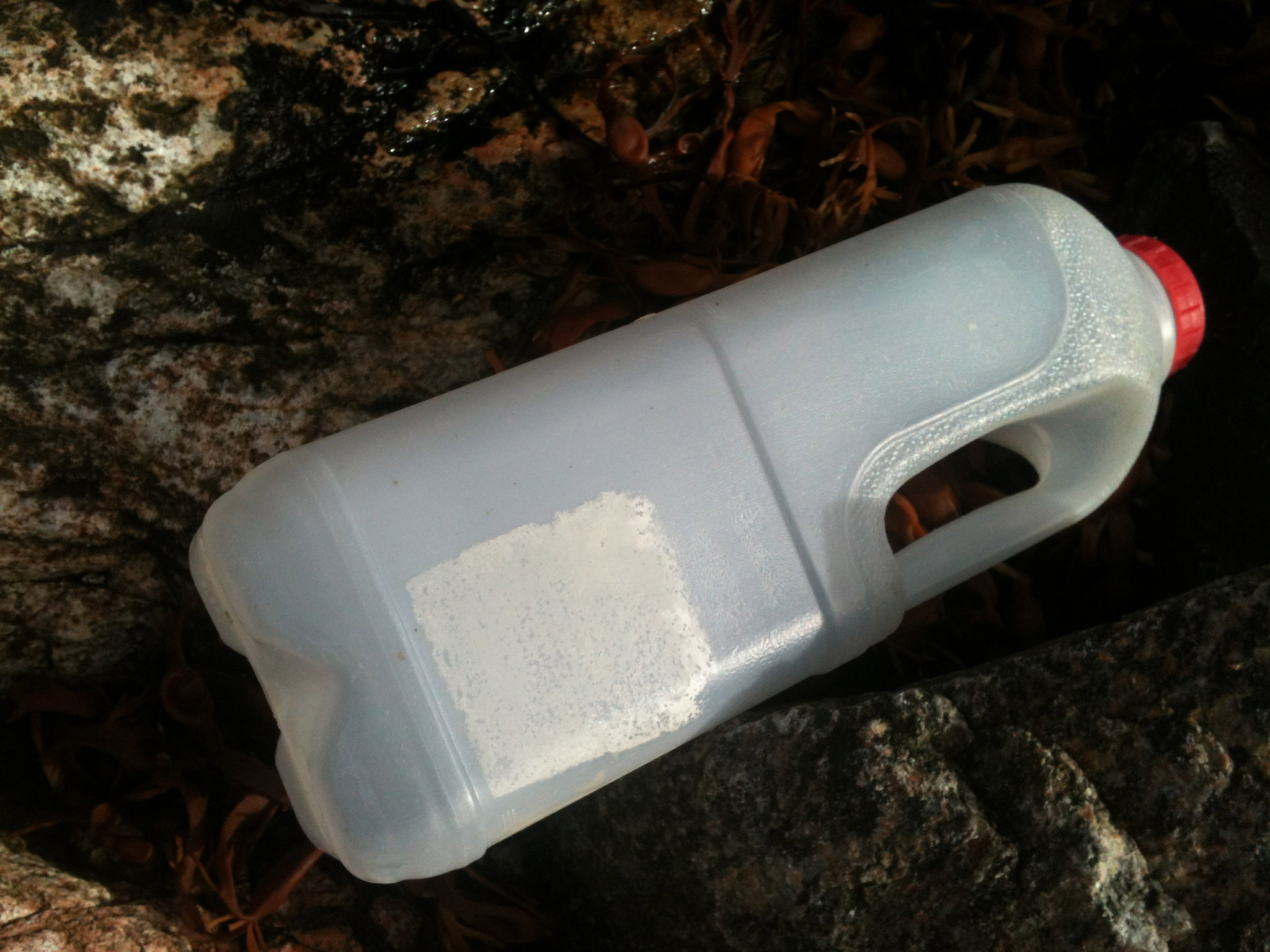
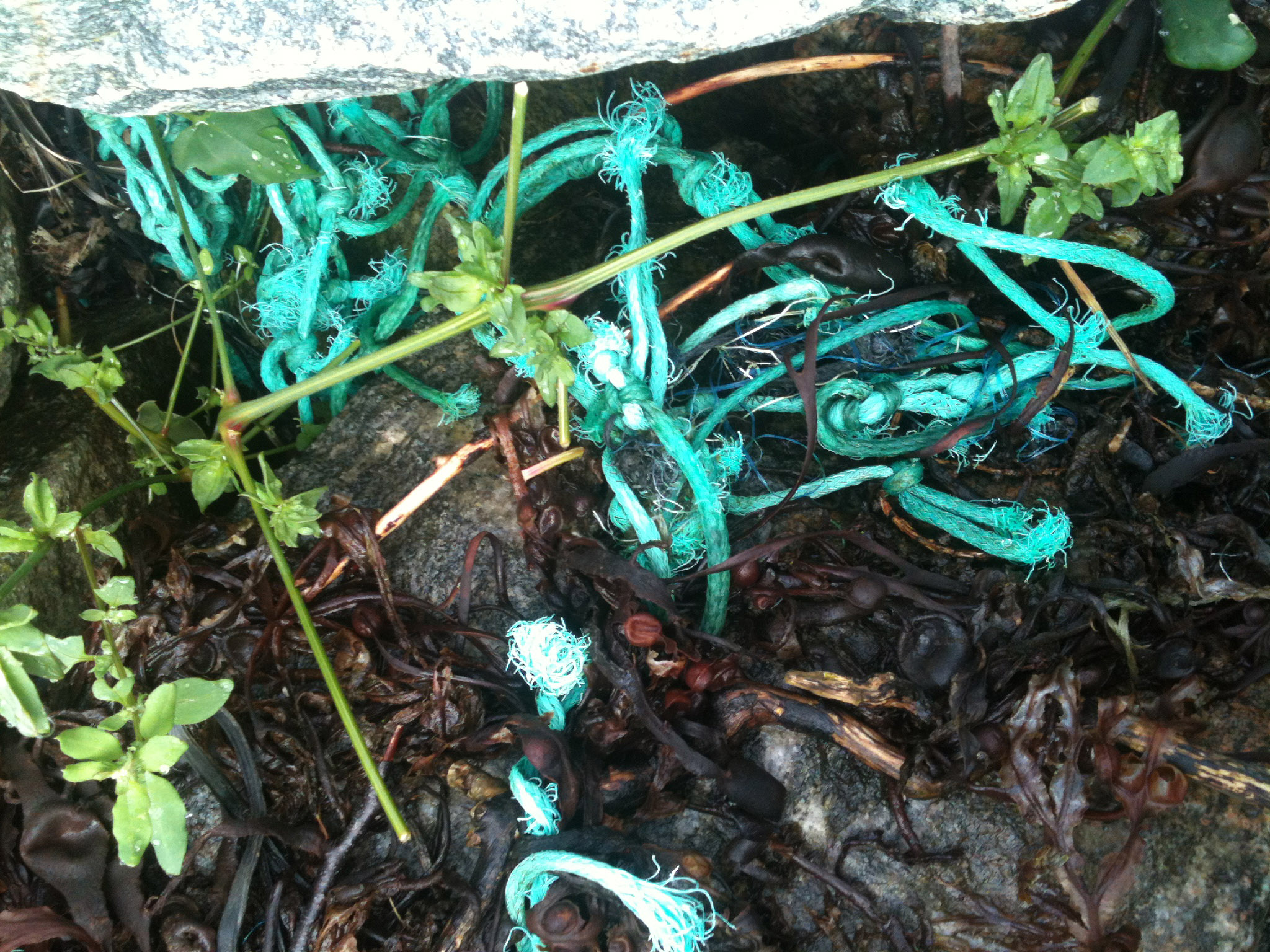
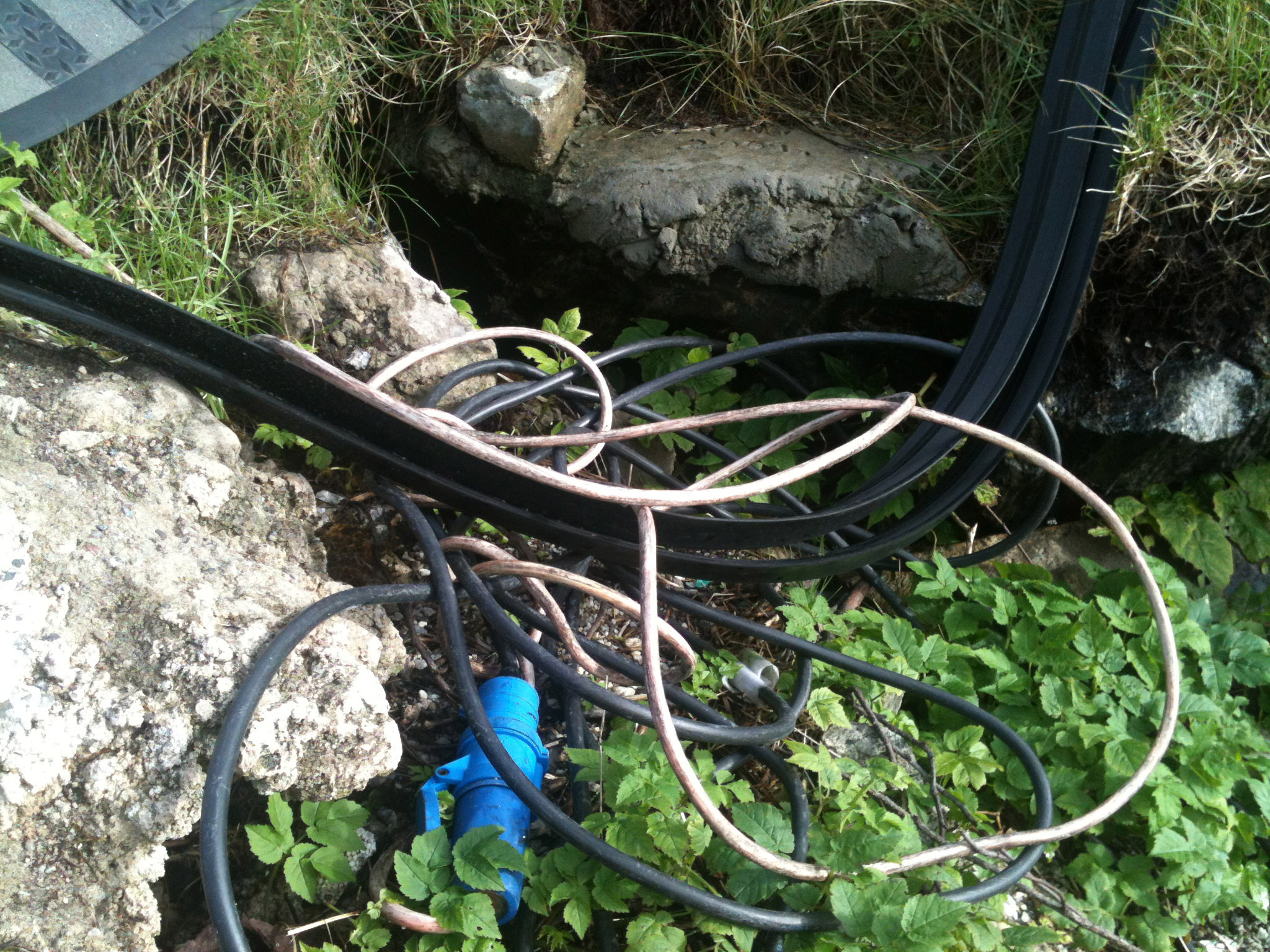
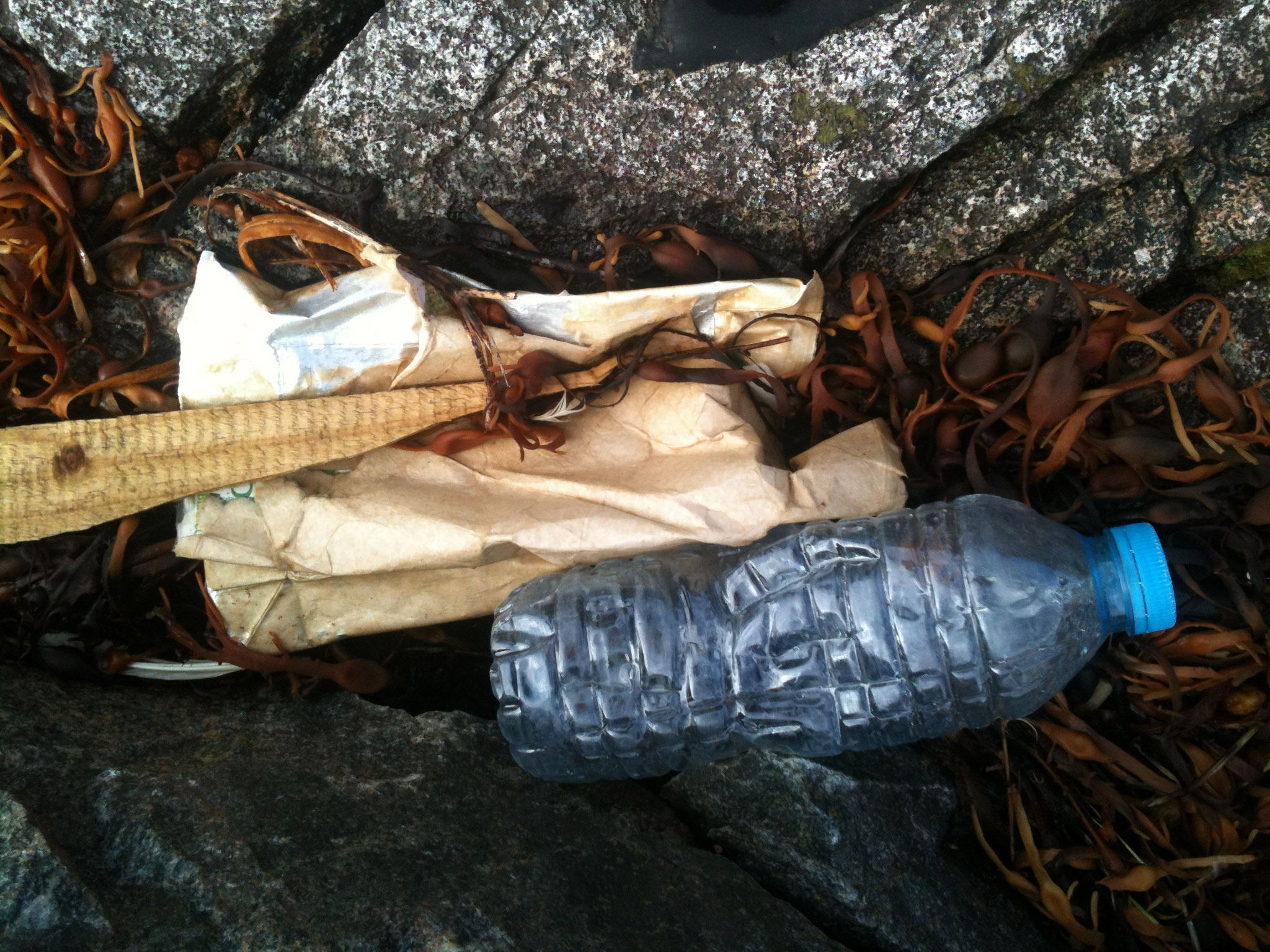
High on all our lists: plastic bottles, food containers and wrappers, glass bottles, plastic shopping bags, drinks cans, clothes, metal barbeques, gun cartridges…….

  milk bottle  net blog  electrical cable bog psd  plastic bottle & wrapper

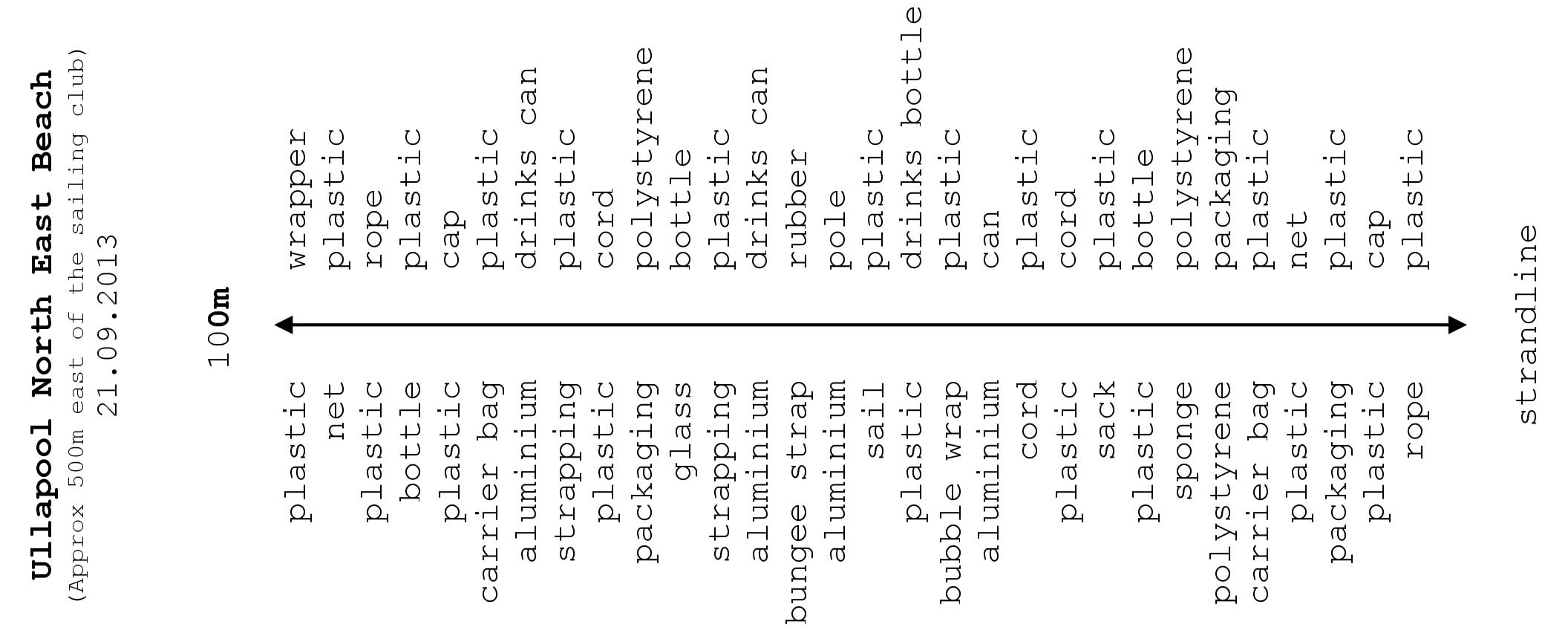
The amount of marine litter not only varies hugely between beaches,  coasts, islands , continents, oceans and by climatic changes. It has been estimated that 80%of marine litter could be from land with possibly only 20% coming from vessels. This projection is thought to have originated from the International Coastal Cleanup which Scotland and the UK as a whole takes part in organised through  MCS  http://www.mcsuk.org/scotland . Our local survey on Ullapool East Shore will also to add to Scottish statistics on what’s happening in the marine environment  and if continued on yearly help to add to international statistics.

But we know relatively little about what is lying on the sea floor or suspended in the water. That is why the reports from sailors like Ivan MacFadyen,  divers  and the information gathered by specific research teams such as the one based at University Marine Biological Station Millport,*is so crucial to our understanding.  The beaches are our thermometers to the health of the seas, the simple lists collected go on………electrical cable, metal window encasement, ducting, concrete blocks, pier fenders……..

strandline PDF horizontal

*Since starting this project in September the Millport research team has been cut