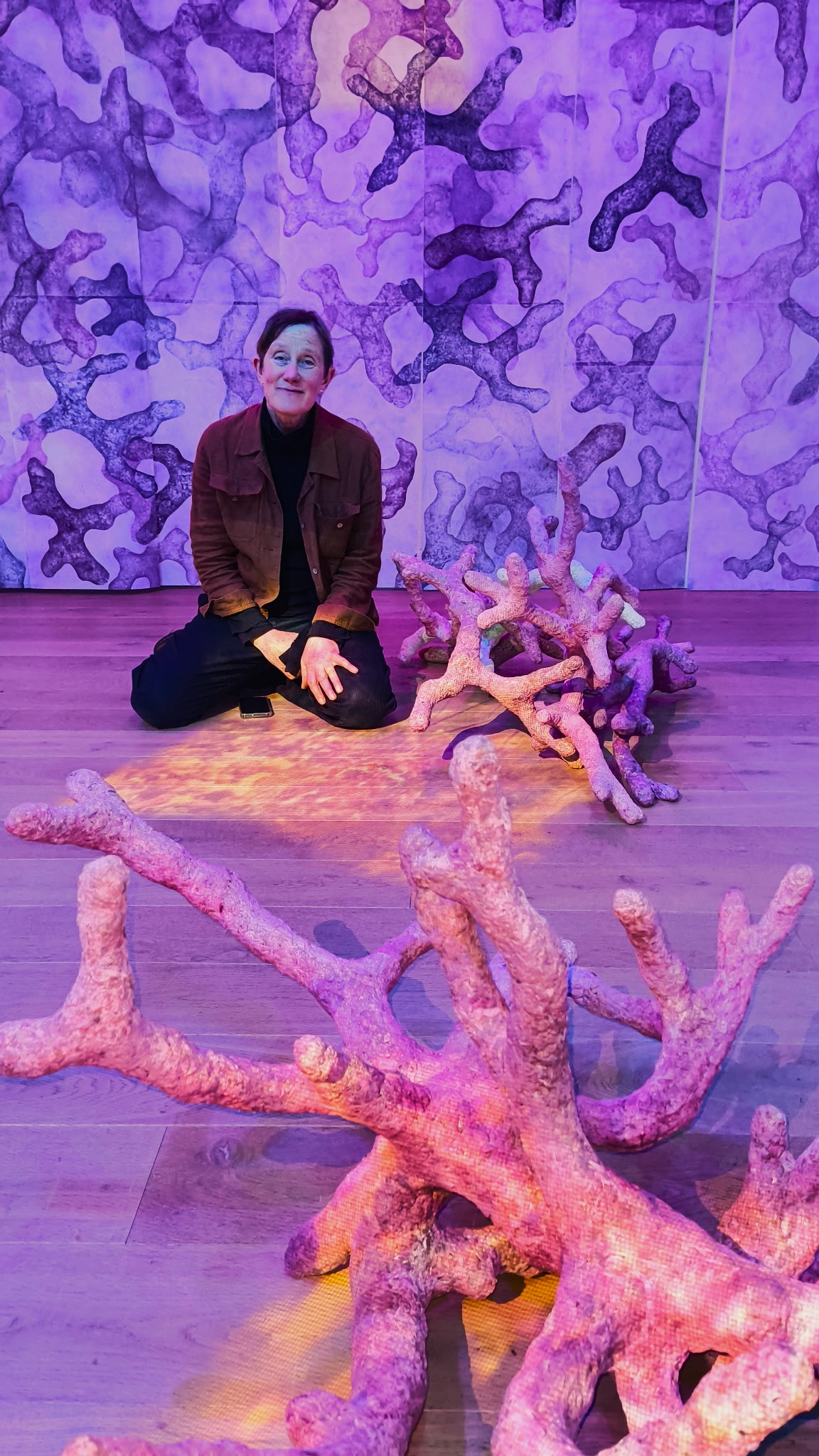
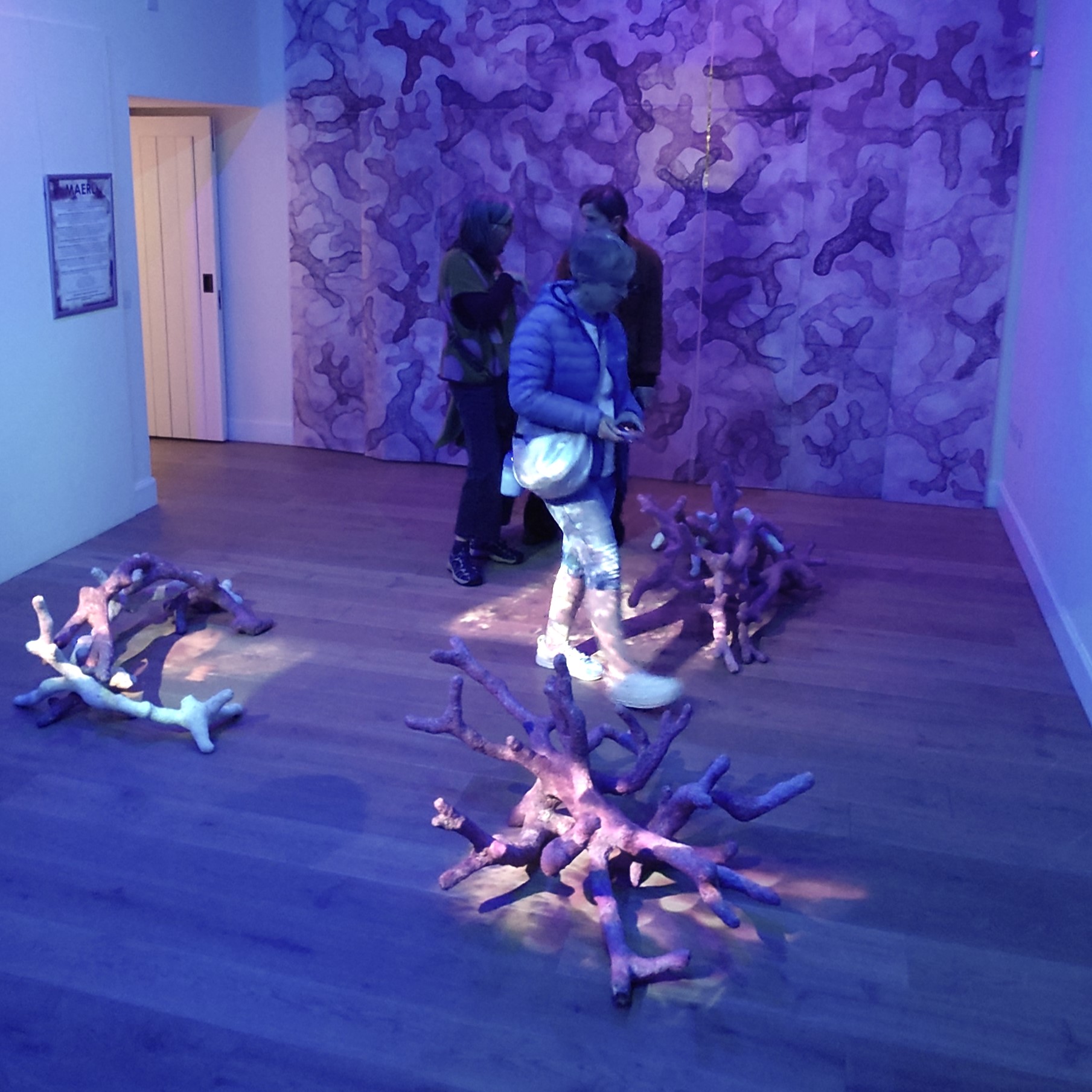
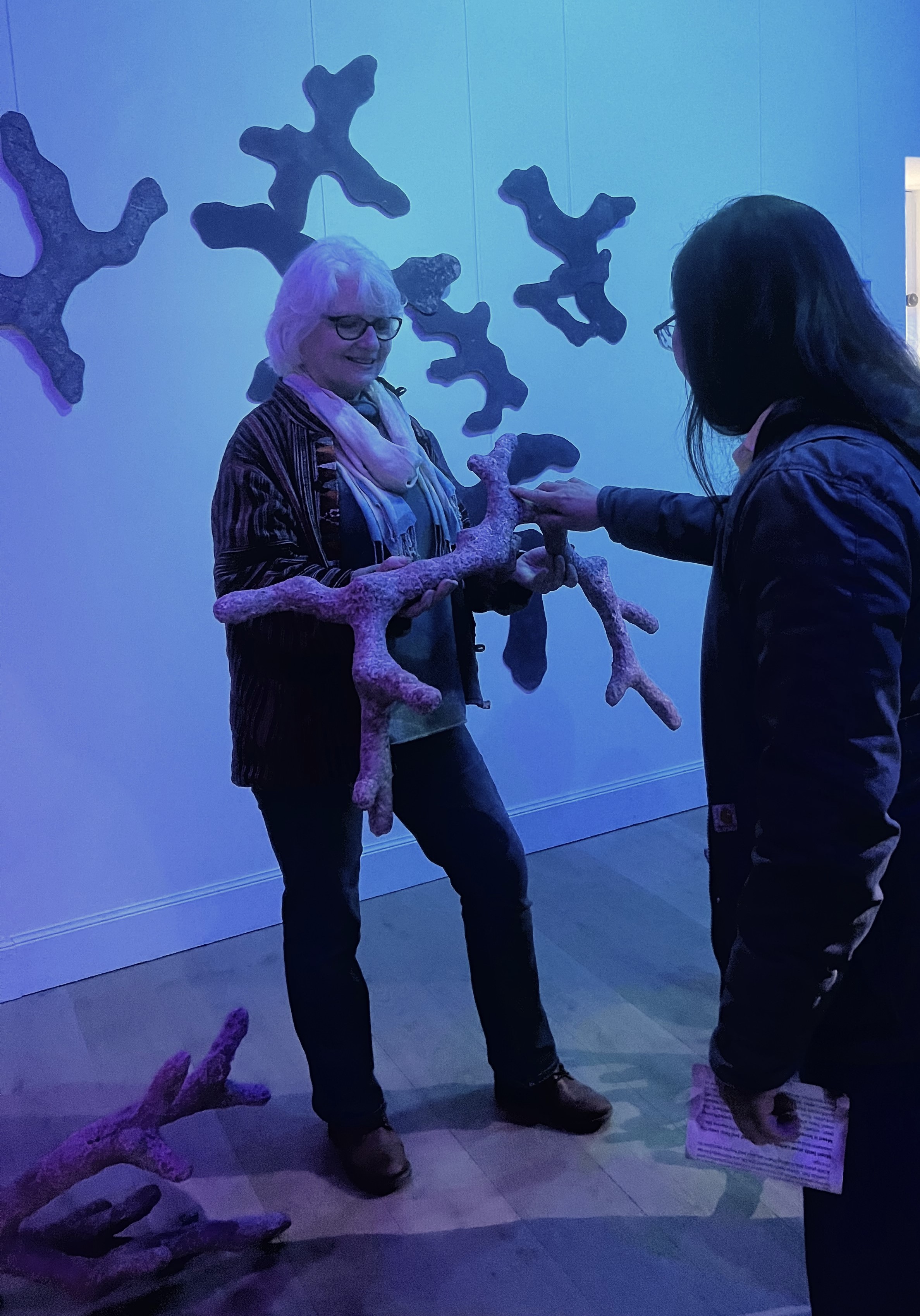
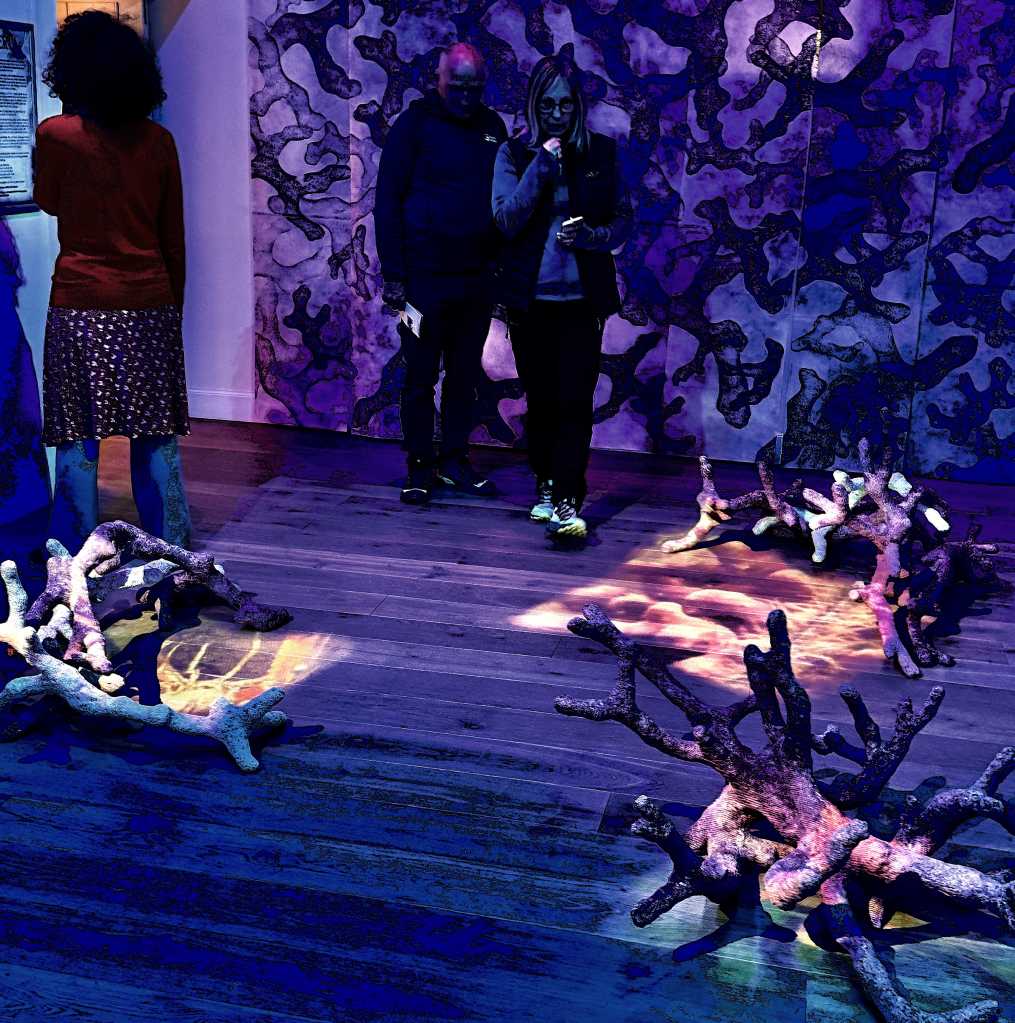
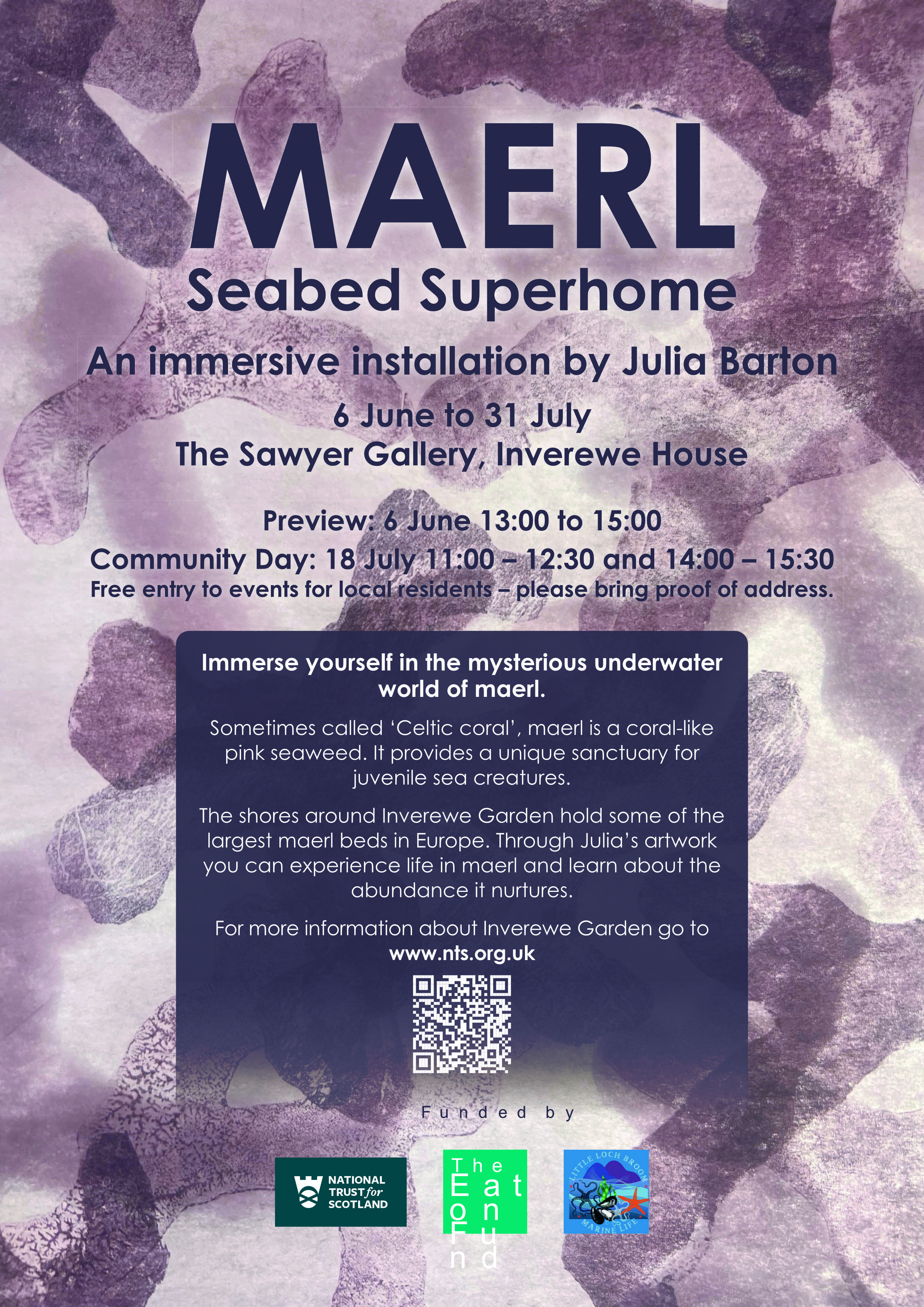
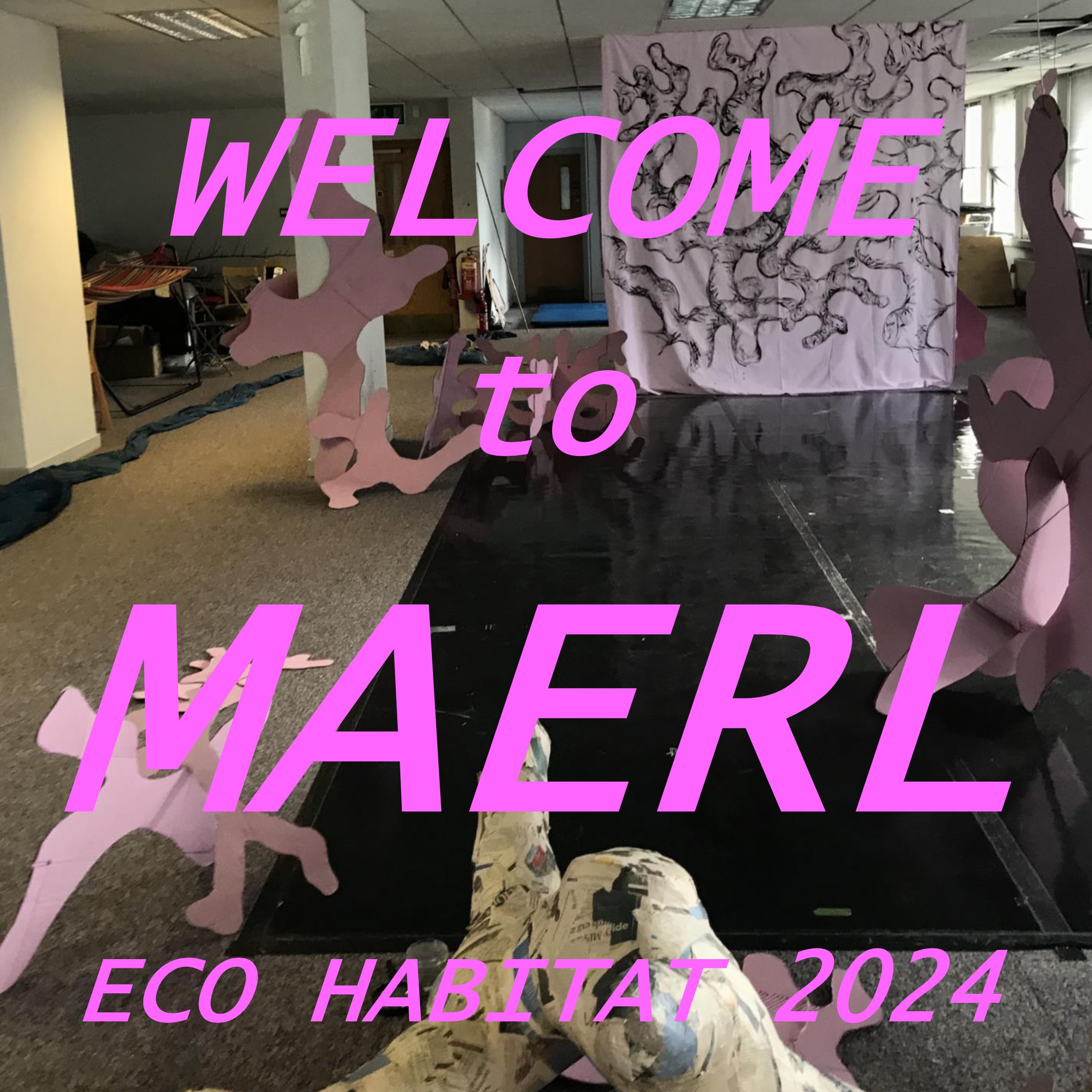
Welcome to my new exhibition, to introduce people to the amazing coralline seaweed maerl. MAERL Seabed Superhome is showing at the Sawyer Gallery, Inverewe Gardens, in Wester Ross in the Scottish Highlands. Open daily 10am – 4pm.
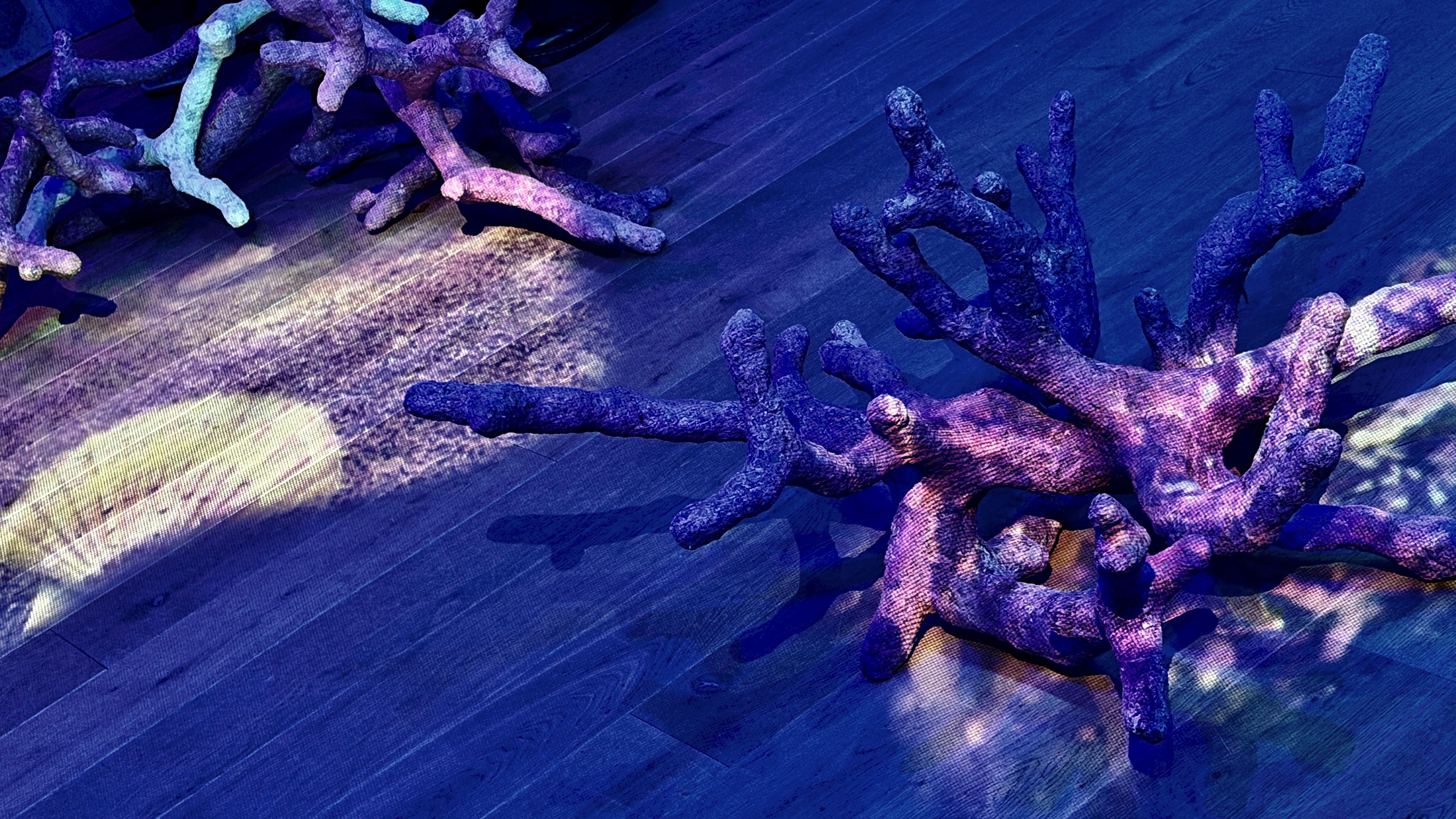
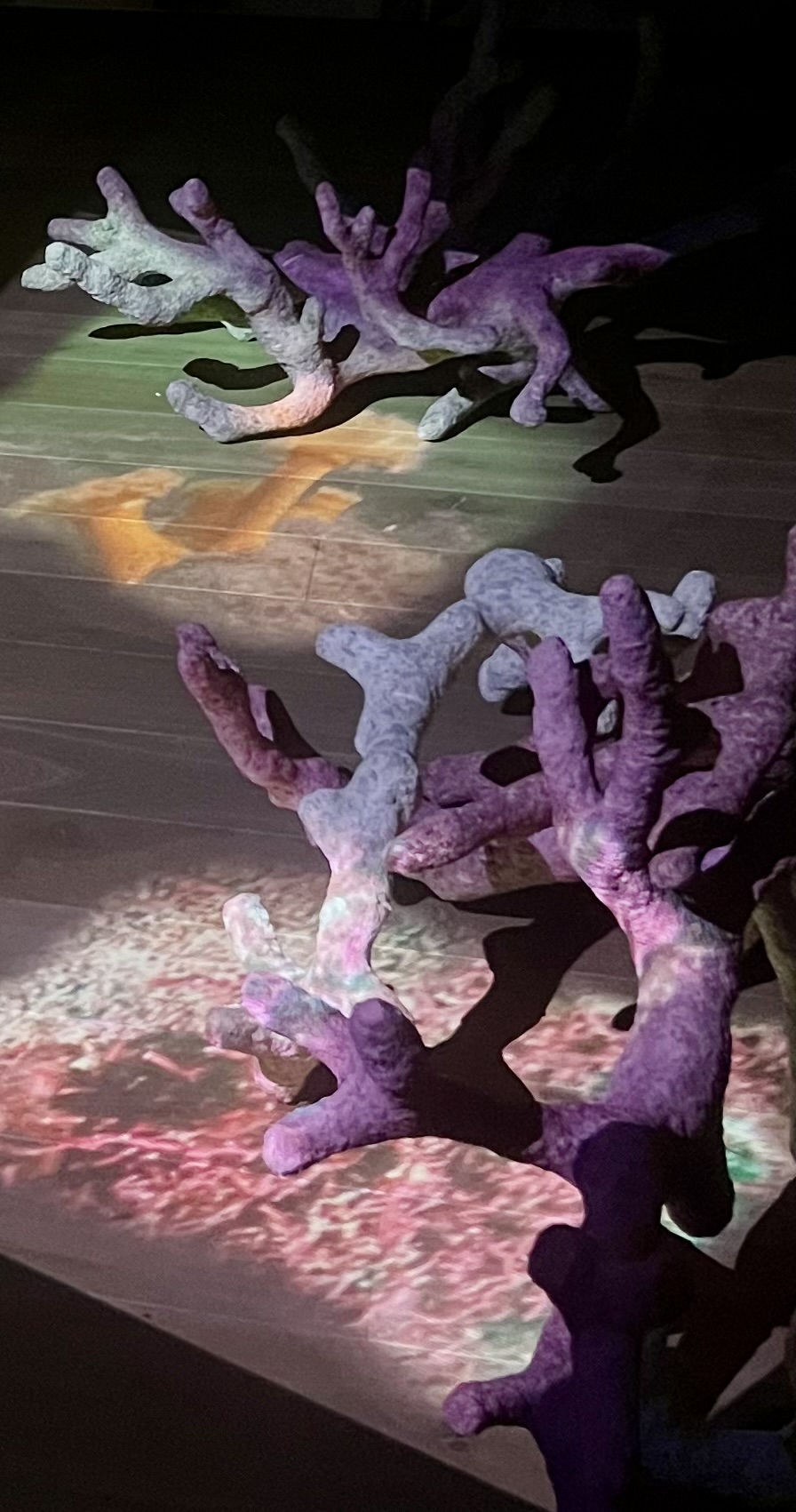
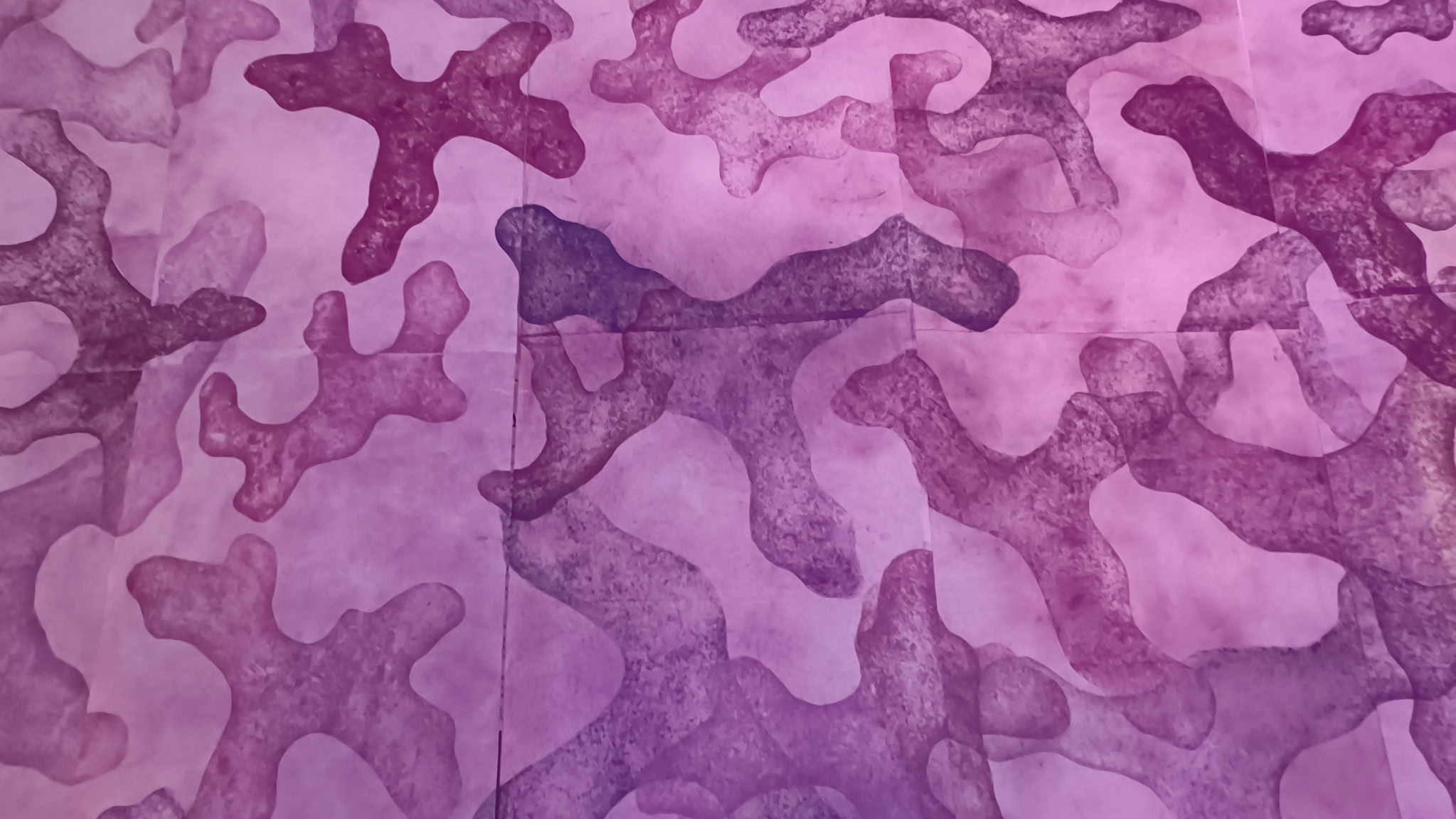
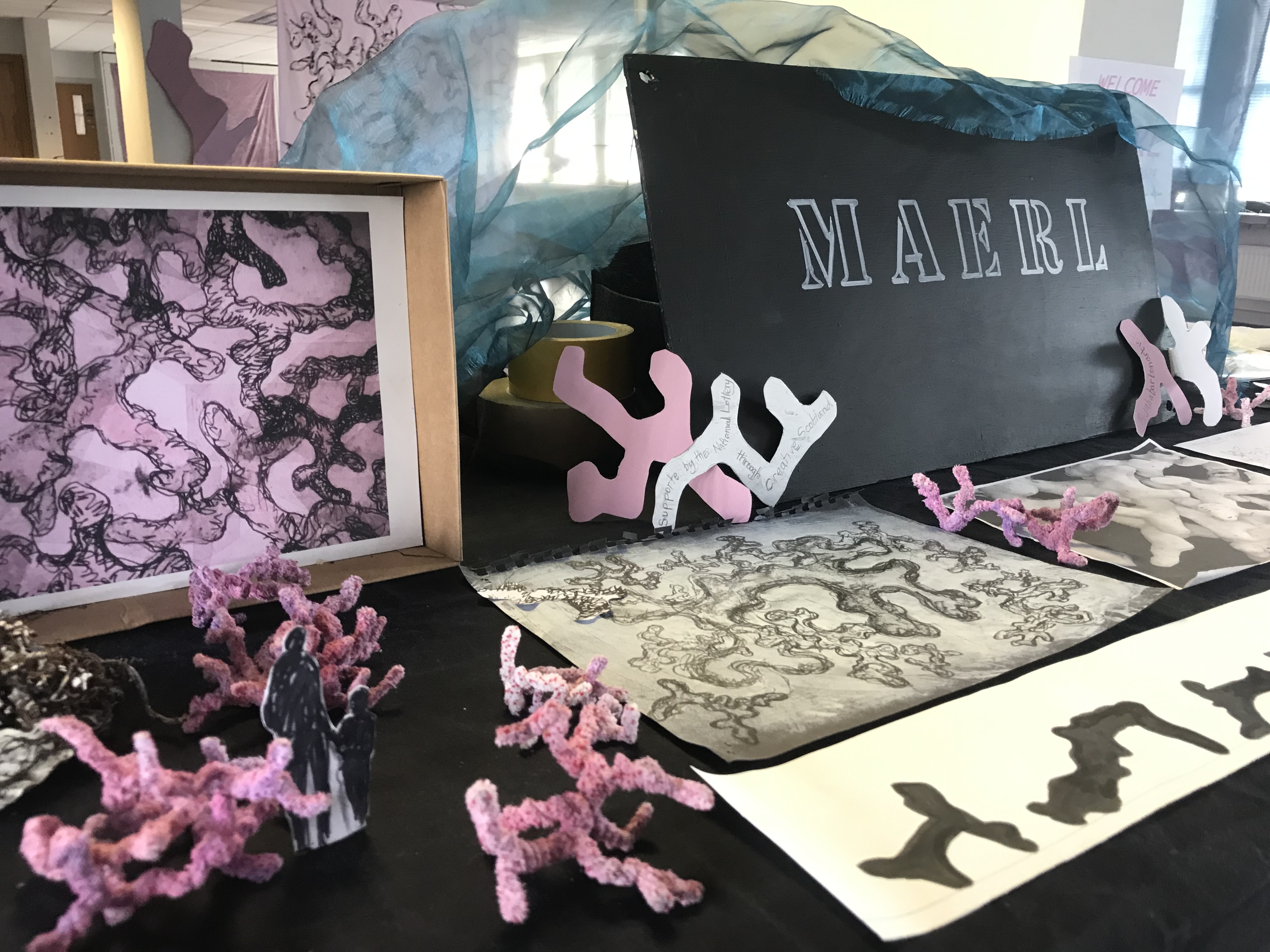
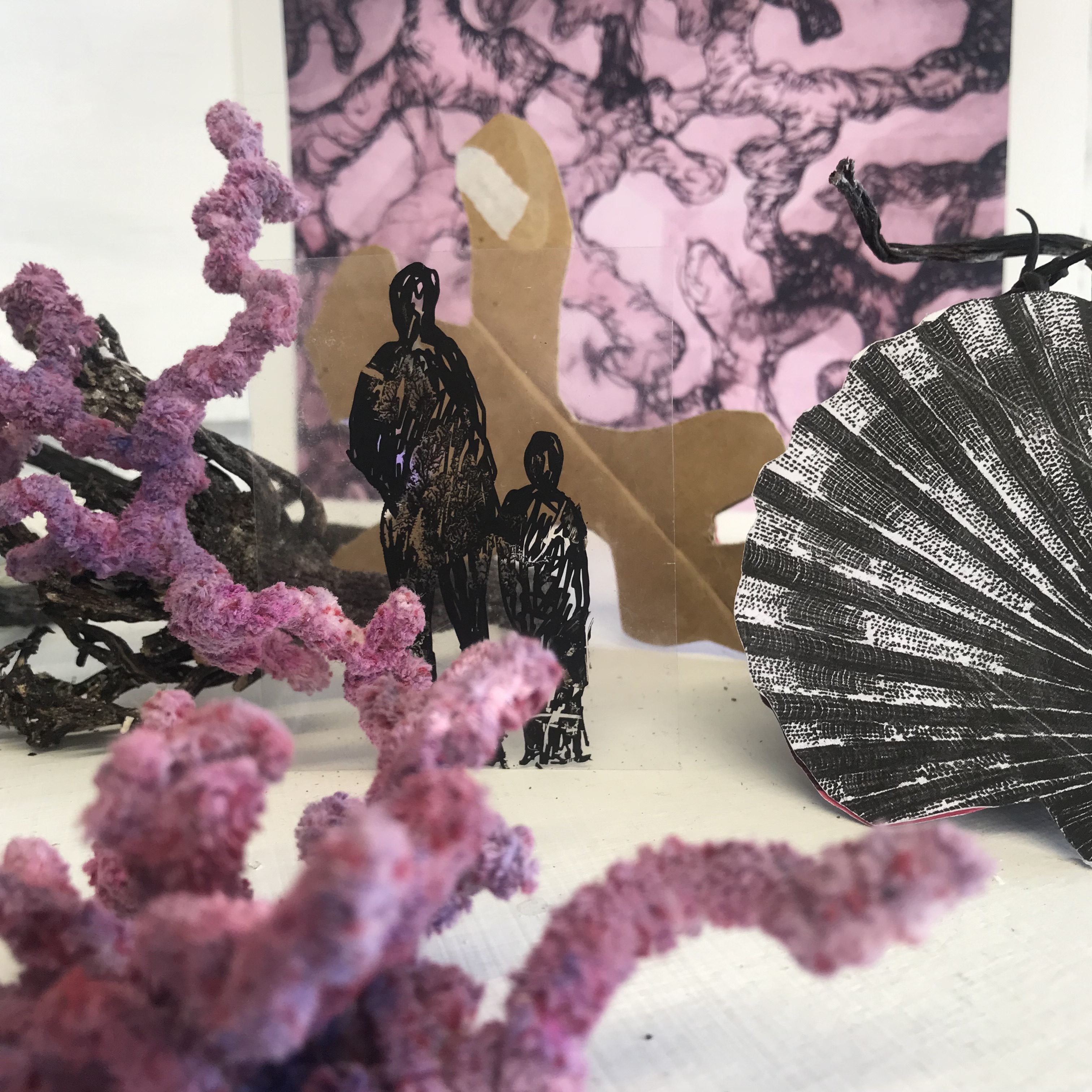
My exhibition includes maerl sculptures (eco building blocks) films of Wester Ross maerl habitats, including a soundscape from a maerl bed, prints, and drawings. The exhibition is a celebration of maerl’s ecological importance.
A link to exhibition interview between Ginevra House Sawyer Gallery Curator and Julia gives the background to the exhibition
Maerl is a vital ecosystem engineer, creating three-dimensional spaces that support incredibly high biodiversity – housing up to 500 + species – and serves as perfect & essential sea life nursery grounds for commercially important fish including cod and scallops. Maerl beds are highly valued as blue carbon resources as they lock away carbon in their calcium carbonate skeletons.
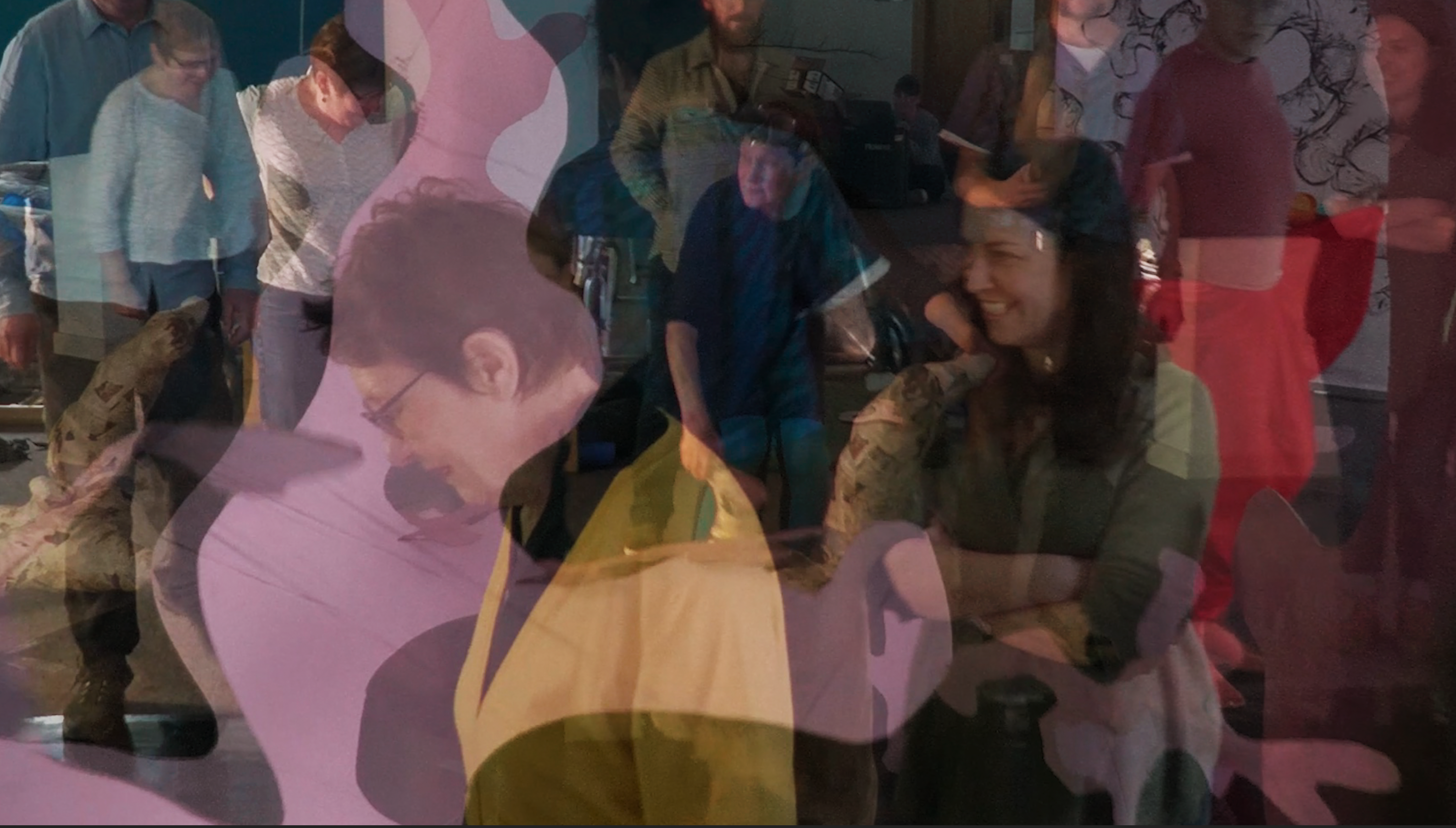
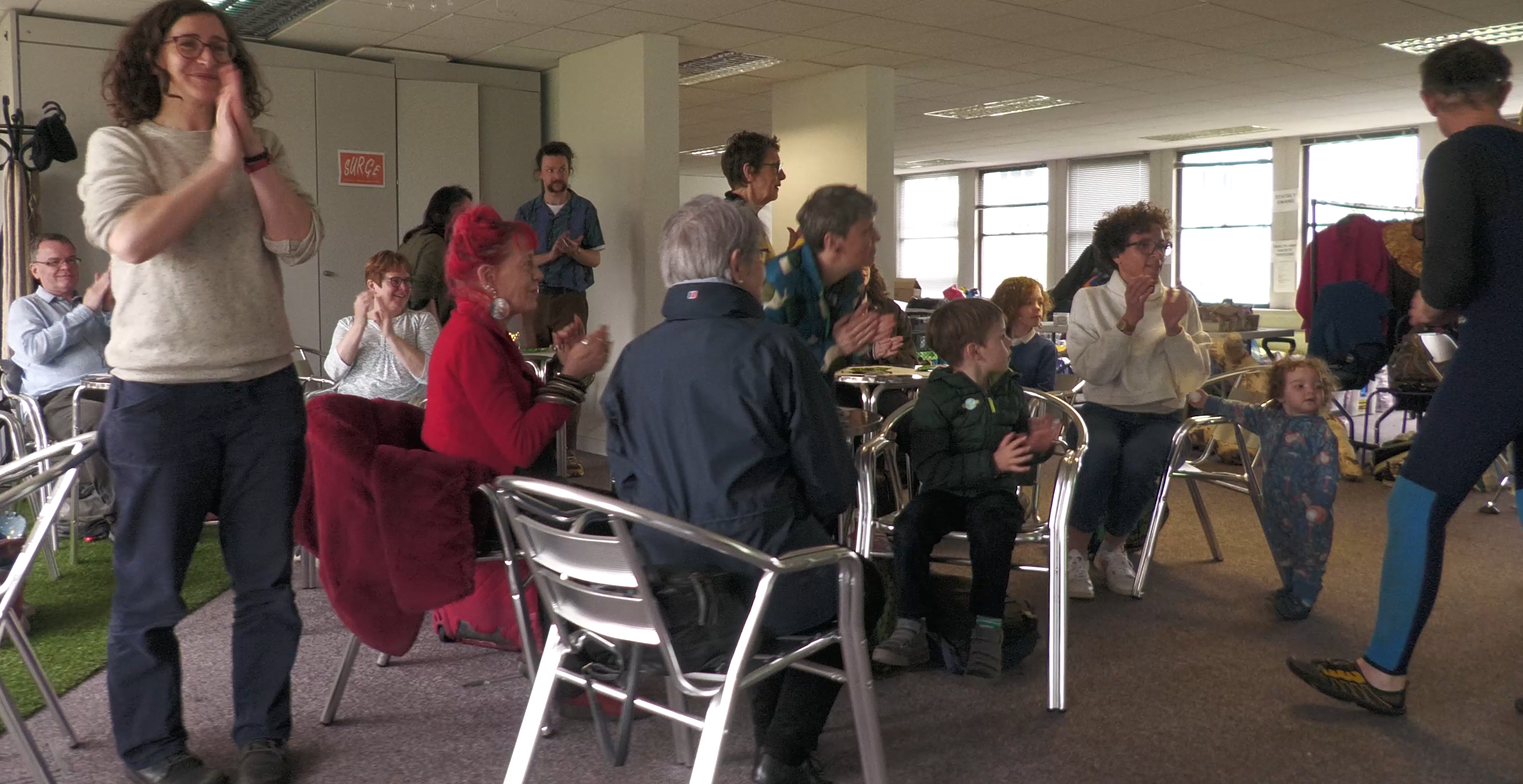
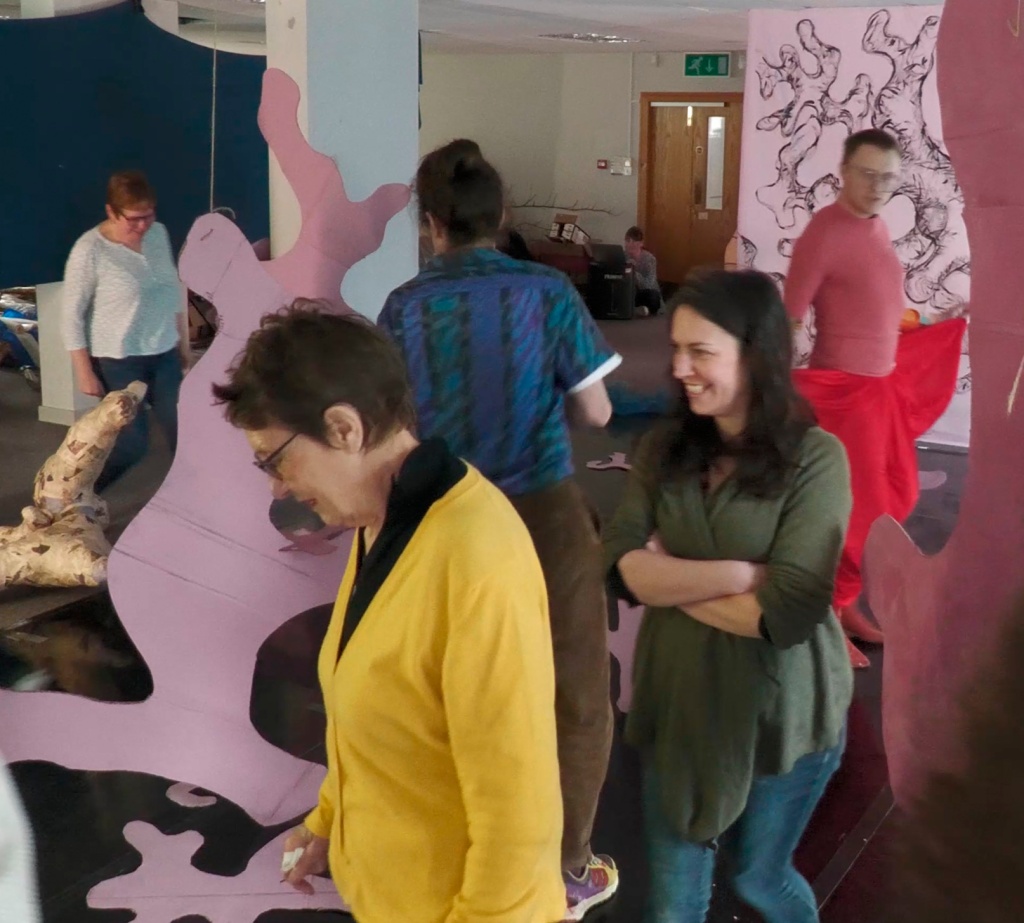
Pictures taken at the opening on the 6th June by Veronica Vossen, Lesley Strachan and Neville Rigby.
Inverewe Gardens is a perfect location to show this exhibition as it sits at the southern tip of the Wester Ross Marine Protected Area which contains the UK’s largest maerl beds
Maerl beds are rich biodiverse marine habitats which support ocean health. I believe it’s absolutely vital that Maerl beds receive continued protection. Please visit and share information about the exhibition and MAERL both here and on Instagram @juliabartonartist
Many thanks to the National Trust Scotland, The Eaton Fund, Little Loch Broom Marine Life, Sea-changers and in-kind support from colleagues friends and family for supporting the making and showing of this exhibition.
The exhibition opened just in time to celebrate World Oceans Day which that has the global community action theme of “Strong Marine Protected Areas for Our Blue Planet”
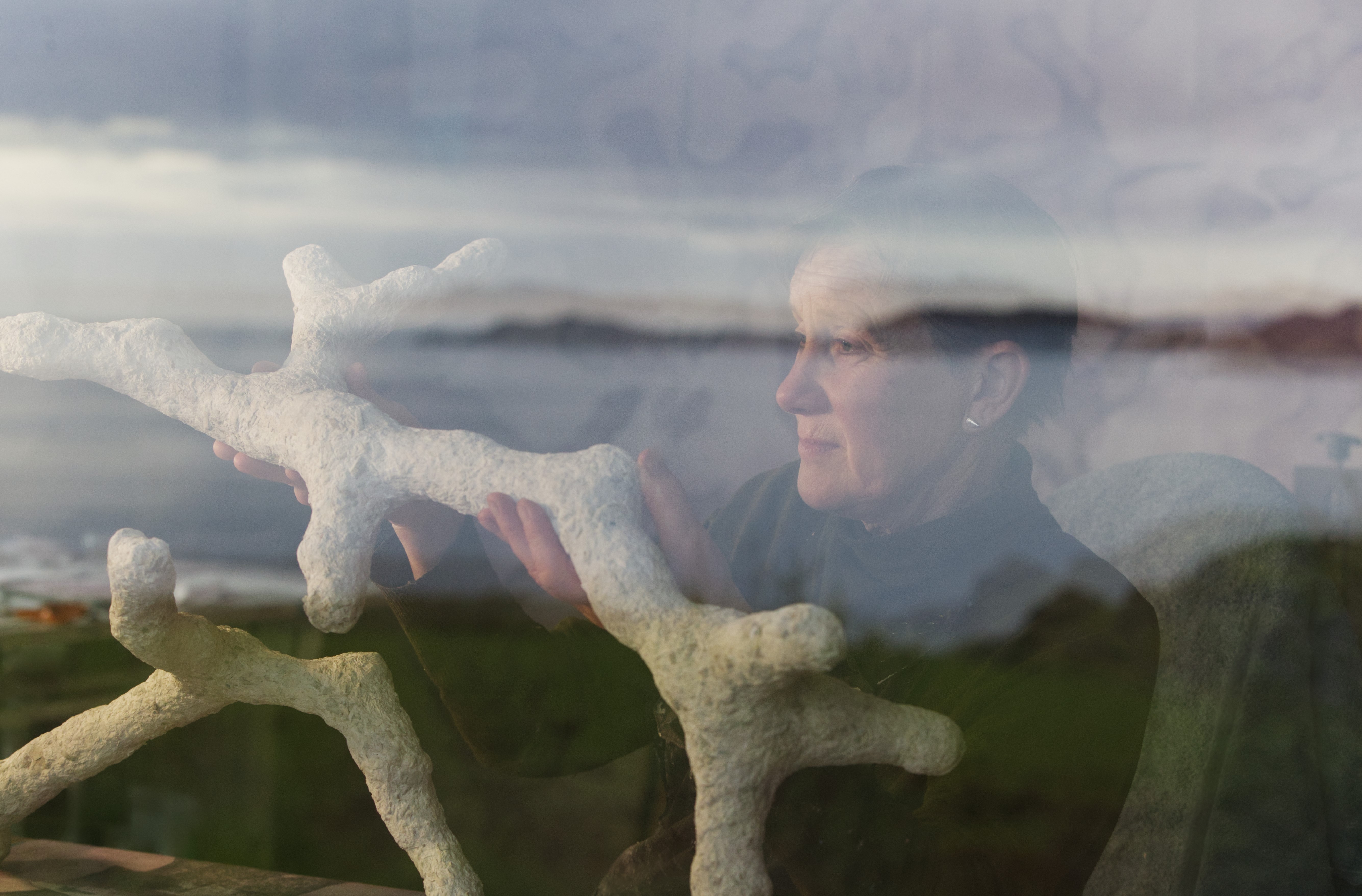
Making a collection of sculptures to introduce people to maerl, its branching shapes, to share how I see individual pieces of maerl as ‘eco-building blocks’ that layer upon layer make up maerl beds sometimes metres deep. Seabed Superhomes – with an infinitesimal variety of shaped spaces for marine life to shelter, burrow, rest and spawn in, providing perfect sea life nurseries.’
This exhibition of suspended maerl prints, sculptures, drawings, photographs and films of marine life living in Wester Ross maerl beds, plus maerl soundscape, is a celebration of maerl’s ecological importance. A vital biodiverse marine habitat which supports ocean health.
Inverewe Gardens is a perfect location to show this exhibition as it sits at the southern tip of the Wester Ross Marine Protected Area which contains the UK’s largest maerl beds
‘I believe it’s absolutely vital that Maerl beds receive continued protection’
2025 has developed into a busy year of reaching out and joining in diverse ocean conversations taking place in forums, conferences, and creative liquid kinship groups, both in person in the UK and online internationally.
All became inspiring habitats to enter, share and absorb the knowledge exchange, fostering future collaborations and partnerships around our shared passion and concern for our marine health.
I was delighted and proud to be asked to present the R&D findings and development plans of my MAERL visual storytelling project, both at Porcupine Marine Natural History Society (PMNHS) Annual Conference at St Andrews University, themed ‘Understanding Our Marine Environment’, and at the University of Exeter’s (Maerl Forum) ‘Why Maerl?’
At both events marine scientists, conservationists, phycologists, community groups, citizen scientists, filmmakers and artists gave in-depth presentations on their specialist areas, sparking questions and lively conversations all touching on our concern for Ocean Health.
To my joy, the first presentation at the PMNHS’s conference, was a brilliantly detailed study of St Andrews and the Firth of Forth seaweeds, by Martin Wilkinson. His research documented and revealed the rate and pattern of seaweed species colonisation of shorelines polluted by the coal mining industry decades ago.
The two-day conference was packed with fascinating wide-ranging talks, sharing studies in, and unlocking hidden data, covering the decline of mussels, grey seal predation of marine mammals, bi-valve invasions, new underwater observation and recording technologies, and discussion sessions on the future of citizen science.
And Lucy May, project manager of COAST, the community organisation working for the protection and restoration of the marine environment around Arran and the Clyde, highlighted the vital importance of Maerl in their coastal waters over the last 30 years.
The conference aptly concluded with field trips down on the St Andrews shoreline examining the inter-tidal marine life.
Inaugural Maerl Forum 2025Jason Hall-Spencer Professor of Marine Science University of PlymouthLiving Maerl on display at the Maerl Forum
The first ever Maerl Forum was attended by over 100 people passionate about Maerl.
Jason Hall-Spencer, Professor of Marine Biology Plymouth, gave the opening overview asking ‘Why Maerl?’ referencing his 30 years of research into Maerl and Maerl bed-habitats, which started here in Scottish coastal waters. He explained Maerls’ ecological importance on a global scale, how it provides a wealth of ecosystem functions. Yet in comparison to other coastal habitats, such as kelp and seagrass, it is still understudied and is in need of protection, particularly from bottom contact fishing gear (such as scallop dredging) and pollution from sewage, aquaculture and nutrient run off from farms.
The following 12 presentations and films highlighted not only the damage being done to Maerl around the UK and Europe, but also the beauty and importance of Maerl habitats for other species, a storer of carbon and as a component of a broader ecosystem that supports coastal livelihoods.
The Maerl Forum’s extensive collective expertise has now, layer by layer ‘like a maerl bed’, been collated and published online as the Maerl Forum Output Report, together with the impressive Cornwall Maerl Conservation Action Plan.
Central to both the Forum and the Conference was a question that underlies my MAERL project aims: How do we break out of our bubble of knowledge?
My contribution to the Forum and Conference was to share the Research and the Development of my visual story telling project ‘Welcome to MAERL’ (highlighted in my previous post ) and how the test audience became engaged in the life of maerl, the habitat it creates, asking questions and looking to know more.
Presentation papers are being published in the PMNHS bulletins and the Maerl Forum Report. The Maerl networking conversations continue, with ongoing MAERL Forum webinars; the first online meet-up in June was lead by Professor Juliet Brodie, international seaweed expert based at the Natural History Museum, presenting and discussing fascinating in depth surveys and studies from around the world, including identifying new Maerl species.
The Conference and Forum were wonderfully exciting and inspirational days, expanding our understanding of our marine environment and the importance of how to protect Maerl, our ‘Celtic Coral’.
I am happy to have shared my project with both marine communities and to be actively taking part in the construction of the growing Maerl community/habitat on land. Already plans have grown out of the forum meet ups with intentions for a Maerl Festival in 2027.
I celebrated World Ocean Day online in ‘Liquid Kinship’ with the ocean comm/uni/ty global event listening to fellow artists tell of their collaborations with scientists, dancers , musicians. This went on to explore and find intriguing and inspiring ways to ‘tell of’ a host of issues pressurising and threatening our marine world e.g: the laying of transmission cables across the world’s seabed. At that point I was unaware that our nearby Little Loch Broom seabed, with its rich Maerl habitat, was now under threat from the laying of electricity cables.
Locally and much closer to home I took part in the Blue Hope Alliance film night, where I was able to enjoy Scotland’s Barrier Reef film also shown at the Maerl Forum and the latest Wester Ross Marine Protected Area, citizen science seabed surveys.
I also to presented my MAERL Project plans, including leading a series of forthcoming school Maerl workshops in Ross-shire, now underway, with local funding from the Ullapool Community Trust and the Ullapool Harbour Trust.
‘I am looking forward to more ocean conversations as I search for collaborators to partner me in creating a series of creative events, finding locations/venues and to identify funding sources.’ JB
Cornwall Council: for support to present my project at the Maerl Forum, Exeter University
Seasearch: for enabling healthy living maerl to have a rightful place at the Maerl Forum, albeit in a temporary regulated observation tank ( left) Seasearch
Notes:
Porcupine Marine Natural History Society: Is an informal society interested in marine natural history and recording, particularly in the North East Atlantic region and the Mediterranean Sea. Porcupine MNHS welcomes anyone interested in marine biology and ecology. www.pmnhs.co.uk
Blue Hope Alliance: A voluntary citizen science survey coalition working together to document and protect the ecosystem. https://www.bluehopealliance.co.uk
Ocean Uni: The ocean comm/uni/ty is an online social space developed and hosted by TBA21–Academy for ocean lovers, researchers and practitioners to gather, discover and (un)learn across oceans https://www.instagram.com/tba21academy/?hl=en#
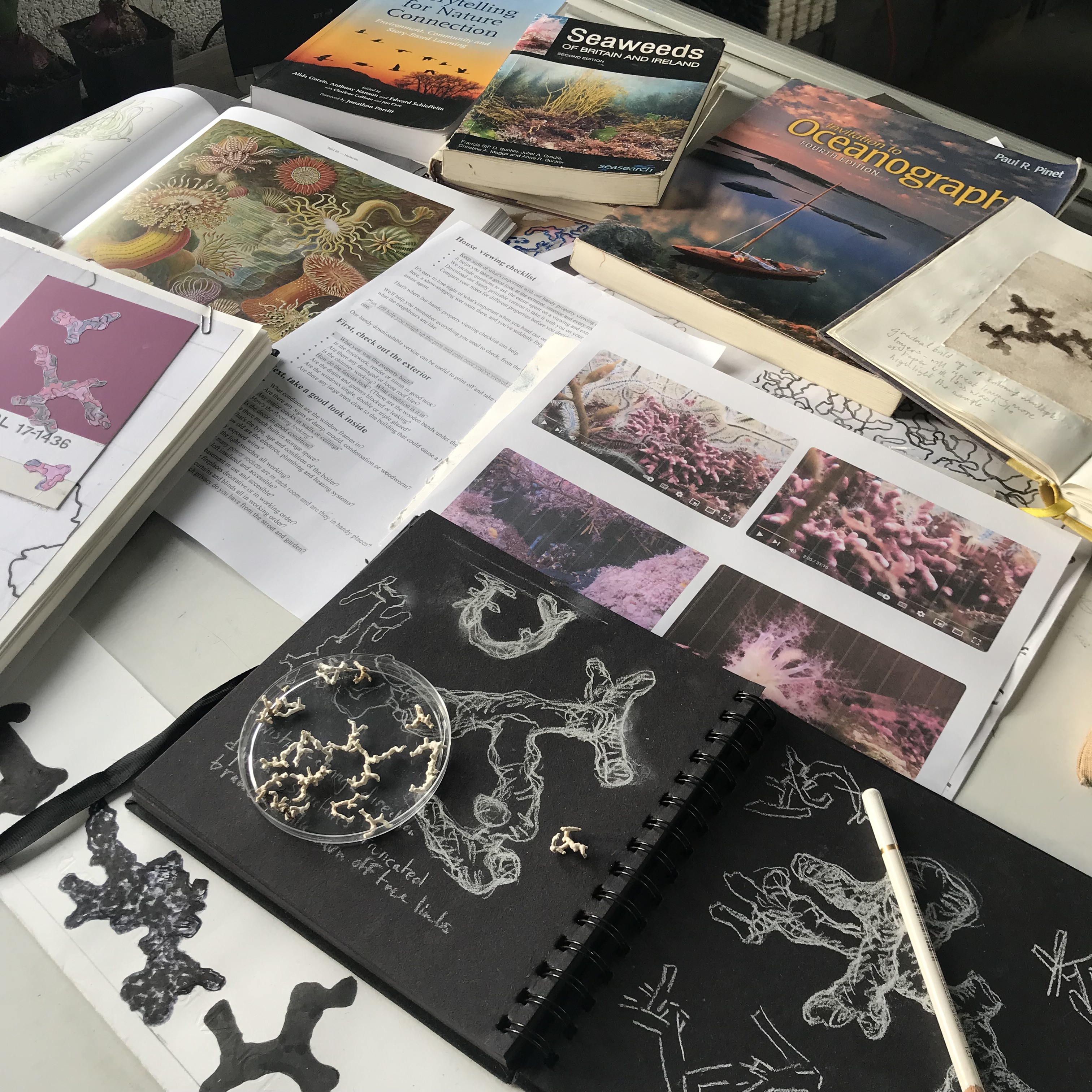
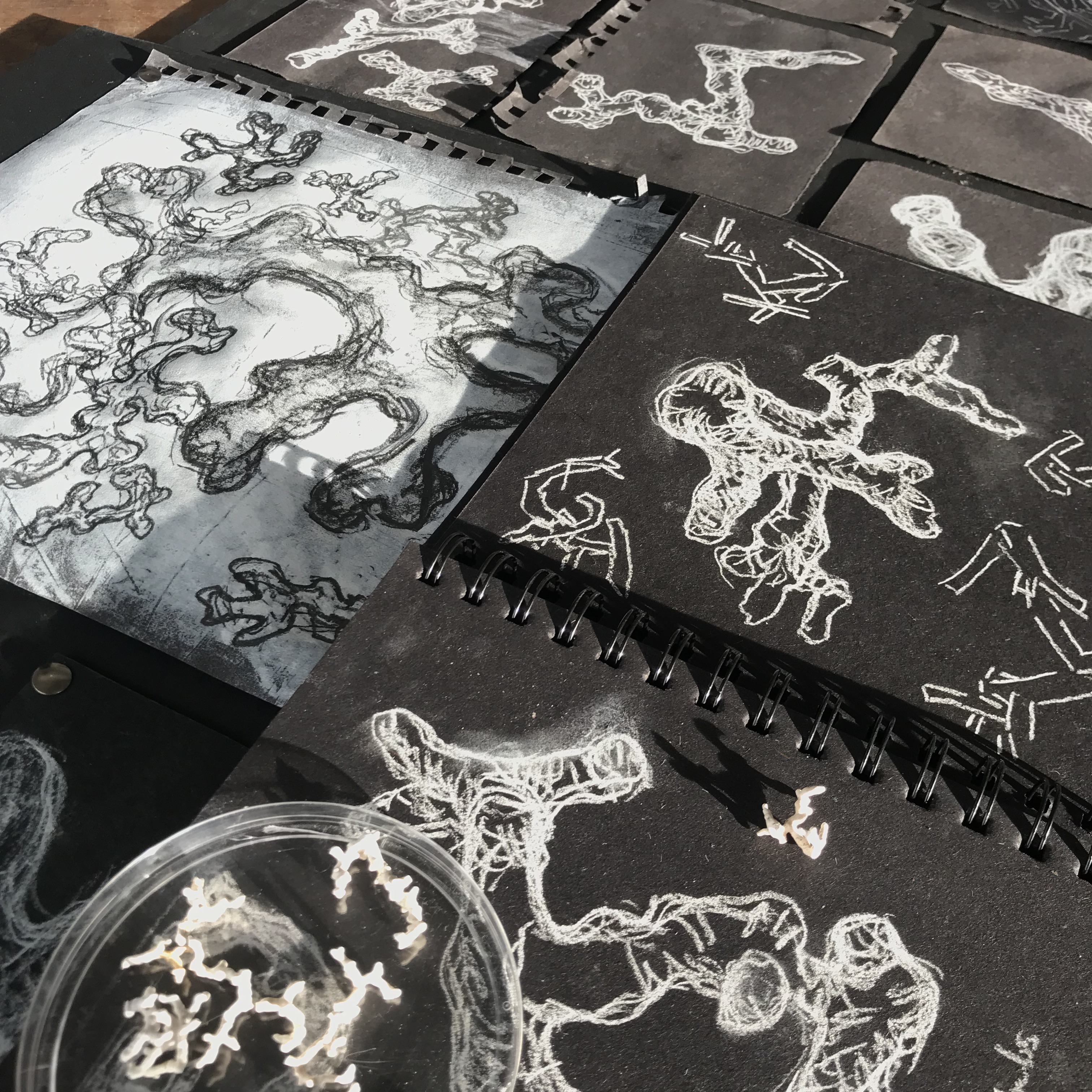
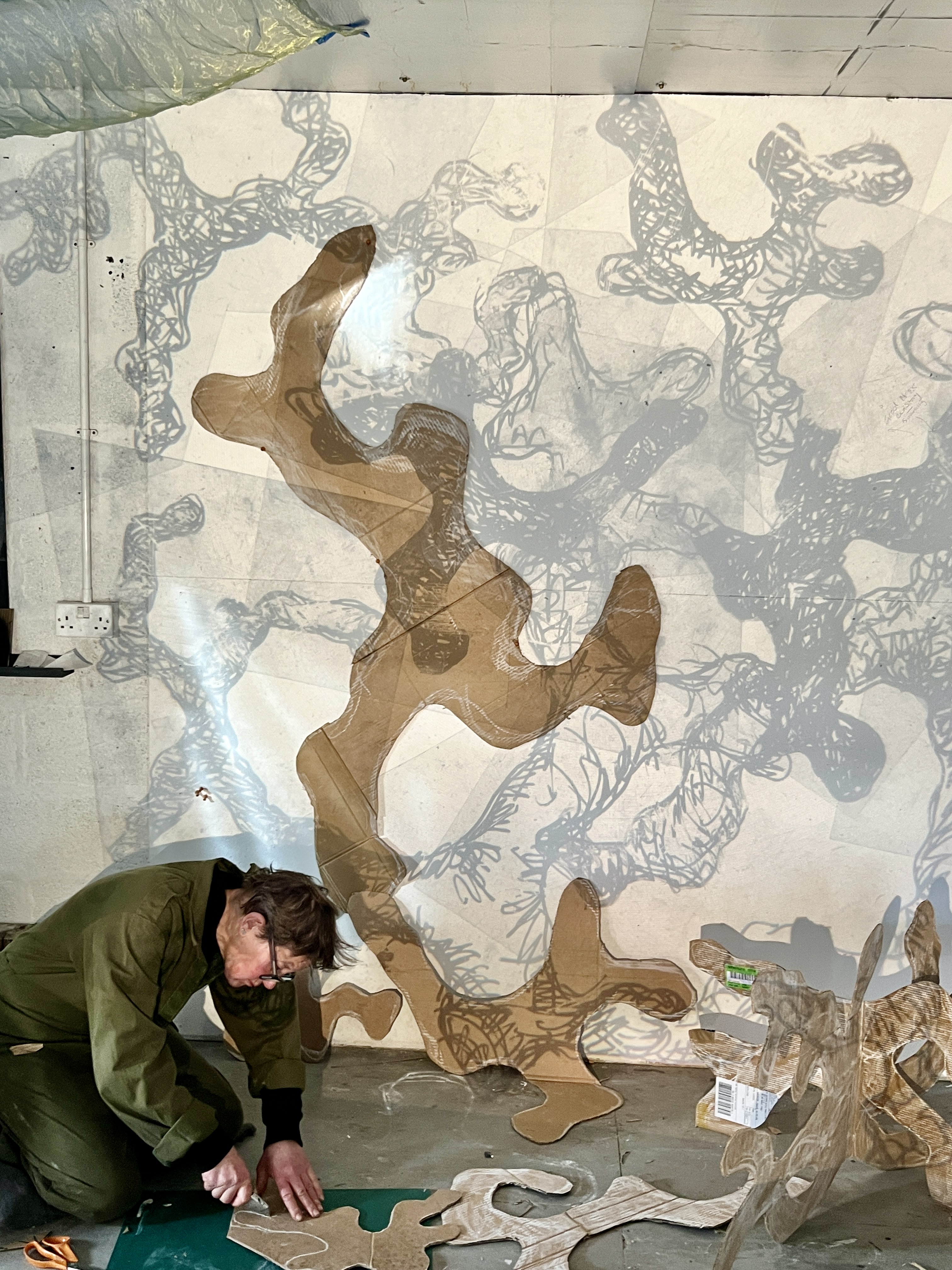
After several months of studio-based research, examining, drawing and re-drawing washed up Maerl samples, and collecting and collating information from marine experts, divers, film makers, I began plotting out a simple dramatic story line of Maerl. This is an extraordinary coralline seaweed eco-habitat, which I have been dreaming of inhabiting and passionately want people to know and care about.
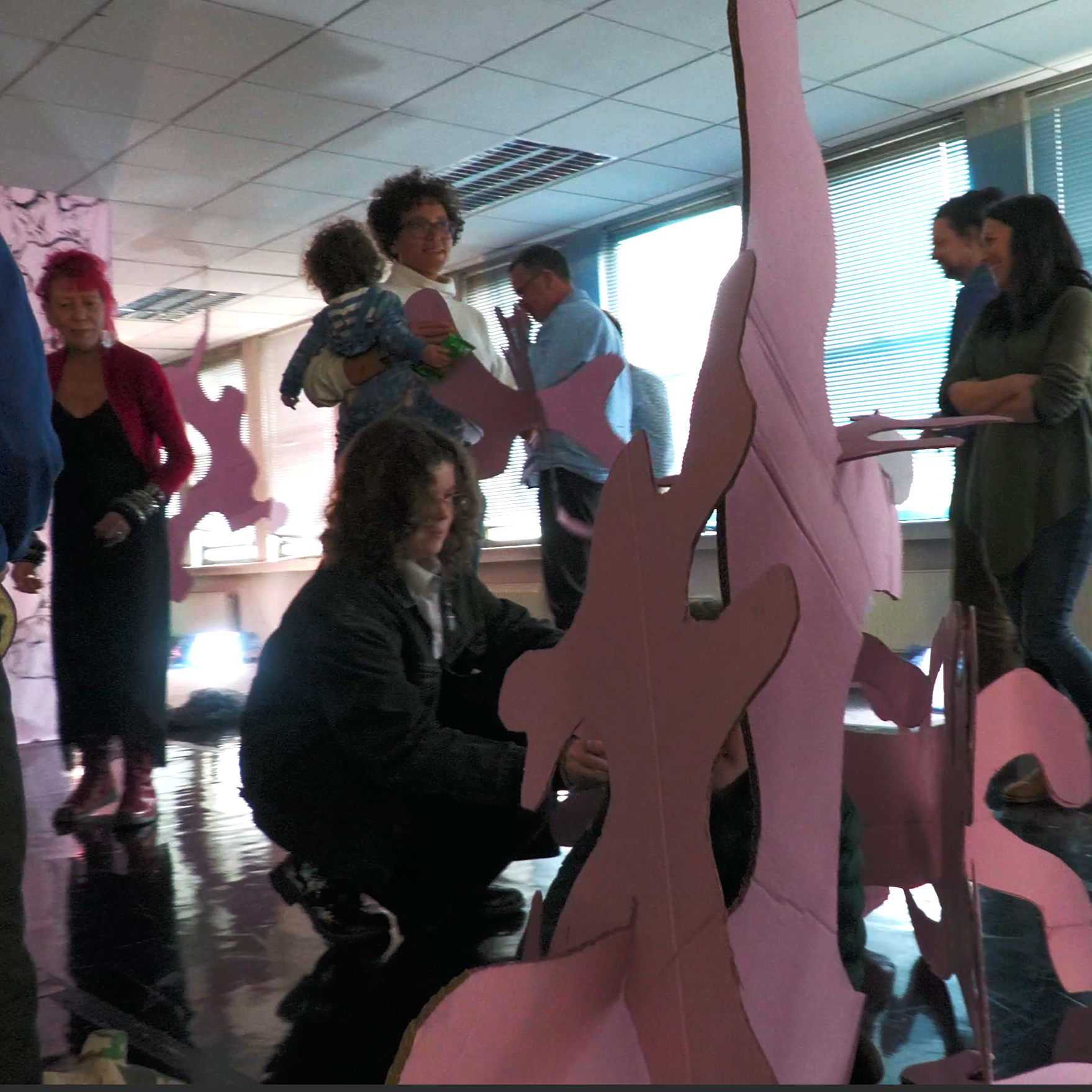
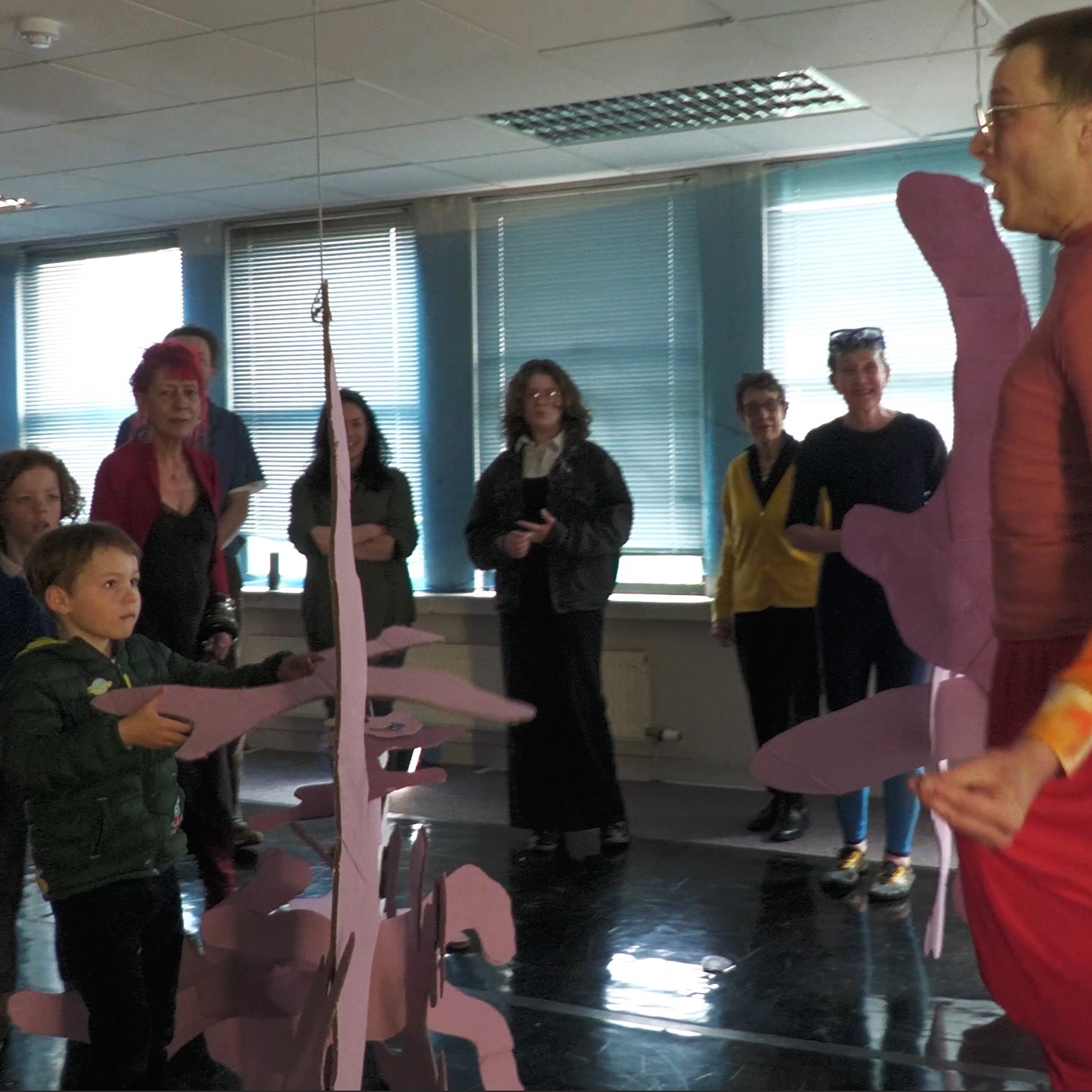
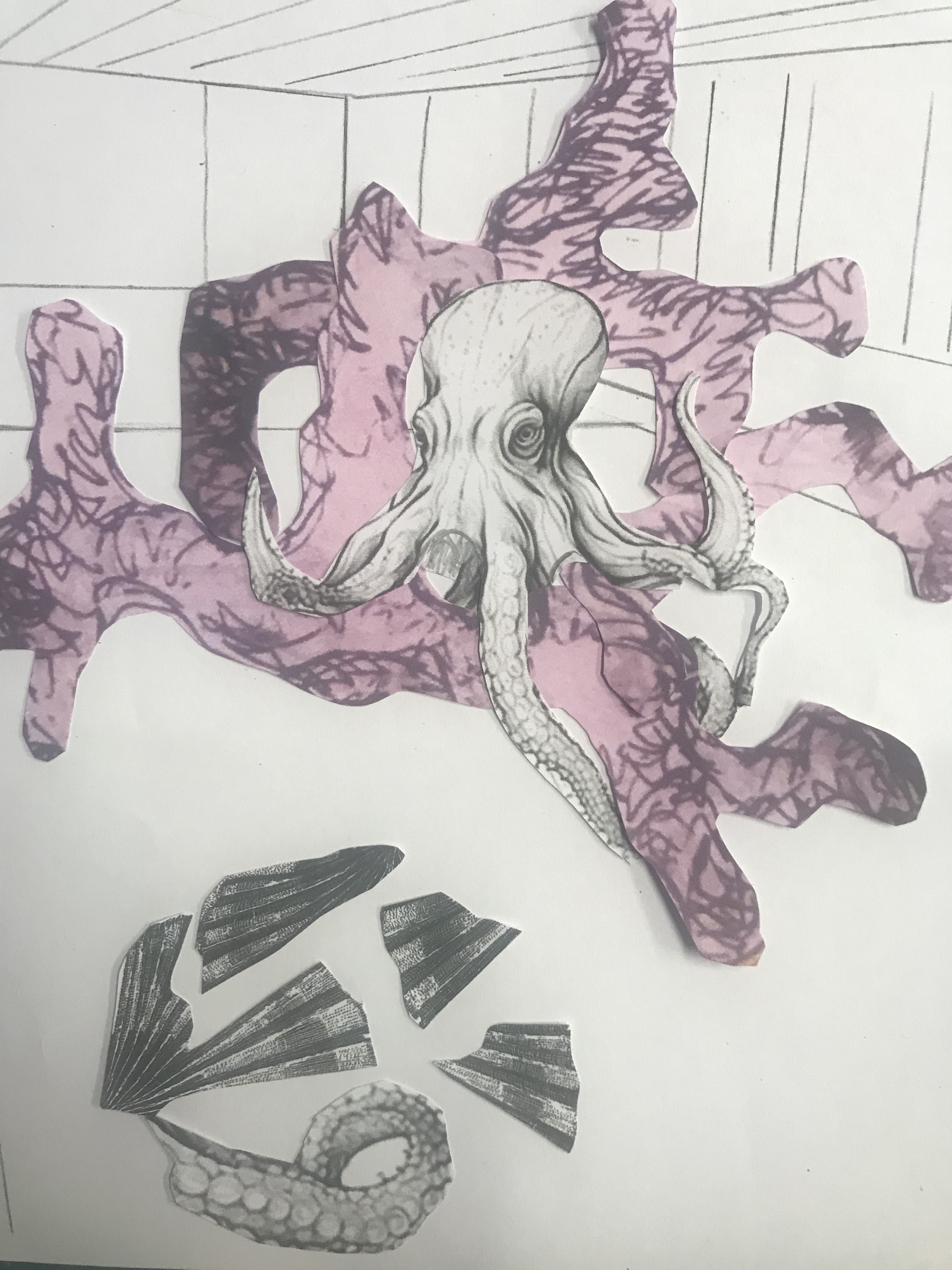
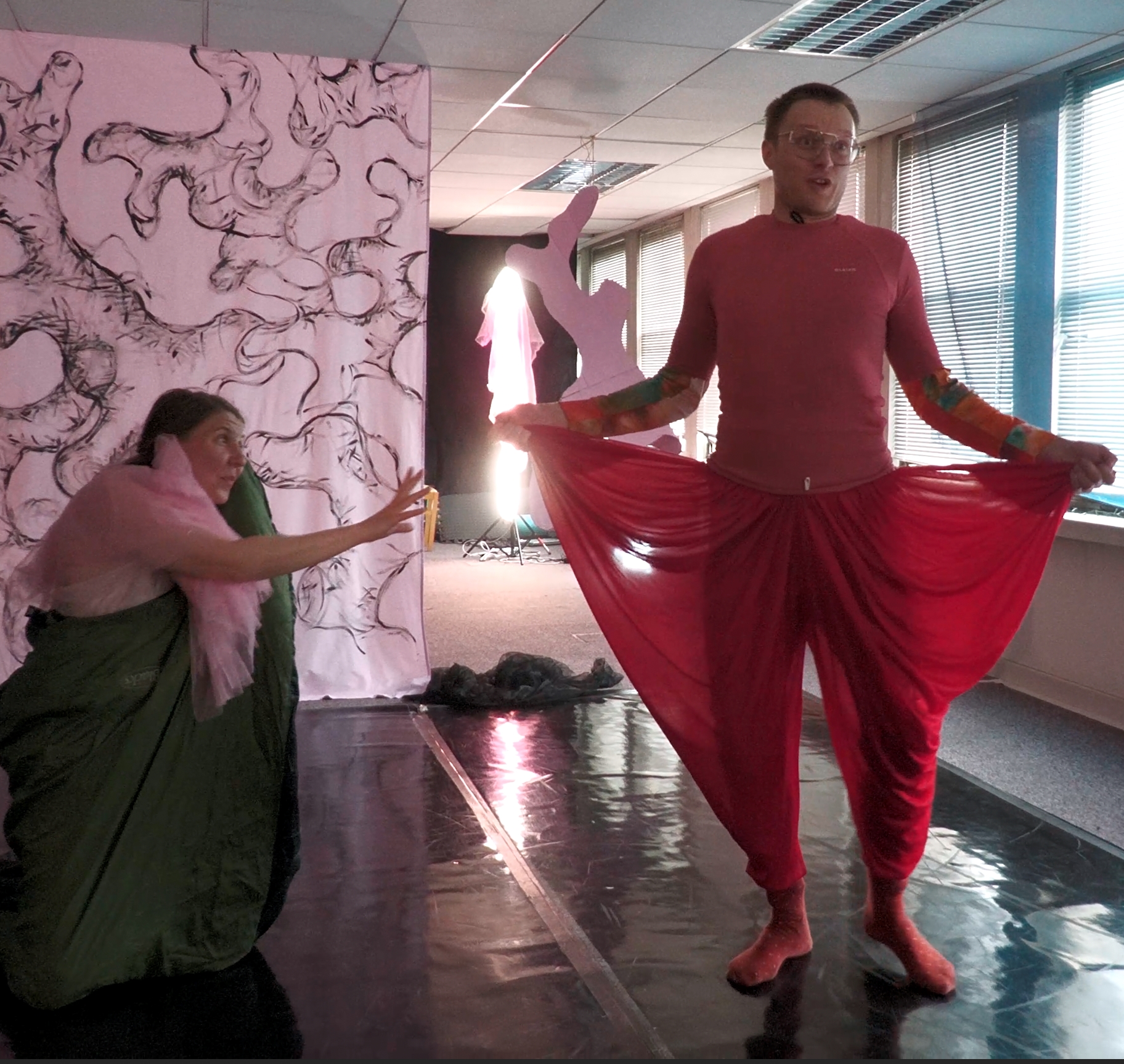
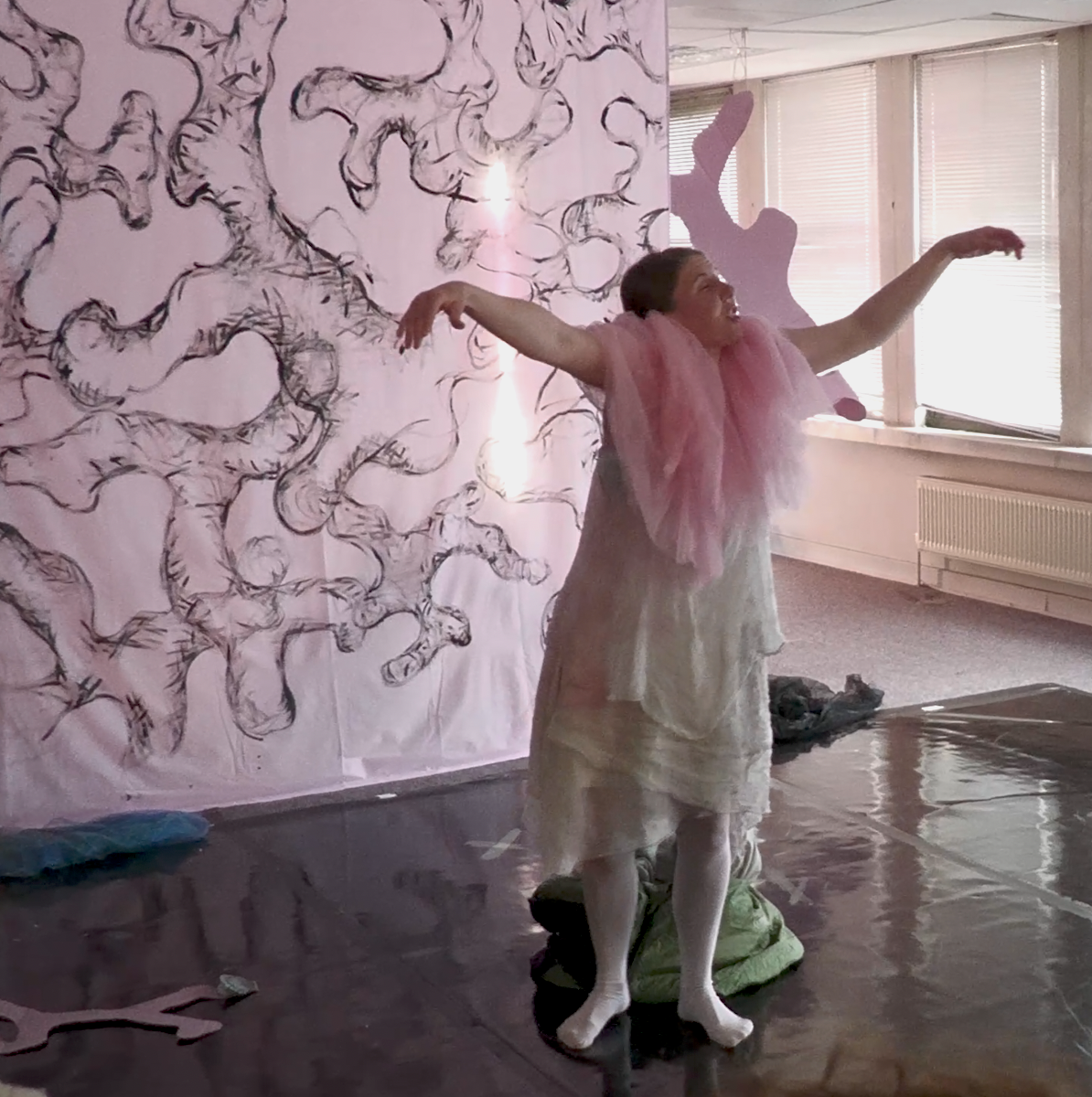
By the beginning of May I was armed with rough scripts, scene plans, painted Maerl back cloths, various sized cardboard and paper-mâché Maerl pieces, pink and blue sheets of material and a few props. I dived into the Surge Scotland rehearsal space in Glasgow to try out my perambulating installation performance idea with producer Mahri Reilly and enthusiastic, creative performers Lewis Sherlock and Sita Pieraccini portraying a crab, octopus and sea-cucumber, with theatrical critique from Alan Richardson (SURGE director). An exciting full-on experience working out performance possibilities.
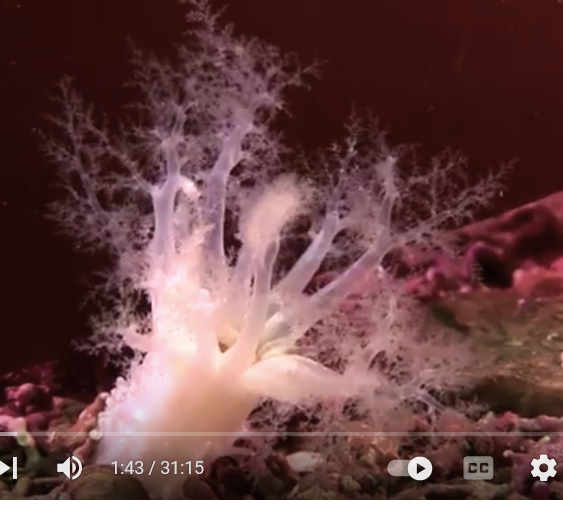
An invited audience were enticed by the Crab tour leader, to enter and explore the Maerl eco-habitat, trying out constructing with pieces of Maerl and to meet the singing and dancing Sea-cucumber celebrity. Here, they experienced the loud threatening sound of the oncoming dreaded dredger and to find and meet the sheltering Octopus, a dredger veteran. They then entered and relaxed in the protected Maerl Bed sanctuary, watching projected underwater marine life footage. The performance closed with the audience returning to shore through the devastated dredged Maerl bed they had explored earlier.
The audience feedback was very positive and will be invaluable to enable me to develop MAERL.
Many thanks to:
The audience – who took part. Please follow, share, comment & keep in touch! Producer – Mahri Reilly; Performers – Lewis Sherlock and Sita Pieraccini Physical Theatre Support – SURGE Scotland
I am excited to be starting a new project this January MAERL: an art science research and development project, the seed of which I’ve had in mind for many years and has arisen out of my passion for seaweed and coastal ecology.
Maerl, is a coral-like seaweed that grows on the seabed of Celtic inshore waters and is massively important to our marine ecosystems, unfortunately it is rarely seen and is under threat.
With the support of an award from Creative Scotland, I am now looking into the life story of Maerl, to understand its crucial environmental value above and below the ocean surface.
I will be envisaging and testing out cross-art-form and performative ways to tell Maerl’s story, in an accessible way. To help me do this I am delighted to have project support of Maerl expert and Professor of Marine Biology, Jason Hall-Spencer, Producer, Mahri Reilly & Theatre Mentors, SURGE
My aim is for this R&D to result in a pre-production treatment, with a view to a future performative/installation production. I want the end MAERL production to be accessible to all and excite people to care about Maerl and ocean sustainability.
Please follow my Maerl research and development journey over the next 6 months with regular image updates on Instagram @juliabartonartist
Thanks to funding from Creative Scotland’s Open Fund for Individuals
Strong winds and high tides battering the shorelines of the North-West Highlands this October have washed up a host of small pebbles to ponder. Encrusted with the hard chalky forms of the shells of filter-feeding marine organisms the surfaces of these pebbles appear richly decorated.
Anchored shells, protective living spaces for small organisms with static lifestyles, are located predominantly in the turbulent littoral zones and are built by the larval stages of organisms to anchor themselves to rocks, concrete seawalls, boats, marine litter, and even seaweeds.
Secreting calcium rich substances they model tiny, calcified homes, in conical, tube and spiral forms. Some, including barnacles, have ‘trap doors’ that close at low tide for protection against predation and water loss.
Acorn barnacle colonies can cover and change the appearance and surface texture of hundreds and even thousands of square metres of the most exposed shoreline rocks.
For several days I have observed three annelid worms (RHS image) extending their fan-shaped arrangement of tentacles out of their tubes to filter the water to feed.
There are many variations of marine ‘calcified houses’. One of the annelid worms makes longitudinal structures with a top ridge; the shell is up to 20mm in length, roughly triangular in cross section and the segmented worm lives within the inner circular tube.
Magnifying collected seaweed samples on my observation table revealed the tiny calcified spiral shells of the filter feeder Spirorbis spirorbis. Each sinistrally coiled tube is only 2mm in diameter, appearing as tiny white specks on the fronds of wracks, which I have often missed. I now see them as perfect examples of calcified shelters, bespoke marine homes demanding closer inspection and study. Sculpturally inspiring.
Inspired by coastal ecology and sustainability and lucky enough to live and work on Scotland’s NW Highland coast, most of the materials I work with are collected from the shores, between the low and high tide lines the ‘littoral zone’
Printmaking plays a central part in my visual art practice. It is integral and essential to my understanding of the materials I find and use, whether natural or man-made.
My choice of printing techniques is inspired by the nature of the material and location I am working in. When on the road, sometimes simple ink pad pressings are useful to quickly record detailed plant forms and seaweed samples. I also employ a manual pasta roller machine, for its calibrated efficiency on tougher grasses and seed pods.
Sedge grass print
These more immediate printing methods often serve as a way to get to know my natural materials whether depicting plant forms or marine algae, but most of my detailed botanical printmaking takes place in my studio on my roller press.
Pelvetia canaliculata
In order to print from contrasting man-made materials such as marine plastic, for example in my LOST exhibition, repeated adjustments to the plates are required to achieve the desired detail. The type of polymer of each plastic item dictates whether I use a hydraulic press, or a roller press. For example creating prints from plastic drinks bottles required pre-cutting and flattening under my van wheels before printing.
LitterCUBE prints, LOST exhibition, Summerhall Gallery, Edinburgh Science Festival2023
This summer I am experimenting printing from a series of seaweed weaving’s made with textile artist friends Marcia Weiss and Ed Thomas.
I will be teaching a botanical printmaking workshop in Dorset September 30 2023 and holding a studio event in November which will also be available to view online. A selection my prints will be on sale at both events.
Bookmark Nature
Saturday, 30 September 2023, 10:00 – 13:00
Studland Village Hall, Studland, Dorset, BH19 3AE UK
As the winter storms ravage the shorelines, I am enjoying re-visiting images of seaweed specimens in my installation at the Isle Martin Seaweed Festive 2021. The 12 glass tanks provided perfect viewing for close inspection.
I braved the wild west coast weather to collect a new sample of wrack (see below). Local marine scientist Ailsa McLellan has identified the pink gelatinous ‘sacks’ colonising the wrack as Baked bean ascidian, Dendrodoa grossulariape a type of sea squirt.
Taking up a great invitation to show my Climate Action exhibition L O S T as a part of the Portobello ArtWalk 2022 this month, I had the opportunity to install my #LitterCUBES within the historic Portobello Brick Kiln, set back from the seafront and the sandy beach where I’ve collected hundreds of washed up cotton bud-sticks, that went into the making of two of the smallest#LitterCUBES.
Portobello Brick Kilns A fascinating venue whose form provided a link to the hundreds of drinks bottles in 3 of the largest #LitterCUBES
Working in alternative spaces such as the kiln, rather than in a gallery is always exciting and challenging.
The kiln’s small 5m diameter floor space was a logistic challenge in which to show the 18 CUBES, a projection screen and information. My chosen plan had #LitterCUBE 1 (drinks bottles) positioned in the centre of the kiln, with the other 7 largest CUBES set behind this CUBE around the wall directly behind it, ensuring space for visitors to move around the kiln.
The screen, being set above these CUBES and opposite the entrance, allowed passers-by to glimpse a view of the work and to cast a little light onto the CUBES.
By far the largest challenge was how to light the work well, in a space off-grid, that only has two restricted natural light sources, the chimney and doorway.
The chimney channelled a limited amount of light into the centre within a very small radius. The light, entering through the doorway, was extremely variable during the day. Often the space was very dark in the morning and then blasted with light in the early afternoon if the sun was bright.
I originally planned to use low wattage spot lights running off a 12v battery, but testing out the spots, the light gain was limited and the cabling was distracting and couldn’t be hidden.
After much discussion with the ArtWalk team who had seen work in the kiln before, I decided to embrace the low light, but to supplement it at significant points, using photographic lights and torches to highlight the work. Part of the lighting solution also came from the visitors using their phone torches, plus my LED solar and wind-up torches. This minimal battery-operated lighting worked amazingly well and kept the very special atmosphere of the kiln as a part of the visitors’ experience.
Wonderfully, over 200 people visited the exhibition over the two event days, 20 people managed to fit into the kiln to hear me sharing the journey of making the #LitterCUBES, and calculating the energy value held within the 18 #LitterCUBES using the ‘Embodied Energy content’ formula – 250 litres of oil. We went on to discuss how we are now (at last) getting more conscious of the importance and need to take #ClimateActions. Primarily to reduce the energy we use and how to do this we need to quantify the amount of energy that we use and waste. Also, our discussion made me want to try calculating the energy used in showing this collection of work over the 2 days, especially given the exhibition aim to show the energy LOST in plastic waste.
It is a calculation, which wasn’t feasible when showing the work in the large arts centre of Eden Court, Inverness, but it is a question that I am increasingly conscious and concerned about. With the help of friend and scientist John McIntyre we have calculated the Energy used in the Kiln during the 2day event to be: Total energy use 0.326 kWh
Below is our simple energy sum, with each item running for a total of 12hours
Mini projector used over 2 days 150 Wh
Photographic lights used over 2 days 150 Wh
LED torches (1) used 6 AA batteries in two days. So 6 x 3.12 = 18.72 Wh
LED torches (3) used 9 AAA batteries in two days. So6 x 1.2 = 7.2 Wh Total Watt Hours (Wh) used 150 + 150 + 18.72 + 7.2 = 326 Wh
Total 0.362 KWh
The equivalent of boiling just over 3.5 litres of water in an electric kettle.
The LOST exhibition is ready to be shown on or Off-Grid. Please help keep the #ClimateAction conversation going by sharing this post and getting in touch with any ideas of where LOST could be shown on or Off-Grid. I am happy to give talks about the project and run related events.
Many thanks for the support of Rosy Naylor, ArtWalk curator, additional photographs from Susan Grant and Ellie J McMasterand photo-editing by Veronica Vossen.
As the UK has been coping with wild fires, heat strokes and transport disruption this week as a result of the hottest days ever recorded, the link to the Climate Crisis is at last being acknowledged over 30 years on from scientists’ early warnings. The need for us to take action on the climate must surely be on everyone’s minds.
RECYCLE: World Environment Day Event, Exhibition talk (photo credit Neville Rigby)
The 18 #LitterCUBES contained a collective energy value of over 250 litres of oil, and this was the starting point for impassioned presentations from Julien Moreau and Andy MacVicar from Plastic Recycling Projects in the Highlands, both highlighting the need to reduce the vast quantities of waste plastic we are generating and exporting across the world. They argued for working together to recycle our plastic in a decentralised way, close to the source (towns /beaches) to make products needed locally, which would in turn save energy and generate jobs.
On World Environment Day in June, (another very hot day) 40 people came together at my LOST exhibition at Eden Court, Inverness to see evidence of Plastic Waste (in this case marine Plastic Litter), one factor contributing to the #ClimateCrisis.
Event participants came up with masses of ideas for items which could be made out of recycled waste plastic including building materials, benches, planters, play equipment, seats, agricultural/garden materials and equipment and which in turn would contribute to creating a Highland Circular Economy.
Our final talk was by scientist John McIntyre, who gave a hard-hitting global overview on our Climate Crisis and the link to our energy consumption urging us to do less and use less! This proved a great starter to our brainstorming session. Event participants and visitors to the exhibition shared the Climate Actions they are taking and intend to take, the most common being recycling, using shared transport, growing food, buying more carefully e.g. second hand, recycled and locally produced goods.
A plea for more opportunities to share information about energy use and sustainable environment options was repeated and calls for each of us to tackle companies/governments and protest!
Our Ocean Plastic Skipping ropes on display,collaboratively made by Plastic@Bay, GreenHive and myself, ticked many of these boxes and proved a good example of the process of recycling plastics and a great break out opportunity for the afternoon and at the following World Ocean Day Events which took place on the Cromarty and Poolewe shorelines. During the events over 3,000 jumps were made – proving the draw that simple #Greenfitness activities can have and the fun that can be had without expending fossil fuels! read more
The MAKE – World Ocean Day events proved a great success with enthusiasm from the local Cromarty and Poolewe communities, including the Primary schools. The workshops were run by myself and Fiona McKenzie (Aberdeen Science Centre ) and began with thinking about the importance of the Oceans and reasons for looking after ocean environments and how Bio-plastics might help reduce the problem of Marine Plastic Litter.
Our central activity was a BIG SEAWEED EXPERIMENT with over 40 people joining in to mix and cook various types of seaweeds, setting agents (starch), plasticiser (glycerine/honey), and fibres such as wool, grasses, straw and linen to make a fascinating array of bio-plastic samples (results to follow on Instagram).
It was an extremely ambitious event, very messy and at times wet and cold, but it was great fun with observational seaweed activities – using microscopes and chrome books in the tent-labs
Head teacher Natalie White said that the “M A K E workshop was a really great piece of partnership work. The children really enjoyed experimenting making seaweed plastic and were inspired to make a brilliant video about the workshop.”
I feel the LOST #ClimateAction project is keeping the #COP26 #ClimateCrisis story moving forward here in the Highlands. In total over 300 people visited the exhibition and nearly 100 attended the LOST events, many of whom left positive responses for Art as a way of encouraging Activism.
Many new connections have been made and ideas set in motion for follow up events both here and further afield. Please get in touch if you know of any venues and funding that would help me tour the work.
Looped exhibition film projection-the dripping-away of the energy embodied in the 18 #LitterCUBES
The LOST exhibition artworks were made with the kind support of individuals through Crowd Funding, Project donations from Trusts: Schiehallion Group, Rag, JA Clerk, Ullapool Harbour Trust, Coigach & Assynt Living Landscape Partnership, North Light Arts, Easthaven Together. Company donations: Eyemouth Marine, Neighbourly TK Max, John Lawrie Group. In-Kind donations: Dunbar Harbour Trust, Ullapool Harbour Trust, Eyemouth Harbour Trust, Eyemouth Hippodrome, SPLASH, Shetland Marine College, JJ Jamieson, Shetland Museum & Archives, The Swan Trust, An Talla Solais, North Link Ferries. Grants: Arts & Business Grant (Shetland), Shetland Council.