Structure & Surface

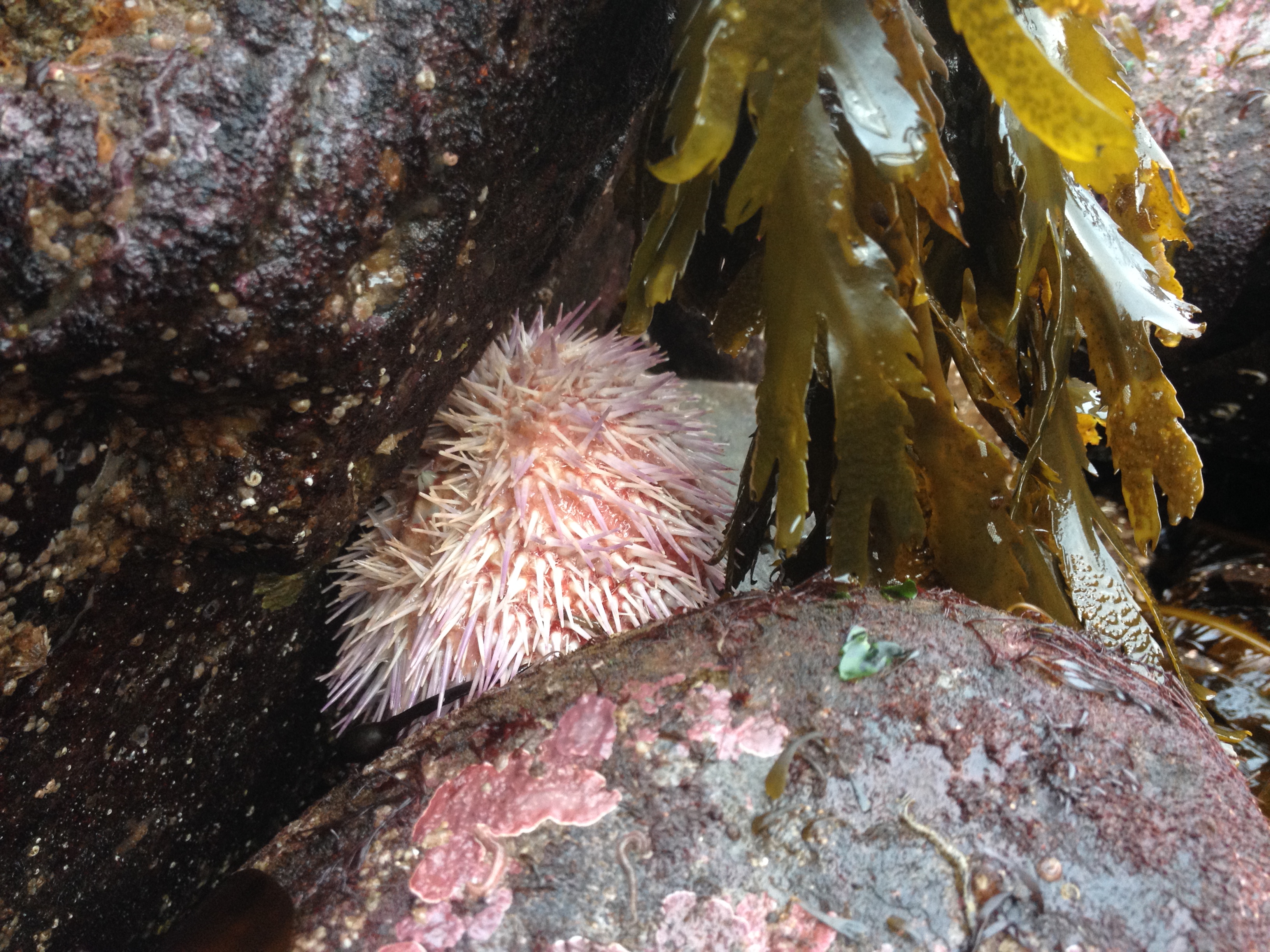
Strong winds and high tides battering the shorelines of the North-West Highlands this October have washed up a host of small pebbles to ponder. Encrusted with the hard chalky forms of the shells of filter-feeding marine organisms the surfaces of these pebbles appear richly decorated.

Anchored shells, protective living spaces for small organisms with static lifestyles, are located predominantly in the turbulent littoral zones and are built by the larval stages of organisms to anchor themselves to rocks, concrete seawalls, boats, marine litter, and even seaweeds. 

Secreting calcium rich substances they model tiny, calcified homes, in conical, tube and spiral forms. Some, including barnacles, have ‘trap doors’ that close at low tide for protection against predation and water loss.  

Acorn barnacle colonies can cover and change the appearance and surface texture of hundreds and even thousands of square metres of the most exposed shoreline rocks.

For several days I have observed three annelid worms (RHS image) extending their fan-shaped arrangement of tentacles out of their tubes to filter the water to feed.

There are many variations of marine ‘calcified houses’. One of the annelid worms makes longitudinal structures with a top ridge; the shell is up to 20mm in length, roughly triangular in cross section and the segmented worm lives within the inner circular tube.

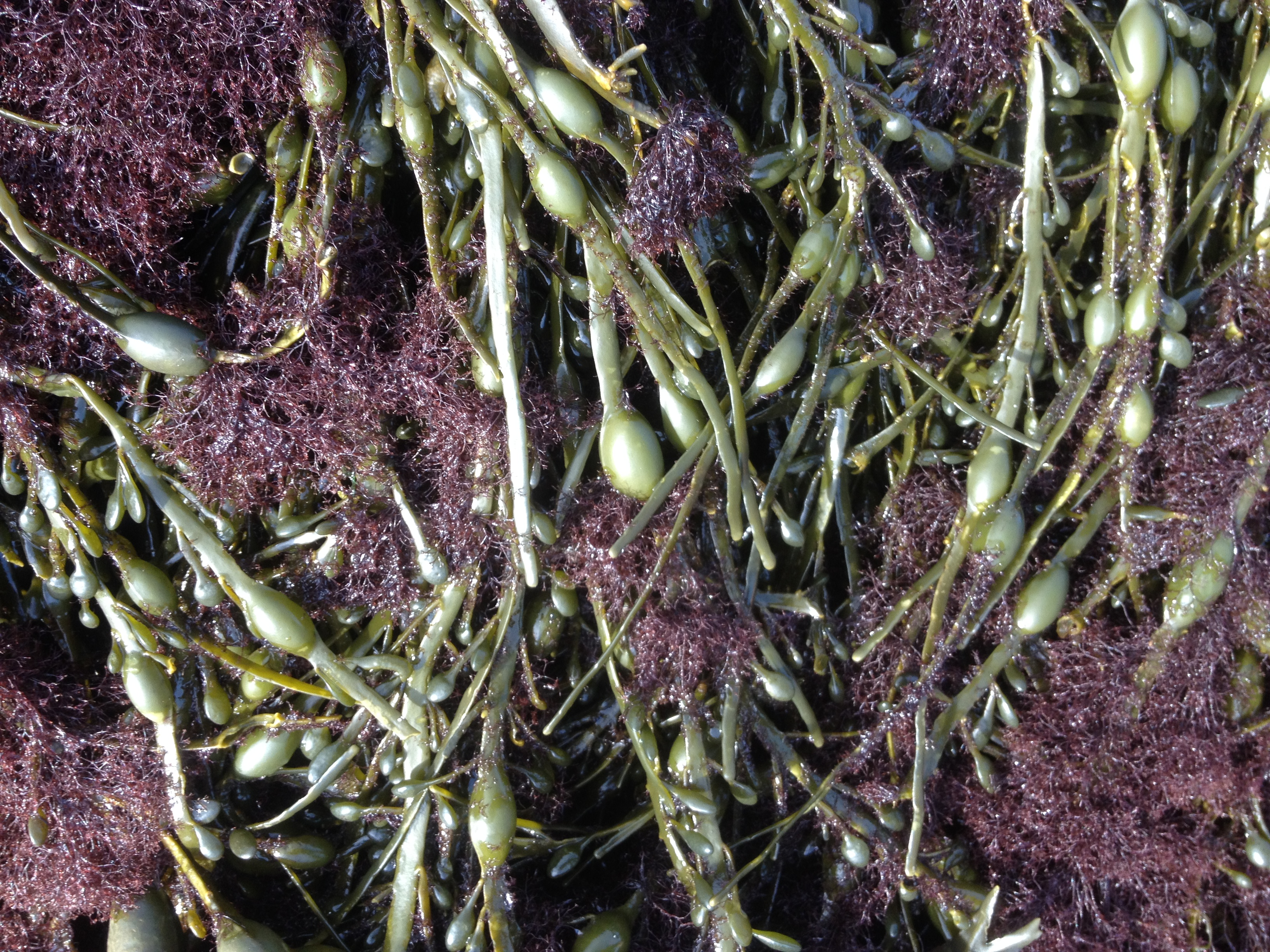
Magnifying collected seaweed samples on my observation table revealed the tiny calcified spiral shells of the filter feeder Spirorbis spirorbis. Each sinistrally coiled tube is only 2mm in diameter, appearing as tiny white specks on the fronds of wracks, which I have often missed. I now see them as perfect examples of calcified shelters, bespoke marine homes demanding closer inspection and study. Sculpturally inspiring.

#artistsobservations #marinearchitecture #calcifiedshelters #rockyshoreline #segmentedtubeworms #caciumcarbonate #seashores #shells #seashells #sealife #biodiversity #ecosystem #coastalwaters

Printmaking

Seaweed textile exploration

Inspired by coastal ecology and sustainability and lucky enough to live and work on Scotland’s NW Highland coast, most of the materials I work with are collected from the shores, between the low and high tide lines the ‘littoral zone’

Printmaking plays a central part in my visual art practice. It is integral and essential to my understanding of the materials I find and use, whether natural or man-made. 

My choice of printing techniques is inspired by the nature of the material and location I am working in. When on the road, sometimes simple ink pad pressings are useful to quickly record detailed plant forms and seaweed samples. I also employ a manual pasta roller machine, for its calibrated efficiency on tougher grasses and seed pods.

Sedge grass print

These more immediate printing methods often serve as a way to get to know my natural materials whether depicting plant forms or marine algae, but most of my detailed botanical printmaking takes place in my studio on my roller press.

Pelvetia canaliculata

In order to print from contrasting man-made materials such as marine plastic, for example in my LOST exhibition, repeated adjustments to the plates are required to achieve the desired detail. The type of polymer of each plastic item dictates whether I use a hydraulic press, or a roller press. For example creating prints from plastic drinks bottles required pre-cutting and flattening under my van wheels before printing.

LitterCUBE prints, LOST exhibition, Summerhall Gallery, Edinburgh Science Festival 2023

This summer I am experimenting printing from a series of seaweed weaving’s made with textile artist friends Marcia Weiss and Ed Thomas.

I will be teaching a botanical printmaking workshop in Dorset September 30 2023 and holding a studio event in November which will also be available to view online. A selection my prints will be on sale at both events.

Bookmark Nature

Saturday, 30 September 2023, 10:00 – 13:00

Studland Village Hall, Studland, Dorset, BH19 3AE UK

Further information and to book visit:

https://www.thespace-online.com/events-index/bookmark-nature

info@yogaatthespace

Please follow https://www.instagram.com/juliabartonartist/ 

Please feel free to contact me to find out more.

Littoral reflection

Littoral reflection

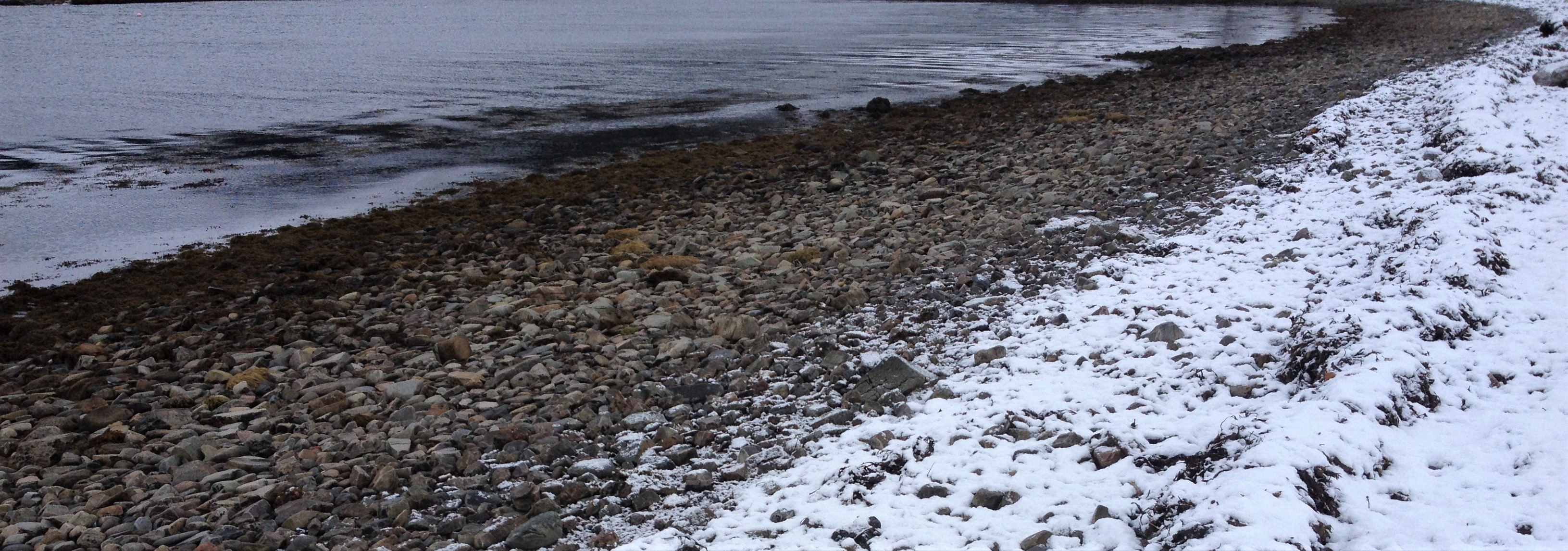
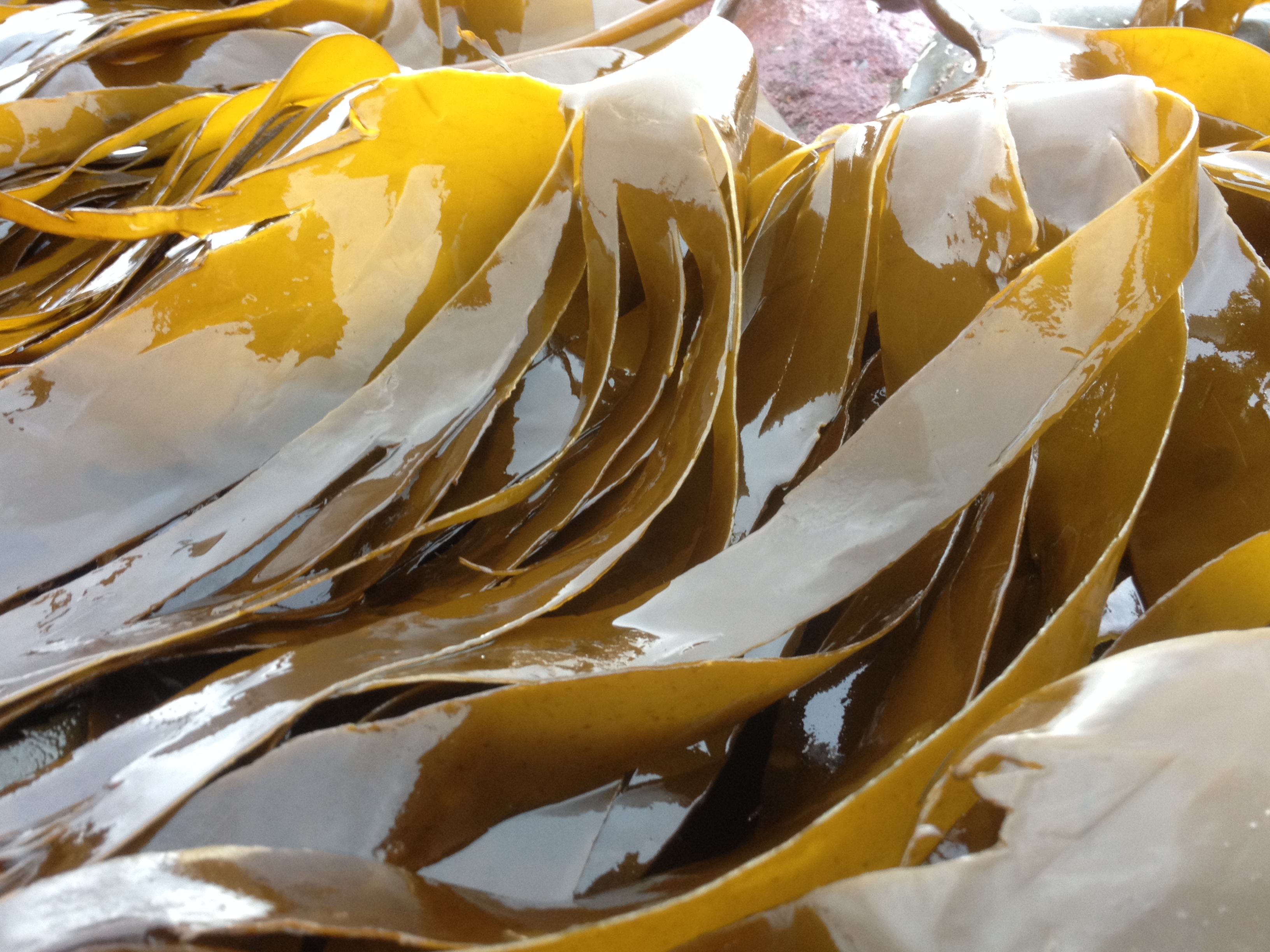
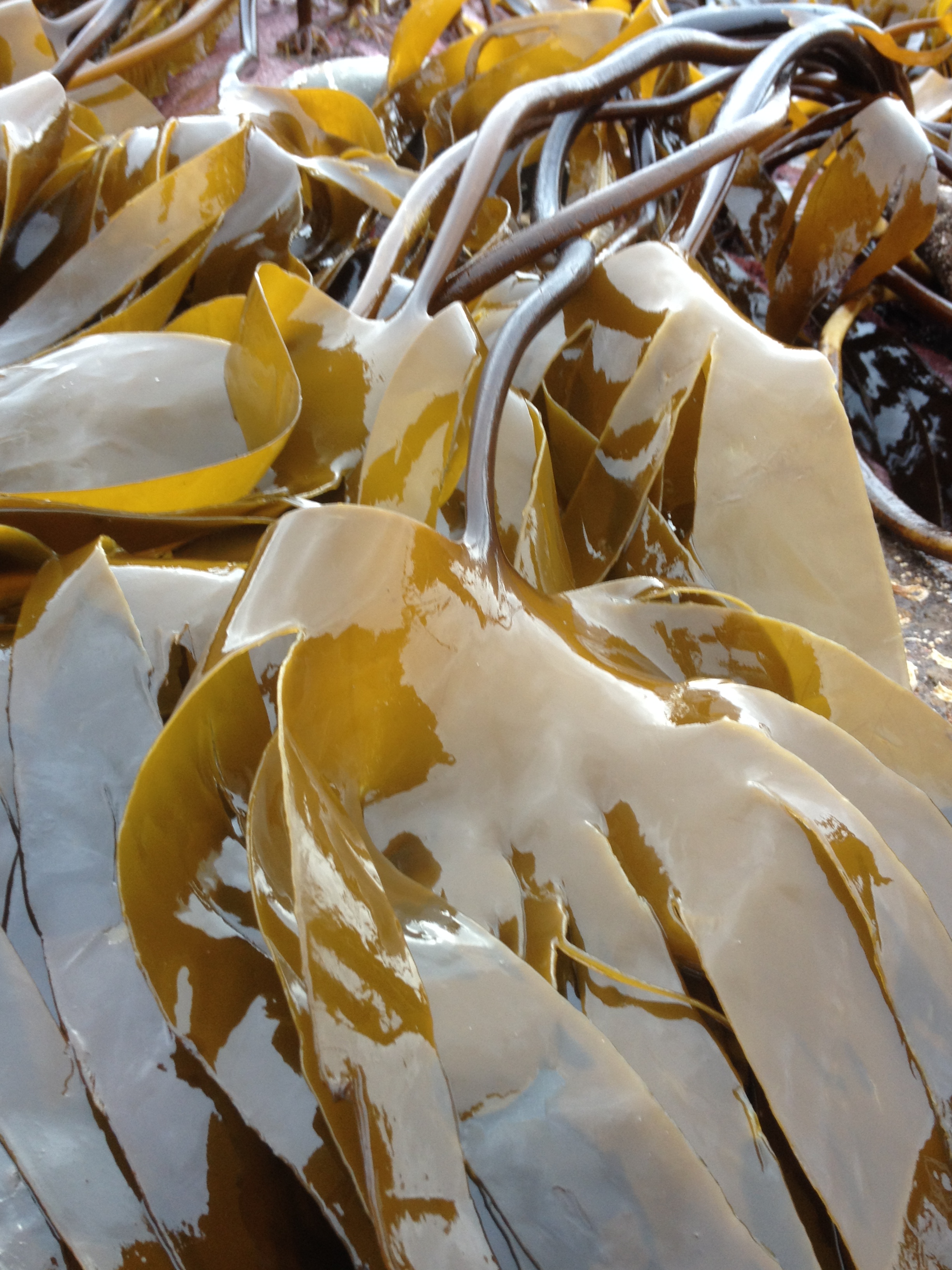
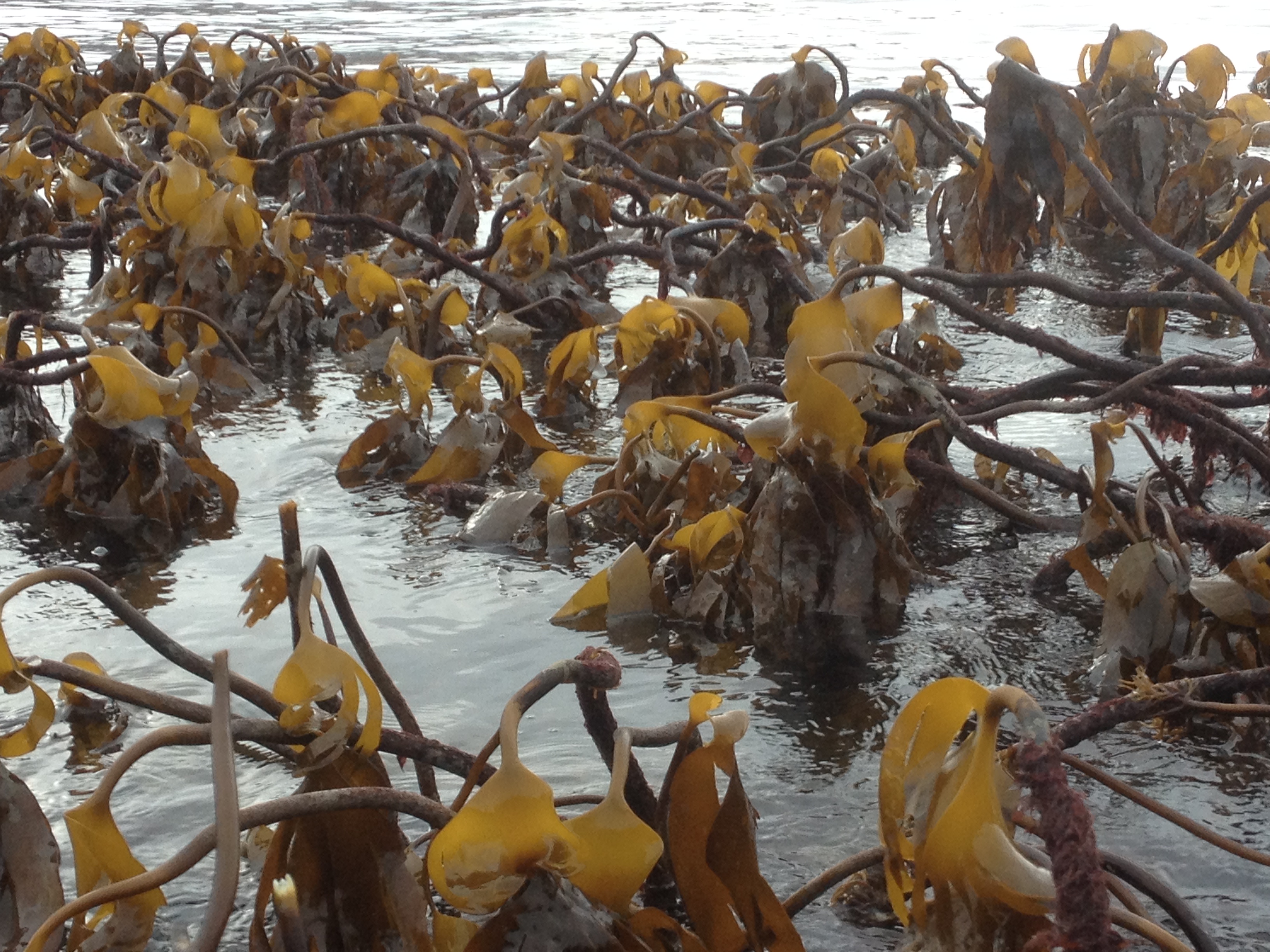
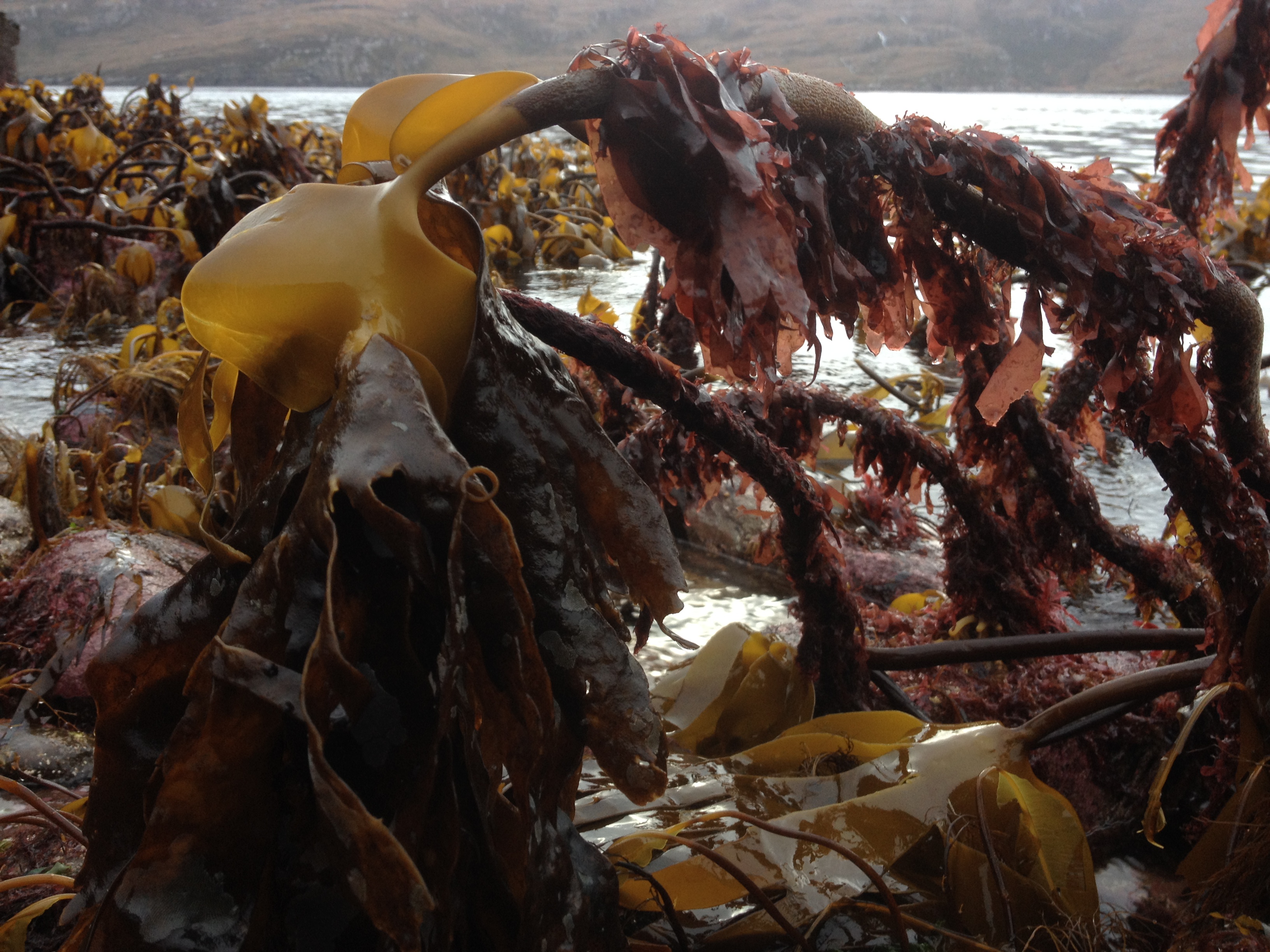
Winter snowfalls are providing a welcome respite from seeing strand-line plastic – allowing time for focusing on the natural forms of familiar Northern shorelines.   IMG_8703 (3)                         One of the lowest tides this winter took place on the 2nd February- allowing access to see some of the biggest and heaviest of our marine algae – Laminaria (Kelp) beautifully bowed over, shiny and relaxed in the slack water . IMG_8791 IMG_8790 IMG_8793 IMG_8798                 The ‘stand of the tide’ provided me the opportunity for a few hours observation of these brown  seaweeds. Close up its easy to appreciate that they produce the main plant material for the coastal food web. Anchored along the low water line and out into the sub-tidal zone the submerged kelp form ‘forests’ – a perfect habitat for fish, shellfish and other animals to get food and find hiding places. img006The rich biodiversity of our coastline is fascinating and clear to see when walking through this dynamic inter-tidal world/zone .

IMG_8800 IMG_8830 As the media begins to wake up to the ‘Plastic Pollution’ issue evidenced on our shore lines, I revel in my momentary ‘Plastic Free’ time in the Littoral Zones

reinvigorated  by many winter walks in this rich dynamic environment I am preparing to seek out support for my work – to visually tell the story of this important ecological CONTACT ZONE that is now constantly  battered and often smothered by our litter.

I am looking for online help to crowd fund for the next  phase of this project focusing on making work in public settings this year, to be toured to Harbours, Ports, Museums, Street Festivals next year. Please get in touch if you can offer any help by leaving a comment below or emailing me Julia Barton littoralartproject@btinternet.com

Shetland Notes 6: Birds

Tonight I take my leave of the Shetland Isles with Black Guillemot’s  diving in Garthspool harbour. Stepping onto the deck of the ferry I am able begin to unravel what I have learnt from my extraordinary Shetland expedition.Almost 8 weeks criss-crossing the Isles, examining beaches, collecting Plastiglomerate, filming  animation footage and leading workshops with pupils with 14 schools. On this journey my constant yet ever changing companions have been the wonderful bird life that fills the skies and extensive coastline.

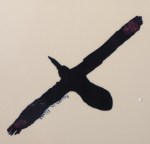
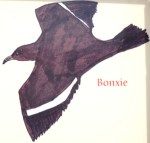
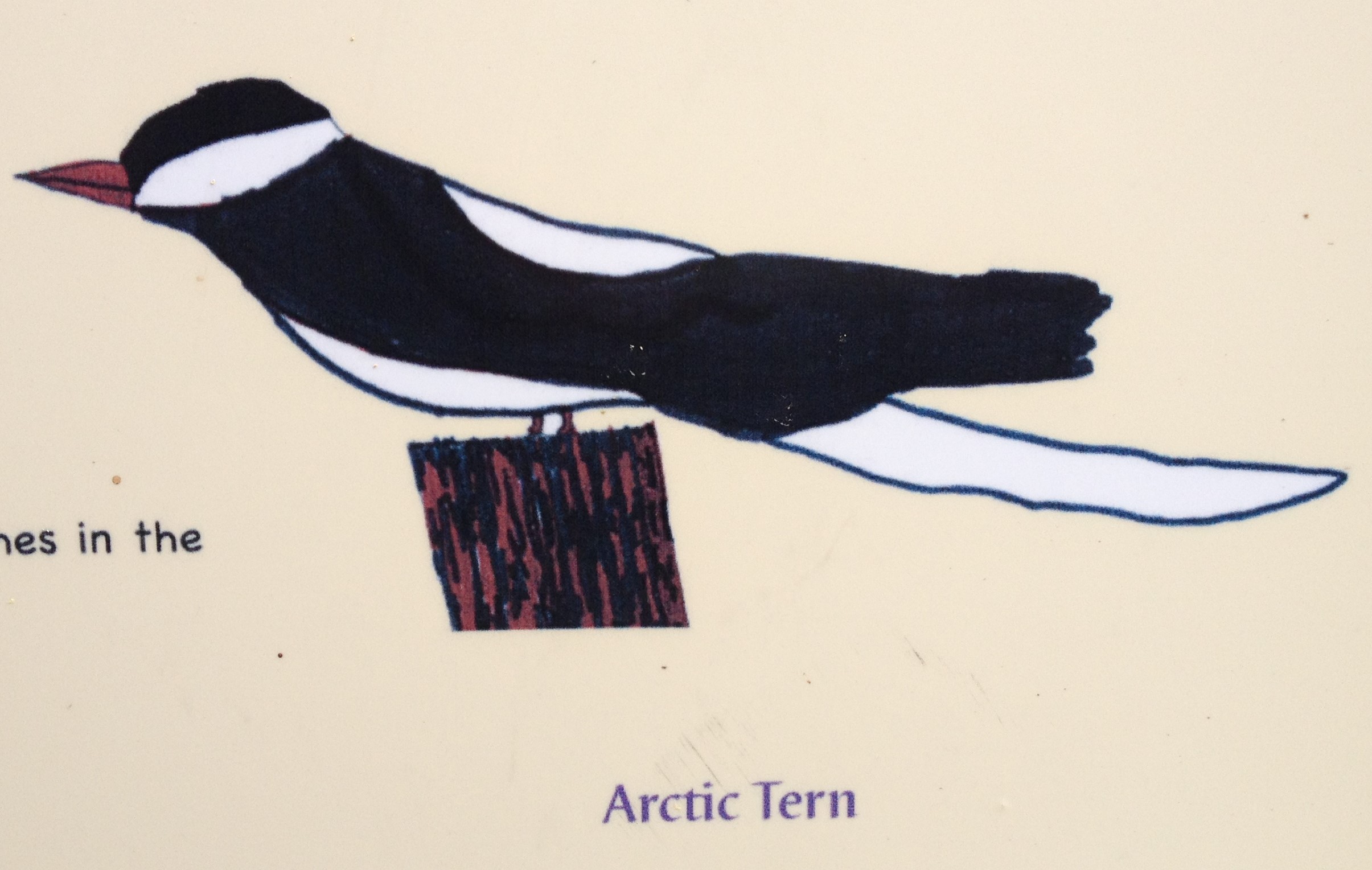
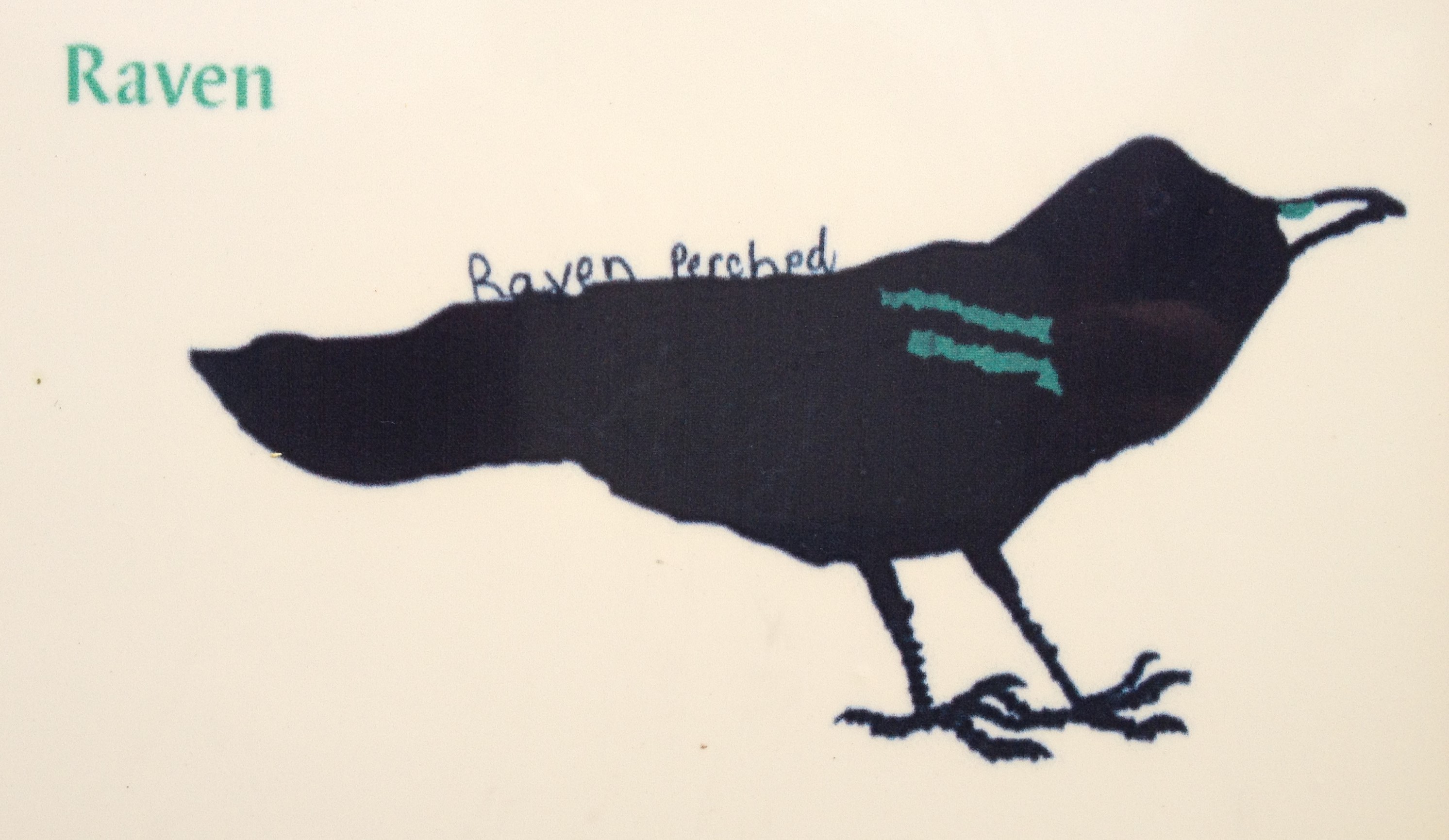
             Drawings above of a Common Gull, Raven and Skua (Bronxie) by Urafirth School Pupils

As the ferry swiftly leaves the dock and makes its passage through the Bressay Sound Arctic Terns dart across the prow of the boat and Fulmars fly down skimming  the seas surface dipping to pick up food.

IMG_1882Steaming down the east coast of the isles I focus hard on the shoreline through the mist trying to recognise some of the beaches I have collected Plastiglomerates from and lead litter investigations on with pupils from 14 schools over the last 7  weeks. The first beaches I spot are effectively the small town beaches (less thean 50m long)  there are many of them tucked in between buildings with a  small tidal range.

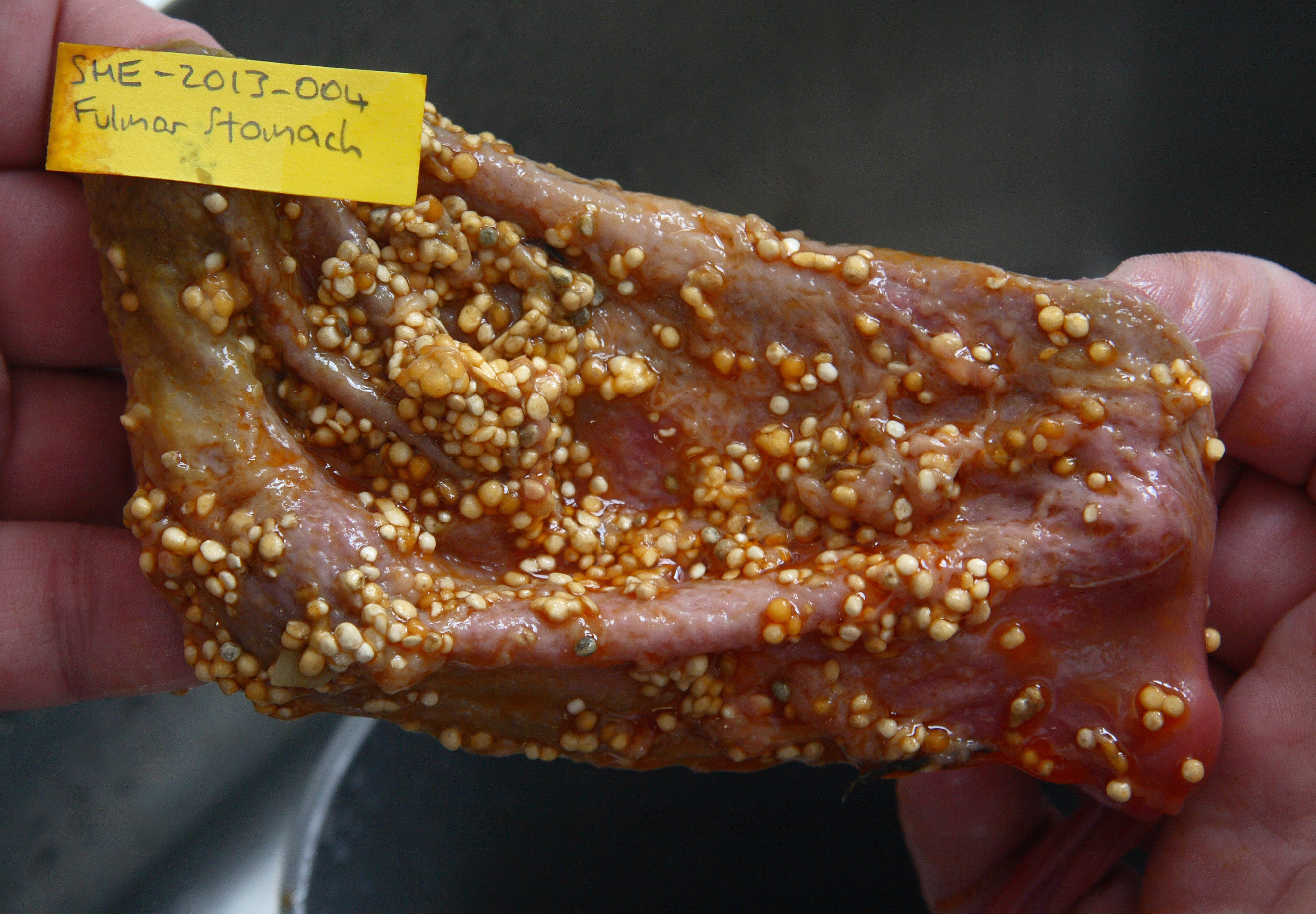
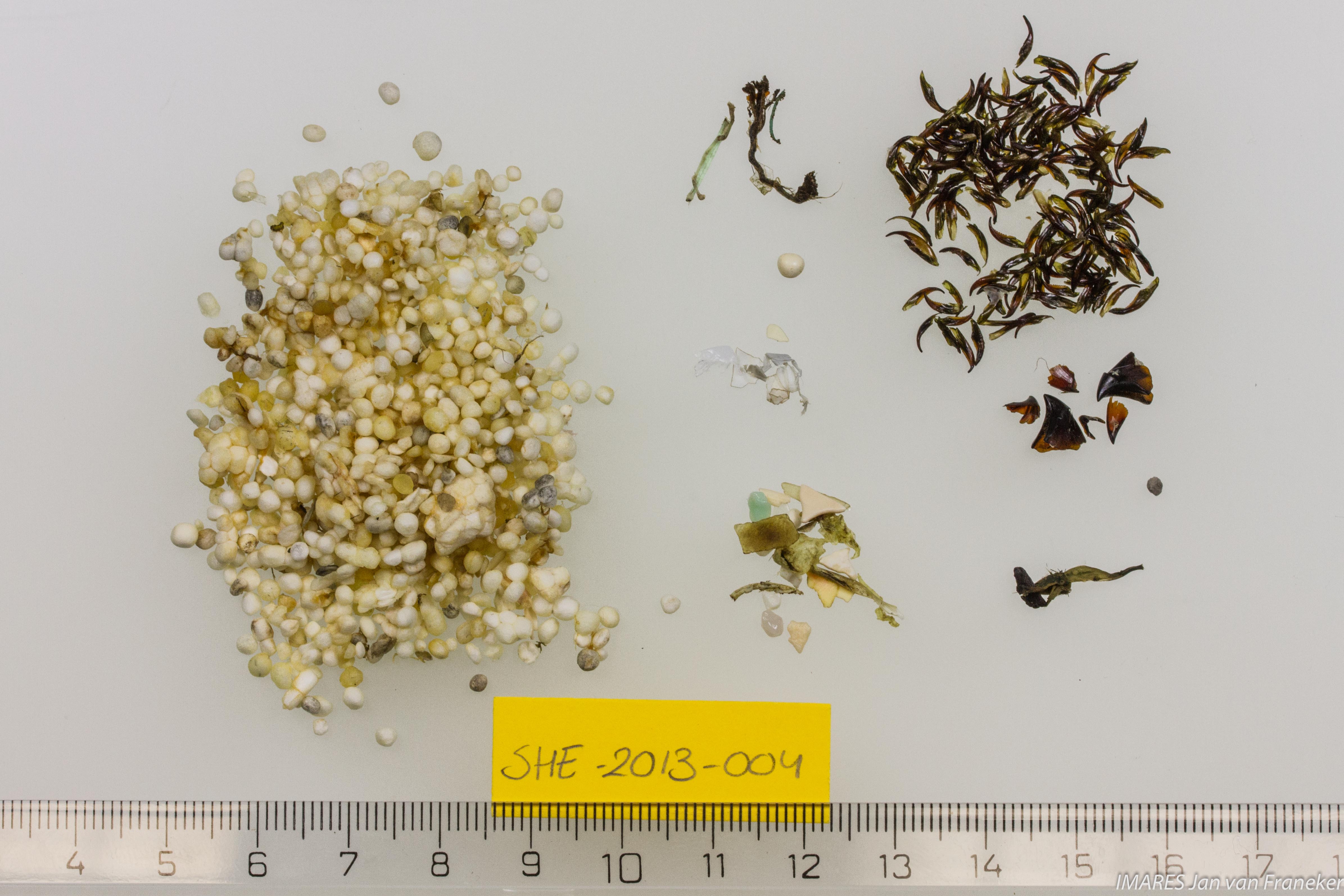
We soon pass by the Voxter beaches of stone and shingle then Hoswick  beach were we examined the beaches with local Sandwick School pupils, collected micro-plastics from the beach and considered the disturbing images (below) taken by a scientist Jan Andries van Franeker who carried out an autopsy on a Fulmar found locally on Shetlands south mainland.

130611-IMG_8518-Dove-Lab-SHE-2013-004-stomach-v2  Shetland-HD-Franeker-G00637

The dead Fulmar had over 9oo polystyrene beads plus small pieces of plastic and nurdles. Fulmars  feed on the surface of the sea and understandably mistake the polystyrene and plastic pellets/pieces for fish eggs. The result of eating so many piece of plastic is starvation as the bird thinks its full. Fulmars also feed the plastic to the chicks. The extreme dangers of micro plastics to bird life was central to our Close Examination workshops and was carefully explained by my workshop colleague Jane Outram the environmental officer of the Shetland Amentity & Guide at Sumburgh Head Lighthouse (bird observatory). Jane has been a great bird knowledge and has been an invaluable project colleague  who has helped me to facilitate the workshops and help me  differentiate  the numerous type of  waders, gulls and .

IMG_1886

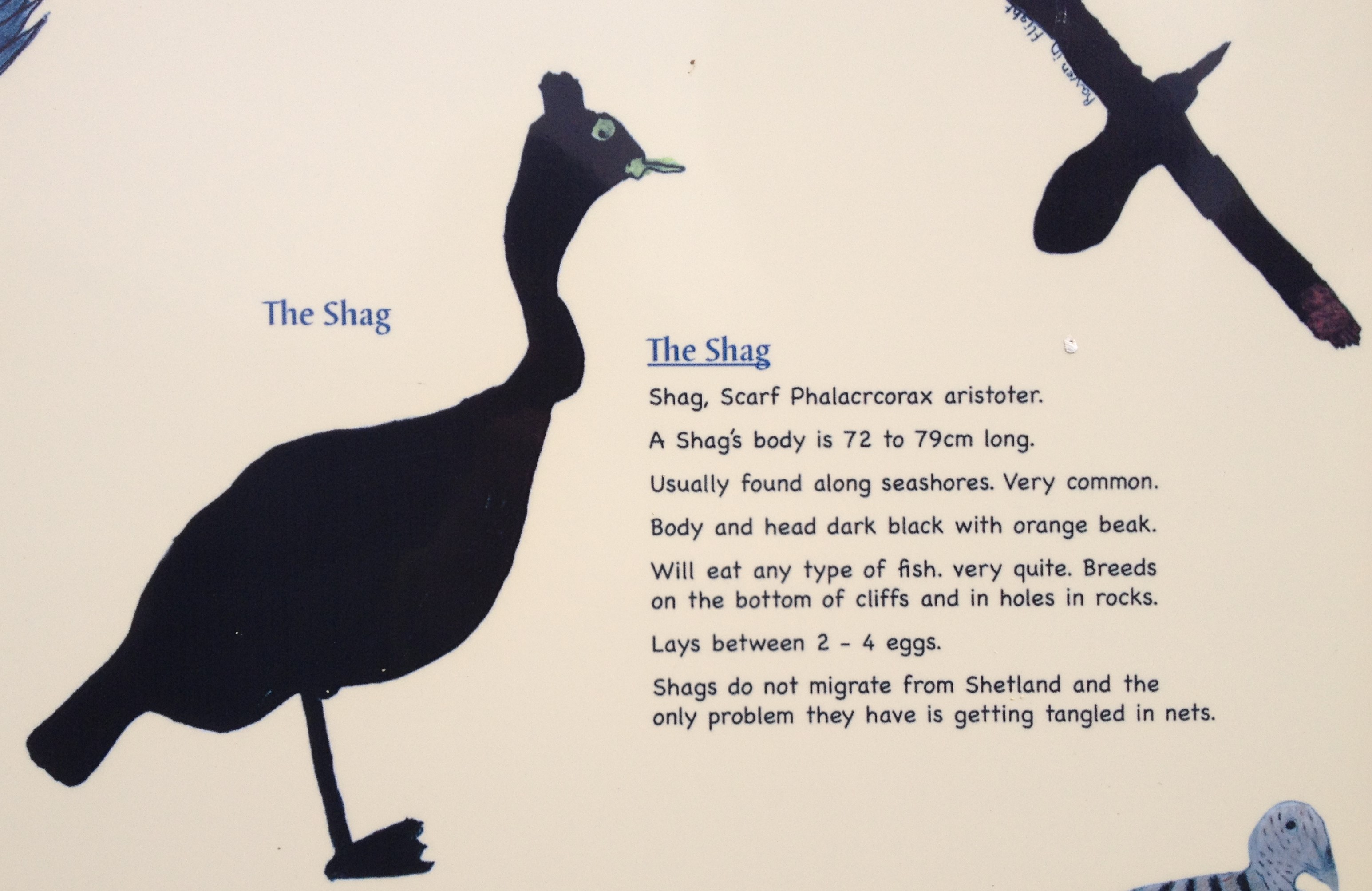
We have both been delighted and impressed by the children’s knowledge of birds while delivering the educational workshops. The Urafirth Primary Schools beautiful  illustrations used here are taken from the schools notice board which names the birds seen around their school and points out the dangers that face specific birds  like the Shag below,  from beach and marine plastic litter.

IMG_1888 (2)

Shetlanders are rightly proud of the vast aray and number  of bird and  wildlife that lives and visits the islands throughout the year. I have delighted in being able to witness this at close hand  as I criss-crossed the islands visiting beaches and schools. I have caught sight of otters cruising along the Grathspool harbour wall (Lerwick) at sunset and Red-throated Divers diving in the afternoon sunlight on Voes out west.

As MV Hrossey ploughs through the North Sea I try in vain to photograph a lone Gannet gliding  fast across the wake of the ship which is broken up by the fresh north easterly.

sea wake

As we pass by  Sumbrugh Head cloaked in cloud after  weeks of continual sunlight. I reflect on the fascinating natural beauty of Shetland and the dangers that wildlife and Birds are facing here and around the world given the increasing volume of plastics in the oceans and on the beaches.

Birdlife: (top) melted plastic rope,  (LHS) Guillemot egg on Yell,  (RHS) waders eggs increasingly exposed as nests change from muted brown to brightly  coloured

With such images in mind  I leave with an even greater determination to make work that envisages this environmental problem  in new and dramatic ways and  to stimulate  discussion and the need to act /change behaviours. I look forward to returning in September to install my work at Da Gadderie  Shetland Museum and Archives

Thanks to Creative Scotland for funding towards my animation and exhibition development work and thanks to Awards for All  and Zero Waste Scotland for funding for the educational workshops and to North Link Ferries  for help towards my travel.

CS logo 1 copy

Shetland Notes 5: Collecting

Shetland Notes 5: Collecting

As my expedition to Shetland enters its last few weeks I am travelling to as many beaches and foreshores that I can to examine the littoral zones and to collect Plastiglomerates.

IMG_1940

This morning I picked my way carefully along the tideline of Channer wick beach a steep pebble beach on the eastern side of Shetlands mainland keeping an eye out for waders nests and watching the Fulmar chicks fledging out of burrows set in the bank of the back beach while I myself was being in turn watched by three common seals basking close in to the shore line. Facing southeast this beach is cleaner than most beaches around the  Shetland/World though plastic litter is there  knitted into the raised  back beach landscape

My main aim is to collect up as amny of the Plastiglomerates I can find, so far I have found them on nearly every beach I have surveyed, even on the beautiful world renowned St Ninians (tabola), where they tend to be small fragments collecting usually at the south west corner of the beach.

My notes help me keep track of my finds, the type of beach, aspect amount of easily visible litter and the amount of  what I collect.

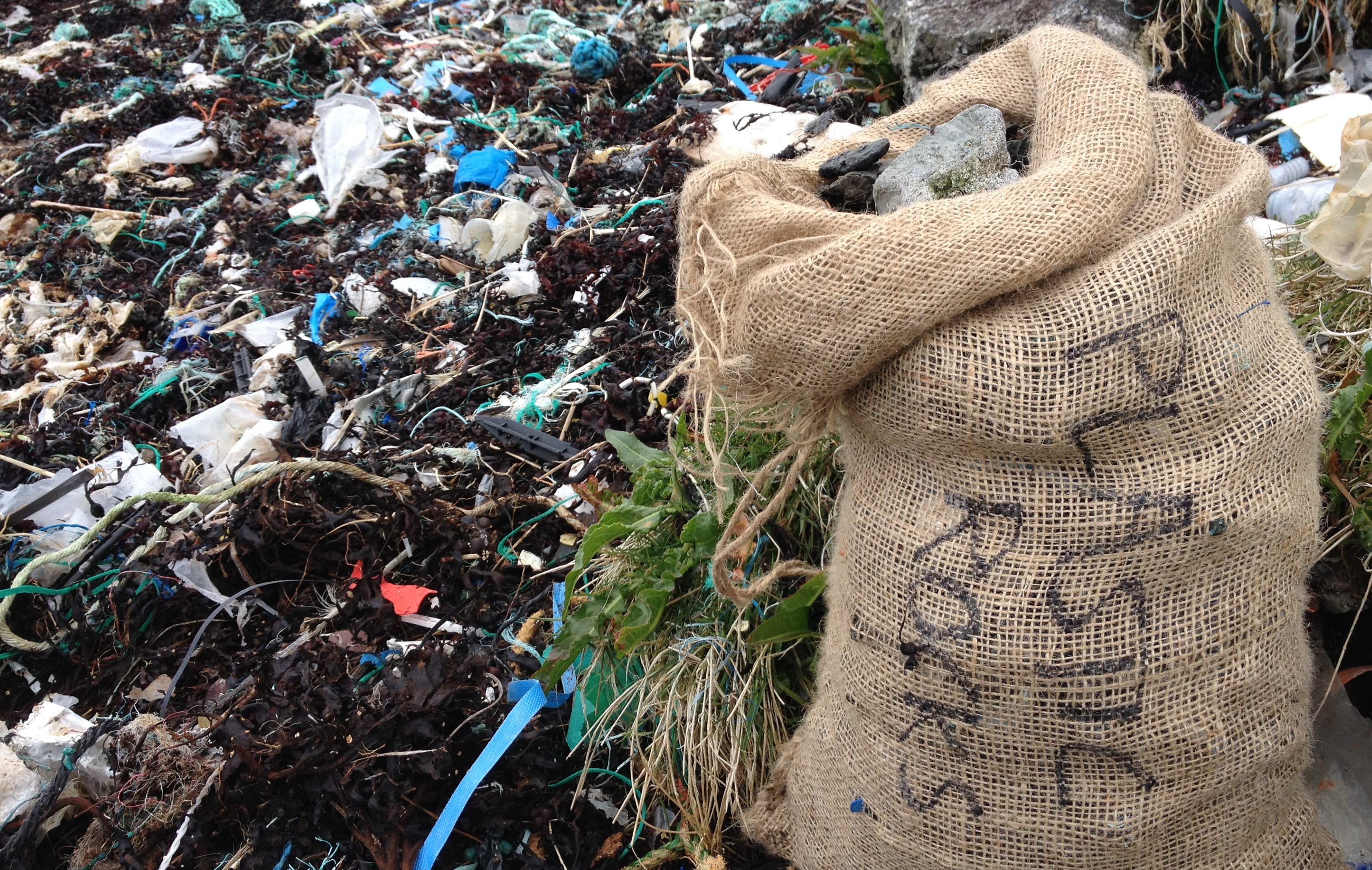
The numbers of sacks are a  crude summary of the amount of litter that each beach is subject to and the prevailing  tidal  flows and whether the  tidal flows are able to wash  the litter out to sea once it’s there or whether the landforms entraps the litter like at beaches such as Burrick (above left) where so far we have collected 6 sacks,  or at  Meal where I lifted several large slabs off the rocks,  or at Mangaster (below) and Mavis Grind  where the the Hightide lines are almost as deeply littered as at Burick.

IMG_1695 (2)

Mavis Grind is a significant point in Shetlands Geo Park  being a narrow isthmus between the Atlantic and the North Sea where boats were hauled traditionally from one side to other to avoid the long row around.  On my journey north today I intend revisiting Mavis Grind to try and understand  more clearly the significance of the landforms (Taings : tonues of land ) that entrap what the Atalantic and passers by leave. Connectivity permitting I will share my findings.

IMG_1694 (4)

Alongside collecting the Plastiglomerates  usually within the high tide zone, I have been taking small samples of sand/seaweed from the splash zones that evidently contain micro-plastics.  This week I will ask Higher school pupils on Whalsey Island to examine and compare samples taken from their own shorelines with those I have taken from around the Shetland Mainland.   I look forward to their observations creative interpretations and  wonderfully visiting another one of Shetlands 100+ Islands.

Shetland Notes 1: Docked

IMG_1280Firmly docked in Shetland I am now happily tied up with the Littoral Art Project for the next 2 months.   Many  Many thanks to North Link Ferries for their support and a smooth crossing on MV Hrossey.


IMG_1269

Greeted by a wintery day – I am glad to be back and  to begin making an animation film with JJ Jamieson and to lead educational workshops in partnership with Shetland Amenity Trust to schools and organisations across the islands. We will be investigating the longevity of plastic and ways to creatively help to reduce the waste that’s picked up off beaches every year. This week is the annual Da Voar Redd Up the UK’s biggest spring clean up, the beach clean event that I took part in last year with Scalloway  School

Burwick beach WS before DSCF9507 IMG_1293

On route to spend my first few nights on the West side of the mainland I stop to check out a beautiful beach Sand Sound, perfectly named.  On arriving I see the Redd Up bags mounded up with random objects on top car bumper with nets thrown over and meet nearby resident Mike Barnett collecting litter along the beach. Like thousand’s of other Redd Up volunteers this week he has been well at work picking up and bagging every type of beach litter.   You can see the great work that community members have achieved if you go to the Dunna Chuck Bruck   As Mike bows down picking up pieces of cord and rope in the  wind, he voices what many  volunteers over the past 4 years have said to me about litter picking ‘It becomes so addictive , especially when you know if you leave a piece by next year it will be broken down into 4 pieces then the next 8 pieces …..and on’

IMG_1302

This is a common addiction I sharealong with most beach cleaners i.e. the compulsion to keep going, picking up piece after piece even when you’re tired and its freezing cold and snowing like today! The compulsion is that the more you pick up the cleaner you leave it, which is of course true BUT sadly we know only too well it’s only a temporary fix.  The gratifying ‘high’ only lasts until the next spring tides

My aim in creating this project and travelling to communities on the frontline of the issue is to inspire us to find ways to reduce the waste in the system and to be more sustainable which inturn allows us to negate the need for this addiction.

Keep tabs on the Littoral story  by clicking  the follow button on this page and confirm with Word Press when prompted. Please pass the link on to as many people as possible and if in Shetland get in touch if you find any plastic rocks ‘Plastiglomerates’ like the ones below  as I am collecting them to use in my work and am happy to pick them up.

IMG_4456  Plastic Rock  Burn beach melted rope plastic rock reveal copy

In the meantime well done to everyone who has/is taking part in the Redd Up here in Shetland and all spring MCS Beach Clean events  around the UK !

CO2 Count

Having recently been  introduced to looking at the natural landscape  in terms of carbon storage and points of exchange through taking part in the Flux Chamber investigation  at the Environmental Arts Festival Scotland EAFS. I am increasingly conscious that the litter that I and thousands of people this weekend  (18th-21st Sept) are surveying and collecting for the Marine Conservation Society’s (MCS) annual Big Beach Watch across the UK  represents vast volumes of wasted/discarded carbon, that may of only been used once.

plastic bag scottish P1090105 cover image bag on sand

The MCS annual survey enables pollution sources to be identified and is a vital tool in being able to take action to pressurise DEFRA and governments to bring in positive environmental legislation e.g. the charges for one time use plastic carrier bags. Last October our MCS survey on Ullapool East Shore Beach recorded a marked drop in the number of carrier bags. Having just helped out on the Beach Watch Event at Robyn Hoods Bay (a North Yorkshire beach regularly cleaned), the need for the ban to be introduced in England is very obvious as shredded and degrading  bags  cling to the seaweed along the strand-line, not surprising as 7.6bn were handed out to English shoppers in 2014.  The partial ban will take effect next month (October) and will hopefully will have a similar effect to Wales where there has been dramatic drop in carrier bag litter, in Scotland there as been an 80% drop in their use  since 2014.

DSCF9503 80 bags +
My hope is that MCS 2015 analysis of the Beach Watch Survey will show a marked decrease in the  thousands of heavy bags of litter/carbon collected and hauled up the beaches this weekend. Its estimated 80% of litter will be plastic, the massive bags of litter like all ‘unsorted/mixed’ waste in bins around the UK will be transported to waste transfer stations and then on to landfill sites, such as the one I visited at Caithness last year . The non-biodegradable plastic (engineered from oil) buried in these sites ironically   may last  longer than the million year process took to form the oil from marine organisms.

landfill mound

The weight of such carbon use and waste is  thankfully being felt and highlighted as the Climate Change Conference COP21 approaches, fantastically creative ideas about a new ways of approaching use of resources and reducing environmental damage are being aired BBC R4’s Future Proofing programme explained positive ideas on the ‘Sharing Economy’ you can ‘share’ via the Twitter #future.

clyde tide line 1

Low down on the tide line of the Clyde
I along with artists across Scotland  ArtCOP Scotland and the World are creating artworks and events to capture in some way the urgency and hope that is needed to draw the commitments and resolve from politicians and most of all from ourselves and our communities. The Capefarewell arts organisation has just launched their Art COP21 events calendar and is encouraging us all to take part with events addressing climate change. My contribution will begin with a short film compiled from images low down on the tide line of the Clyde . The film will be shown on line here and projected at beach locations I visit  during the autumn.

For details of locations of the projection locations and dates please click on the blog FOLLOW button above and please share any Beach Watch observations made this weekend by leaving a comment below.

Many thanks to Laura Shirra and Noel Hawkins for taking on organising the Beach Watch event in Ullapool, I will share their findings in due course and compare with the previous two years results.
MCSS & MCS Beach Watch events continue today and tomorrow check out and join one near you http://www.mcsuk.org/beachwatch

Carrier Bag charges in Scotland have reduced the number of  one use bags in Scotland/http://www.theguardian.com/environment/plasticbags


Connecting the littoral zone

While I have positioned myself within the littoral zones of the NW coast of Scotland over the past 3 years, to undertake this project, I am increasingly conscious of the need to stand up and to take a look outside of the zone. Projecting my notes helps me keep in mind the vast network of global environmental that each piece of litter connects us too.  The enormity of this bigger picture  makes me keen to make links with other artists focusing on environmental issues .

carbon change projection climate chang projection  oil projection eaten projection

Reassuringly there is a growing number of artists focusing on ‘Nature and Culture’ and  in Scotland many of which can be found through through Eco-Arts Scotland word press site. Many of these artist’s like me embrace working in a cross disciplinary way. Kate Foster is one such artist who is presently working with  a biogeochemist  Susan Waldron and environmental writer Dr David Borthwick on  a project entitled Flux Chamber. All three collaborators will be sharing their knowledge and findings next weekend at the Enivronmental Arts Festival (details below) They will demonstrating how the Flux Chamber measures carbon locked in water by taking festival participants  on a guided walk and exploration of a watercourse around Morton Castle. Together they will be instigating discussions, mapping and an exploration of our carbon landscape.

OLYMPUS DIGITAL CAMERA  Flux Chamber

Artists seem naturally to cross disciplinary lines but it is refreshing when scientists and thinkers do this too. I recently posted a link to a great website called Worldly which highlighted an article by Audra Mitchell a refreshing thinker into global environmental ethics, she boldly states that she is not bound by any medium, and she puts forward that multiple registers of meaning and visual images can help to crystalise the enormities of environmental phenomena. I totally agree imagery can make ideas about difficult subjects more thinkable or imaginable.

casting votes for beaches #IVoted copy  Plastic Rock  my marine object 1

As I explore ways to develop my imagery to tell the complex stories of the litter objects that I pick up, I am encouraged to discover and read about the  work of other artists who are creating successful and arresting visual work that is tackling urgent environmental issues.  Heather Davis and Etienne Turpin have recently edited a wonderful book  ‘Art in the Anthropocene’ published by Humanities Press. It is a publication which creatively and critically looks into the ‘politics of nature and culture’ and is full of the inspiring writings of artists and images of their work addressing a vast array of issues associated with how we are affecting our environment, each other, disputed territories, war, pollution, excessive consumption, migration, the legacy of past generations. Global issues touching us all.

  Art in the anthropocene Book cover aerosolar 2 Museo Aero Solar  Thomas Saraceno

Aerosolar is one of the most outstanding projects of collective visual action I have learned about and now wish to witness, by a collective of artists based in Italy lead by Thomas Saraceno. Museo Aero Solar is a flying museum, a solar sculpture made up of reused plastic bags, with new sections being added each tie it travels the world, changing techniques and shapes and growing in size every time.
So far it has been shown in Italy, Mecico, Canada, United Emirates and France. It is an inventive liberating sculpture which offers a different conception of space and energy by utilizing our waste and free solar (thermodynamic) energy. The Museo Aero Solar will touch down again next Wednesday August 26, 2015 at 21er Haus in Vienna. In the sculpture garden. Free with a valid exhibition ticket.  I certainly wish I could be there!

WORK_disputed01_t Disputed  Senkaku Islands   2014  Map Office

As I am preoccupied with the litter pollution we find on many remote Scottish islands, I was drawn to the work of Map Office and artists Laurent Gutierrez & Valerie Portefaix who are based in Singapore, they often play with island metaphors in their staged hyper realistic photographs and installations. The simplicity and strength of their work is clear in a piece entitled ‘Disputed’ 2014 which borrows (& therefore highlights) elements of ongoing geopolitical disputes around the world about sovereignty, resources . It is a dart game designed to conquer those disputed territories according to the countries that claim them.

Below are a few links to the references made here focusing on nature and culture:
Environmental Arts Festival   http://environmentalartfestivalscotland.com/whats-happening-this-year/ is a free festival which uses art installations to inspire discussion about our environment and our role in protecting it. This year’s chosen space – Morton Castle in Upper Nithsdale, Dumfries and Galloway – is a dramatic festival backdrop that will provoke thought and trigger sensory experiences.
EAFS 2015 takes place over the weekend of 29th/30th August.

Eco art scotland http://ecoartscotland.net/  is a platform for research and practice. A resource focused on art and ecology for artists, curators, critics, commissioners as well as scientists and policy makers.

Art in the Anthropocene http://openhumanitiespress.org/art-in-the-anthropocene.html

Creative Carbon Scotland  http://www.creativecarbonscotland.com

Map Office  http://map-office.com/exhibitions/

Museo Aero Solar  Thomas Saraceno   https://museoaerosolar.wordpress.com/


Photo shoot

Over the last few days I have sorted through hundred’s of litter items collected across the littoral zones  of  over 20 beaches  on the west coast and more recently Shetland to select 40 items identified  with Dr Cowie  two weeks ago for possible inclusion in the Guide to Beach Litter.

trays litter items

My aim is to select the ‘best’ samples that are representational of what might be found on the beach.

set up seaweed cropped
So far 20 items have been photographed  each item being  shot multiple times on a selection of settings to ensure I achieve the best image possible. The items will be  digitally ‘cut out’ and positioned on the Guide layout . My aim is that the Guide should echo the  natural history field guides where the species are collaged together on each page.

positioning items processing images

But before the processing can begin there are another 20 items to choose, group together, position, reposition and photograph.

caps

I estimate that the ‘Guide to Beach Litter’ will cost £3,000 to produce. £1,100 has been pledged  which will cover the photographing , processing and layout of the work . I still need to raise  £1,900 to  cover the printing  – ideas of how to raise this would be much appreciated.   Many thanks.

Donations to the project can be made through Paypal  check out how to do this on the Sponsorship page.

Sharing ideas – Ragged University Talk

On Thursday evening I embraced  the  ethos of the Ragged University’s talks: ‘to share ideas you are passionate about and to learn something new’ and I enjoyed illustrating my ‘News from the Littoral Zone’ at the Counting House in Edinburgh. The evening also included a mind stretching talk by  Susan Brown from Manchester University on Sustainable Education and allowed the audience and myself to join in with the current thinking on educational approaches to ecologically aware education

The audience was wonderfully  attentive and I was happy to illustrate my research process of exploring the littoral Zones on the NW coast of Scotland  through images taken over the past 2 years  that I have  shared in this blog.  These included my initial shocking strand-line walks, learning survey methods, related hazards and the longevity of respective materials found, plus my trials to creatively share my findings with local community members. Take a look back through the posts.

I began by passing around  evidence bags  of litter items collected over the past two years from 18 beaches and exhibited during my residency at An Talla Solais, Ullapool’s Arts Centre during my residency in 2013 and then shown as part of my installation at Ullapool Museum in 2014.

evidence bags 1

I then shared my thoughts on how I am now honing down my research  findings to be able to focus on specific findings that are the most poignant to me and that inspire me to make strong vital imagery.  Item wise I am now looking in more depth at 3 of the less easily seen litter items found.

Gun Wads: plastic wadding to keep the ammunition in place   either in a gun-barrel or in a paper or metal shell.

IMG_4454

180 plastic wads were collected last autumn on beaches  around Reiff on the Coigach peninsula by committed local beach cleaners concerned  by the fact that these  ‘wads’ have been found to significantly contribute to the death of porpoises, dolphins and turtles.Which is understandable when you view the gun wads floating in the sea as they are so similar to squid. Ecowad alternatives are available.
gun cartridges our contribrition to the ocean conveyor belt

Last week on Shetland I witnessed plastic gun wads on every beach I visited, as there is no known shooting activity on the islands, the Shetland Amenity Trust ‘Dunna Chuck Bruck’ team that I was working with thought it probable that they originated from the from the same place that the lobster tags washed up traced back to Canada’s east coast.   If we follow the conveyor belt of the ocean currents  round it is therefore likely that the  gun wads dropped on Scotland’s NW coast will be ending up on along the eastern Seaboard of America at some point.

Micro-fibres: degrading particles of plastic litter  e.g. rope, bags sacks, cord

IMG_4455

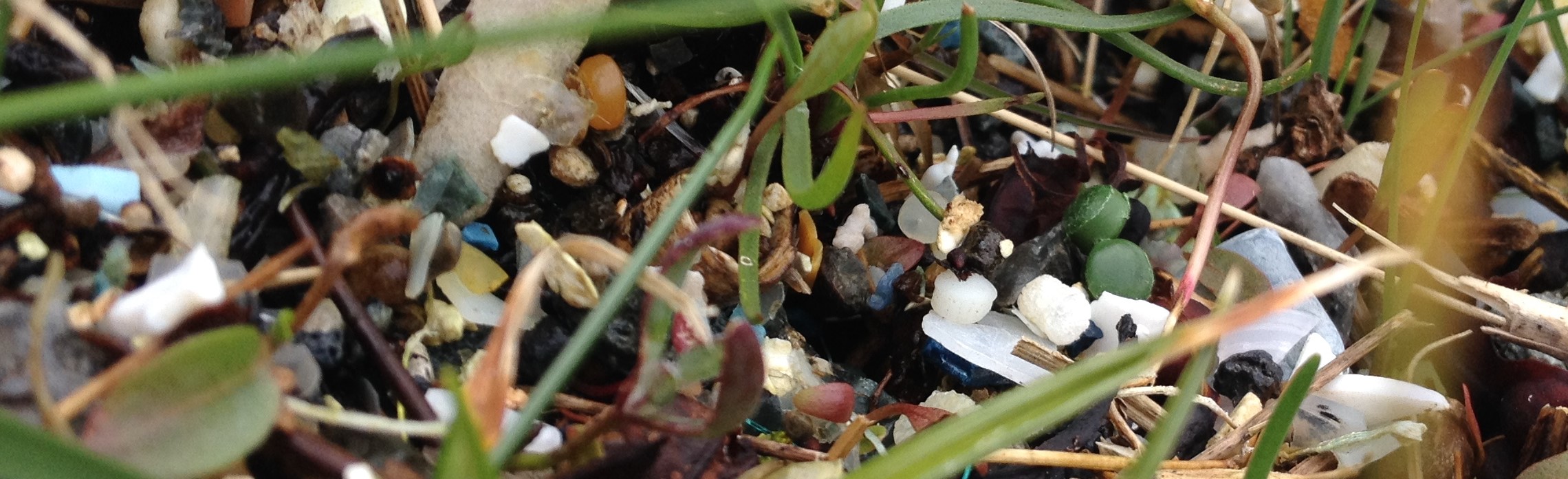
Even on the cleanest looking beaches, where no obvious  litter items are seen,  I have  found micro-fibres laced within sand grains or caught up in/on the seaweed. On mass the fibres are easily visible but when not visible they can be seen easily amongst collected sand grains or seaweed with a hand lens or USB magnifier.   Marine Biologist Dr Phillip Cowie at Millport Field Study Centre explained filter feeding organisms  such as Prawns, flat fish and even sand hoppers are being recorded with such fibres in their guts.

Plastic rocks: melted plastic waste, formed by burning plastic litter on the beaches

IMG_4456

Plastic rocks are perhaps one of the hardest litter items to ‘see’  as the process of burning so many different coloured plastic materials together, often results in  range of grey muted tones which blend in easily with the beach pebbles . I have recorded most of these ‘rocks’ in the mid zones of the beach as they are one of the densest of the plastic items and are less prone to being wind blown.

As I explained in my last post  the melted plastic rock  has now been named  ‘plastiglomerate’ by a Canadian research team and their research findings have led them to argue that the proliferation of the plastic rocks around the world can be seen as a marker horizon of human pollution.

Plastic Rock

I explained that I felt that this broad project knowledge was vital to gain before I could begin to envisage the series of  visual and performance artworks that I am now planning. I am presently working with Shetland Amenity Trust and Highland Arts organisations to raise funding to make the Littoral Art Exhibition possible in the coming year.  I intend to make installations and related stop frame animations focusing/using plastigomerate’s and the micro-fibres that I find practically on every beach I investigate.

Many thanks to Alex Dunedin who organises the Ragged University Talks, and to Susan Brown who through her fascinating talk on Sustainable Education has enabled to me see how my practice fits well in the Sustainable Education models currently being discussed and developed.