Littoral presentation

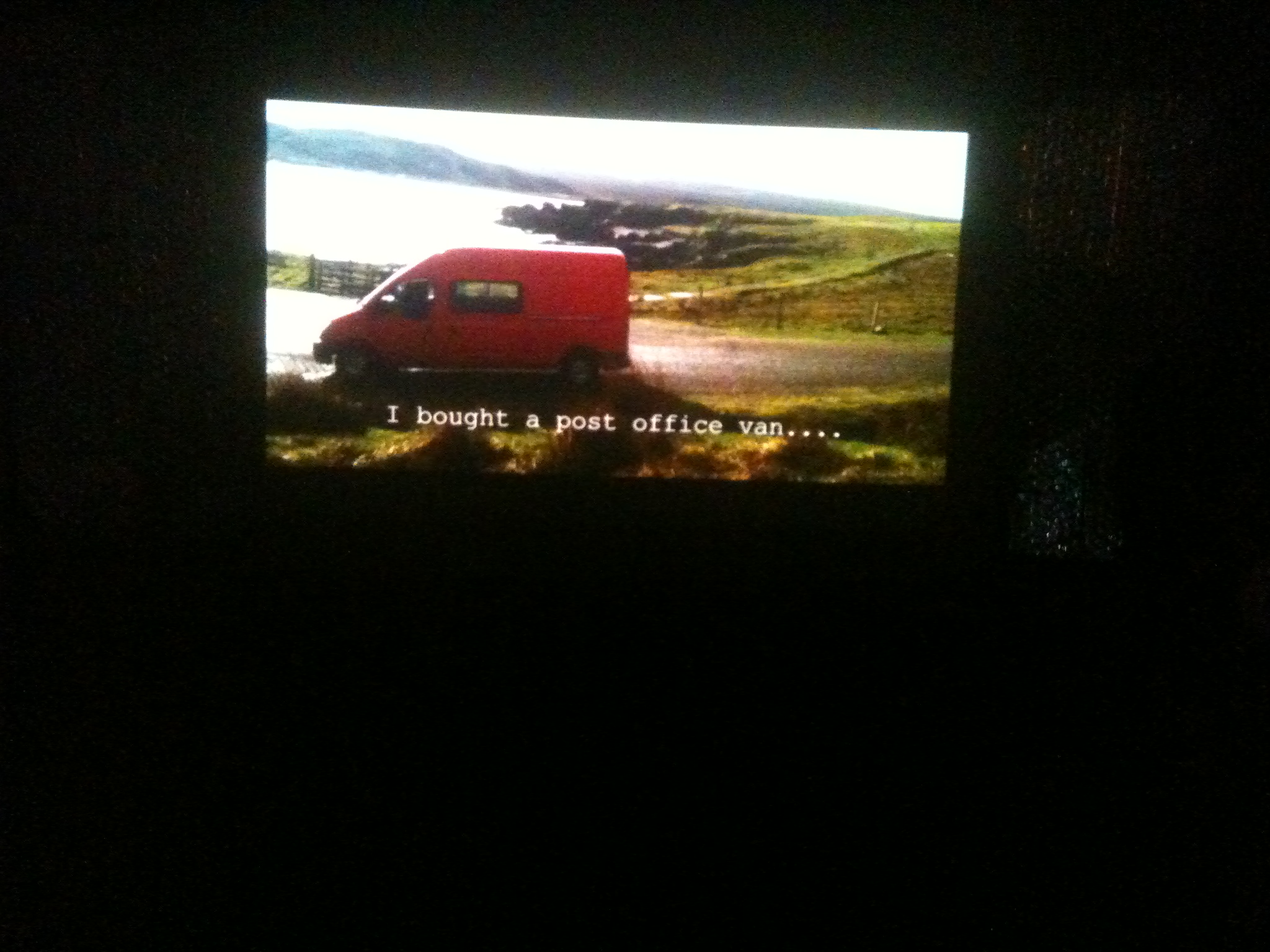
This short compilation of project images is a distilled version of the project presentation I gave to participants, residents and pupils at  Ullapool Museum in October to celebrate the end of both my research in Ross-shire and  ‘Future Fossil Collection’ installation shown at the museum throughout the summer.                                                                                                                                                                                                                                 My sights are now set on producing a collection of  visual artworks based on my research findings  which  will explore and illuminate the magnitude and nature of litter on our beaches and in the marine environment.

The multi-media artworks will form the basis of an exhibition which will tour 5 venues in coastal locations around Scotland over the next two years.   The exhibition will expand incrementally with specific pieces created with participatory contributions and will include a series of presentations and events that will take place both inside gallery locations and outside on the beaches, ice towers, quaysides. In addition my work in Shetland will include a sci-art educational program .

The project will culminate in a final exhibition in Edinburgh with related performance event on the Firth of Forth on World Environment Day 2017.                                                                                                                                                                                                                                                                                                                                                                                                  To  enable my ambitious plans to take shape I will soon be launching a Crowd Funding appeal and directly writing to well known people who speak out and support environmental causes. If you can think of anyone I could try approaching please leave a comment at the bottom of the post.

2014 A Year in the littoral zone

Having completed a year’s research monitoring beach litter on the west coast of Scotland, I have selected twelve images that I feel summarise my findings along the west coast ‘littoral zone’ . The beaches I have surveyed are Grid- referenced and are located between Loch Broom (NH 133 939) in the south and Loch Inver (NC 094 973) in the north.

Ullapool E beach gun copy

Toy Gun Plastic   Ullapool
A poignant find that lay washed up along the upper shore of the north east beach of Ullapool. I have found toys on every beach I have surveyed.

Rhue polystyrene copy

Polystyrene   Rhue point
A common sight on each of the beaches I have monitored. Often large blocks, boxes or takeaway cups break into individual particles that float and litter the rock pools when broken against rocks. They are subsequently ingested by birds mistaking them for food.

IM plastic bottles copy

Bottles Plastic   Isle Martin
Found on every beach. Along the Back Beach (Camas a Bhuailidh) on Isle Martin the nearest of the Summer Isles in the mouth of Loch Broom, I recovered over 100 bottles which had contained drinks, cleaning fluids, oils etc. All the bottles towed from Isle Martin on World Environment Day were recycled.

IMartin melted plastic copy

Melted Plastic   Isle Martin
Hard to see rock-like forms which blend into the cobbles of the Ross-shire beaches. These predominantly grey plastic forms are the result of plastic rubbish that has been burnt on ships/trawlers or on the beach.

Dun Canna strandline mix copy

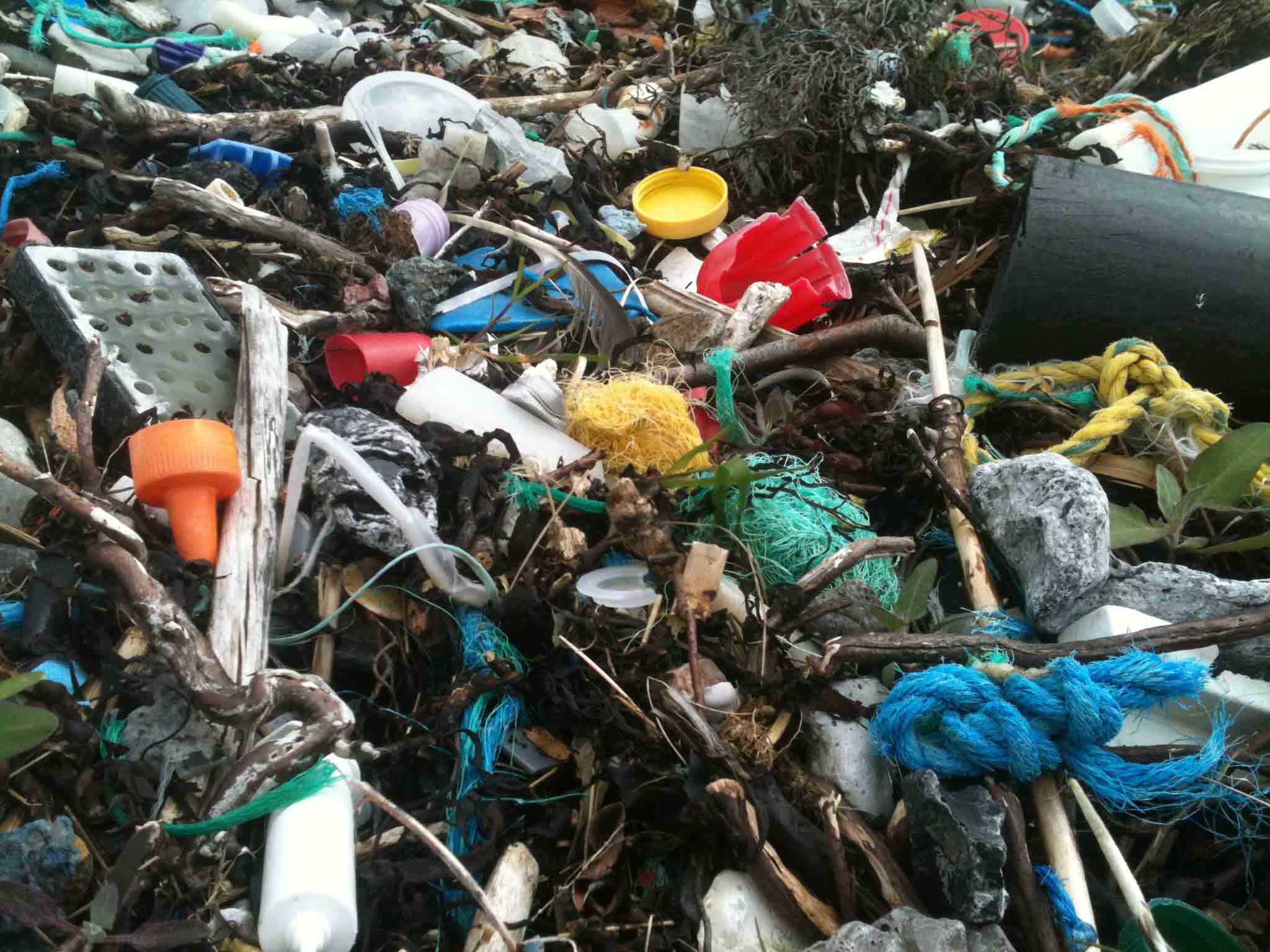
Strandline mix Plastic   Dun Canna
The strandline of this west-facing beach on Loch Kinnaird is one of the worst I have witnessed . Broken fragments of every type of litter is mixed into the seaweed.

Badentarebt prawn box copy
Prawn boxes   Badentarbet
Unsurprisingly, in a significant prawn fishing area, broken corrugated plastic prawn boxes are common place on every beach survey .

Badentarbet rope copy

Rope, cord, line and nets   Badentarbet
The highest percentage of litter that I have recorded has been made up of commercial fishing related materials such as ropes and cord: none of these at present can be recycled in the Highlands.

Altandu measuring cylinder
Fibres Plastic   Altandu
Close between the cobbles, sand grains or within the seaweed are millions of plastic fibres from deteriorating rope, bags, boxes which could be ingested by birds, fish and sand hoppers. I collected 1/2 litre of fibres  from 1m of  seaweed along   (Camas an Fheidh)

Altandu toy soldier copy

Soldier Plastic   Altandu
I found this soldier amongst one of the most severely littered beaches in the area. I intend to enlist him in my Littoral Art Campaign in the coming year

Rief loch gun catridge copy

Gun cartridges   Loch of Reiff
It was explained to me by two local beach watchers & cleaners in the Reiff area that the opaque splayed tubes that are numerous along beaches in this area are the inner sleeves of gun cartridges. In the water they are often perceived as squid by turtles and porpoise and eaten.

reiff loch cabling copy

Plastic tubing   Loch of Rieff
Evidence of large scale commercial dumping like this mass of plastic tubing is evident on the beaches close to commercial fishing areas. The scale of it takes your breath away

lochinver takeaway spoon copy

Food containers & implements   Loch Inver
On a much smaller scale but equally insidious is the common takeaway litter stuffed/trapped between the strandline rocks of harbour walls

I intend during 2015 – 16 to make artworks to hopefully encourage all of us to keep our seas and littoral zones clean. Please keep reading and supporting this project in any way that you can. Happy New Year


Amber warning – presentation coming soon

Dun Canna CU

Photograph –  litter on Dun Canna beach (video to be uploaded shortly)

In total 90 people watched my presentation at Ullapool Museum this week 30 of them braving the Amber Weather warning which was in effect on Monday night for extreme rainfall, gale force winds and high tides. There reward was to be warmly welcomed by the museum staff and to be guided through my years investigation into the beach litter in the area.
Edited photographs and video clips summarised what you can observe on beaches not often cleaned. My residency on Isle Martin allowed me time to map in detail such a beach, the mapping information collected now awaits analysis. The photographic sequence of my activities pieced together the many strands of my enquiry process and I discussed the way that through working with many schools the lack of understanding of ‘how long plastic objects might last’ led me to make a timeline with the pupils and to create ‘ fossils’ which the children found and broke open and became the centre of the ‘Future Fossil Collection’ which has been on display this summer at the museum.
I explained how my love of sharing my work process made it easy to involve the many groups that the audience represented from schools, residents, waste services etc. The process of working together and on creating the artworks such as the ‘Litter Lines’ I hope was enjoyable even if the message was disturbing.

Visibility is a major aim of my project hence the reason I timed towing the ‘Litter Lines’ off Isle Martin to happen on World Environment Day and tried hard to get press coverage, writing up the event for local and regional press. I am still looking to get an article in a National  paper.

proj 1 proj 2   IMG_3672  proj 4
Everyone watched the 26 min presentation intently and at the end of my thanks to everyone, I shared how I want to

• use the images & information collected to create dramatic audio visual event that is projected onto harbour installations in ports along the coast, drawing attention to the litter found locally.
• Make installations and short films about particular types of plastic litter that I have found common in the Ross-shire area and which are not often highlighted in marine litter information i.e. melted plastic- gun caps – plastic fragments
• create an interactive litter map and a limited edition of litter identification cards
Audience questions & feedback ranged widely reflecting their shock at the volumes and types of litter found and their encouragement for me to continue to develop the project on and to return with further elements of the work.
tevens comment   browens comment

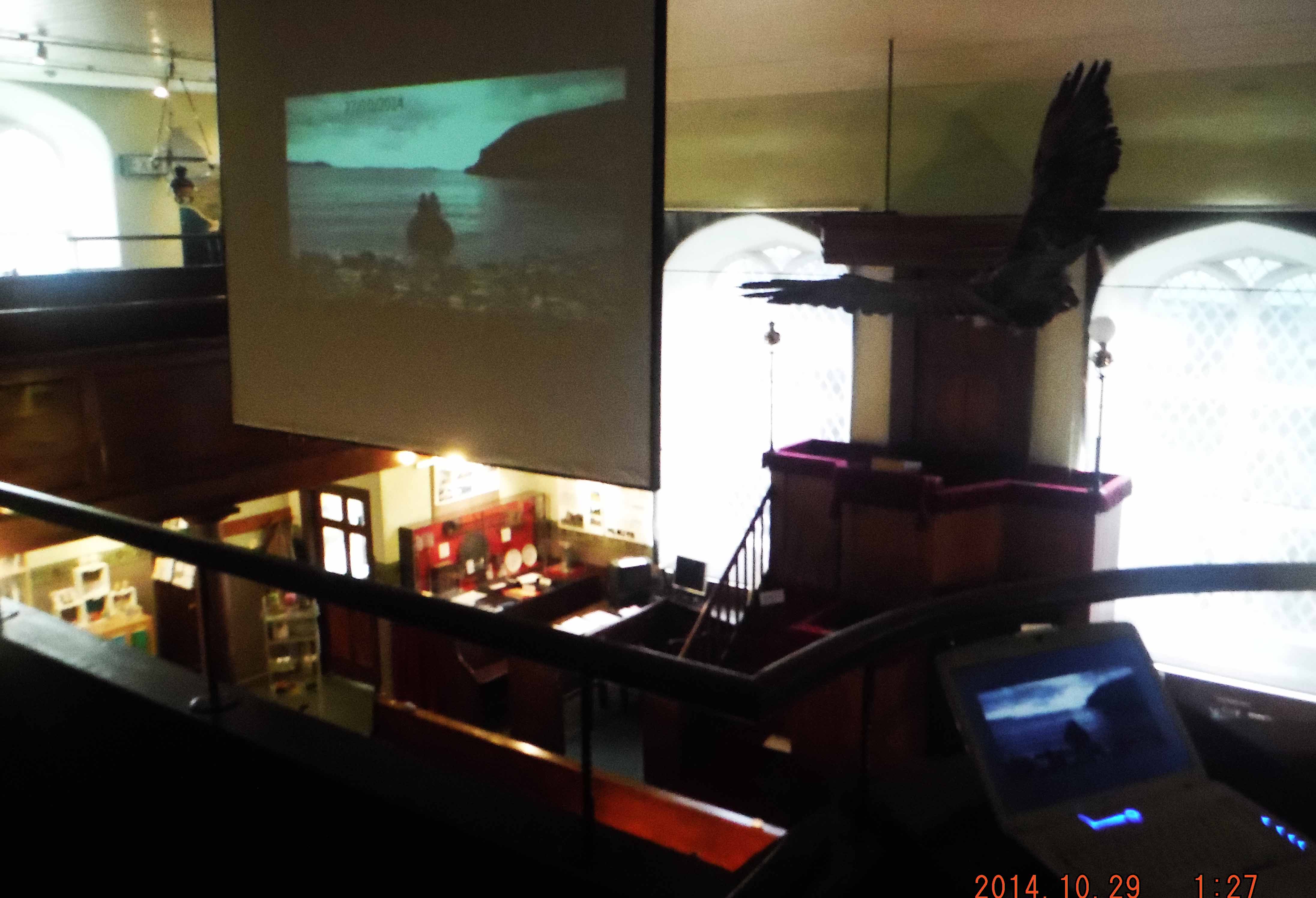
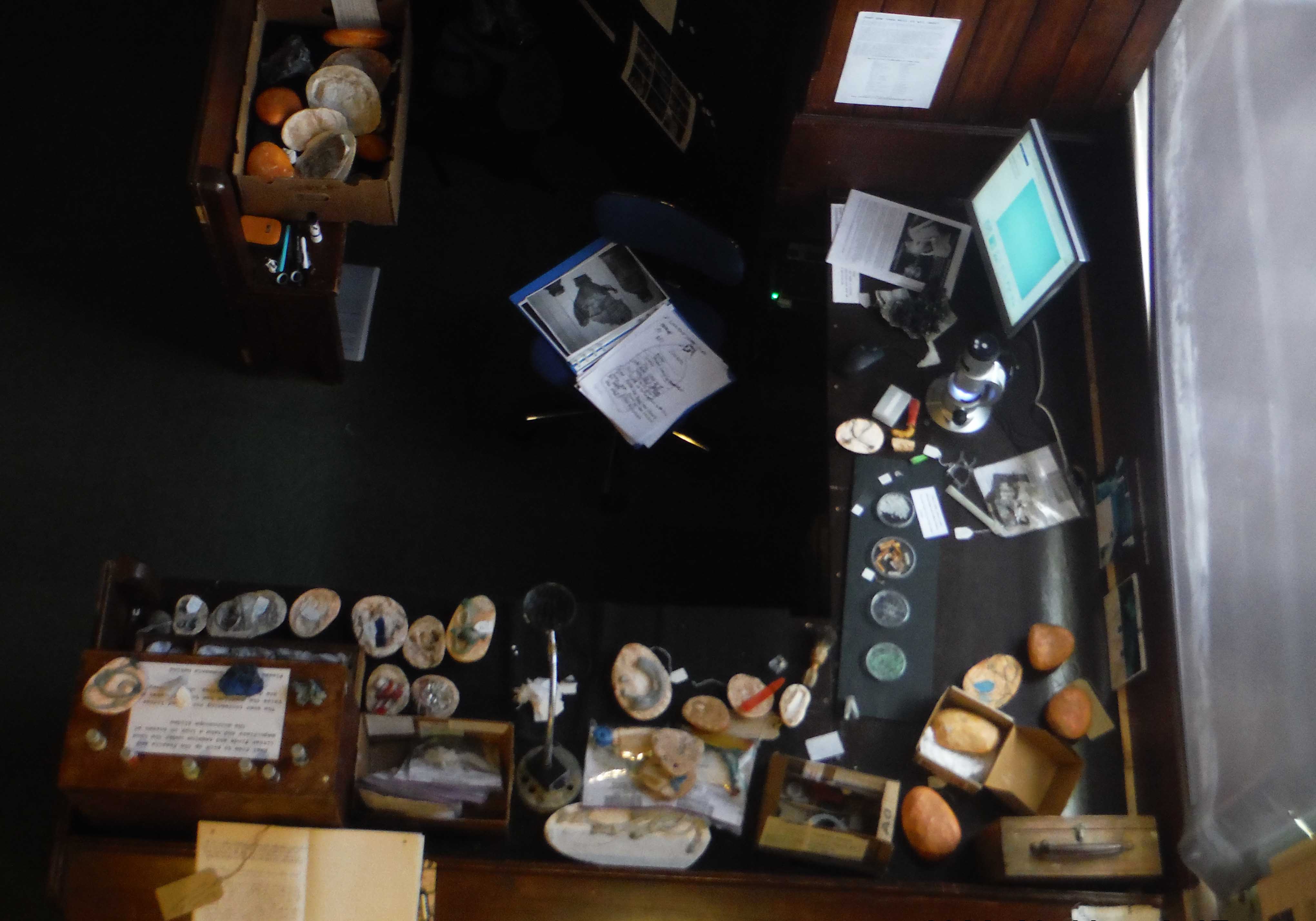
On Wednesday morning 60 pupils & teachers from four of the schools involved took seats in the museum gallery with the suspended Golden Eagle exhibit flying down towards the ‘Littoral Exhibition & investigation space’ below. An exciting morning was had in the Museum by all, with much energy & discussion about litter and other Museum exhibits. A perfect conclusion to my work in the Museum this year, encouraging me to continue my links with the Museum and future possible work there. Thank you.

gallery projection  Exhib overhead small

Saturday night in

premier 1

After an afternoon recording litter on Ullapool’s North East  Beach I am now sat in my van with my faithful companion Cal, previewing a  presentation of my years littoral journey  which I’m  projecting onto the rocking van walls – as gale force winds continue to blow onshore. The  driving rain and the crashing waves hitting the  Port A Bhaigh beach a few hundred metres away, are providing a dramatic additional sound track to the sequence of images I’m reviewing .

IMG_3662 IMG_3668 IMG_3664 IMG_3672

I hadn’t planned tonight’s  preview but it feels  serendipitous, as  the Port A Bhaigh  beach is where my story began in 2012 and where on a much calmer day in May this year I and many volunteers spent the afternoon filling over tens of  bags of rubbish. Thankfully the beach survey today in Ullapool recorded far less litter and our band of ten volunteers were glad only to be needing to fill 9 bags of litter  as the persistent south westerly showers hurled themselves at us throughout the afternoon.

Beach survey 1
This is the 2nd  Beachwatch survey we have carried out , the information we are collecting is going off to the Marine Conservation Society to add to the all important knowledge bank of what’s happening where .

beach survey 6  Beach survey 5 Beach survey 3 Beach survey 2

Our hope is that next year Ullapool will be able to undertake the survey in the same week as the national & international Beach Watch event which takes place in  September. So please come along next autumn, even in the wild weather we all had a good afternoon and made new friends keen on looking after our environment. Many thanks to Tom , Debbie, Sara, Lesley, John, Ron, Rowen, Ellen   & Maria for coming along.

Beach survey 4

My presentation of  littoral event images  over the past year will be taking place on Monday night at Ullapool Museum  7.30pm. Everyone is welcome , your feedback will be much appreciated. Thanks to Black Reiver Consultancy for the loan of the pocket projector.

Rocking in Ross-shire

Dramatic arrival back in Ross-shire – as the tail end of hurricane Gonzalo hits the coast, I am sat editing my presentation and making notes for funding applications in my ‘office’ which is being rocked by the Westerly winds which are beginning to hit the coastline, it’s a great reminder as to the power of  nature and the need to find shelter soon. Certainly tonight I will be looking for a much quieter location to park.

Rocking in Ardmair 2

Along the beach two people are braving the storm busily collecting many bags of seaweed, brave souls and they remind me that on  Saturday  the SYHA & I have planned Ullapool’s 2nd official beach survey & clean. It would be great if the weather calmed and the sun burst through to encourage people to join us  below Pollan Park in Ullapool at 2pm, strong shoes and warm weatherproof clothing essential.

MCS beach survey & clean LRl

The information we gather will be passed onto the Marine Conservation Society national beach watch statistics to enable comparisons to be made between various locations along the coast and between years.  Last year over 800 pieces of litter were collected  including  45 carrier bags, 85 pieces of fishing line & net , our 8 sacks of litter  weighed over 35kg collected from just 100m of beach.  In theory as the beach was cleaned comprehensively last year, there should be  much less litter to record this year, either way there will be a warm welcome and refreshments at the SYHA  after the event .

blue bag

It will be interesting next year to see if there has been any reduction in the number of plastic carrier bags we find along Ullapool beaches after the introduction today of the mandatory charge on one time use bags. On this morning’s 200m standline walk I counted 9 bags.

Invitation

Invitation 2nd version


As my
Littoral Art Project  and I have now completed a years work  investigating beach litter I am busy editing through the hundreds of images  taken while carrying out the many events along the Ross-shire  coast. My aim is to put together a thought provoking visual presentation of the ‘story so far’ , the  30 minute show  will include highlights such as :

The background to how the Future Fossil Collection was created

Young peoples discovery that a plastic bottle might be around longer than them

The curious appearance of oranges on local beaches

Tales from Ullapool High School’s Beach CSI Team

Her stay as Artist in Residence on Isle Martin & developed her rowing career

Her collection of not fantastic plastic

The achievement of two skiff teams on World Environment Day

Her continued close relationship with Scotland’s’ Waste Transfer Stations

Ullapool Museum  & I hope that supporters of the project will be able to join us on either Monday 27th at 7.30pm or Wednesday the 29th at 11.30am to enjoy the visual presentation of the Littoral Arts/Science Project which led to the creation of the Museum’s recent exhibition Future Fossil Collection. The events are free and refreshments will be served.

My intention is to continue to create artworks & events  on our beaches with the aim of encouraging people to take greater care of our coastal and  marine environments.

With this in mind the Ullapool SYHA and I are planning the second annual beach clean of the Ullapool beach below An Pollan Park  on Saturday the 25th October. Please join uson the beach at 1.30 pm

Activism

This weeks momentous movement of activism in Scotland has continued with collective actions both on the streets and on the beaches!

Peoples Climate March

As I joined thousands of people on the Princes Street in Edinburgh today to demonstrate our collective  demands for political actions to be taken to stop climate change I was heartened by the knowledge that tens of thousands of people across the rest of  Europe and the world where also taking action on the streets to influence our politicians. The colourful,  witty explicit placards and costumes spoke volumes and few formal speeches were needed.

our future in your hands   polar bears    protect our planet   reuse recycle

stop pollution

The messages on the placards also drew attention to issues of pollution and the need to take personal action to help our environment. This is exactly what about 50 people did yesterday  on Cramond beach as together we took part in the  2014 Beach Watch weekend organised by the Marine Conservation Society  (MCS) as part of the national and international monitoring of the state of our beaches.

Cramond  survey  bagging up

Cramond Beach has many important memories for me  as its the beach  I launched my first Crowd Funding appeal for my project and where  I was first instructed in the MCS’s  very detailed, internationally accepted method of beach litter surveying .  Yesterday I joined the ‘political action’ on the beach and teamed up with local residents Claire and Oliver who were also returnees to the surveying, together we made up one of the 10 teams that scrutinised a ten metre section of 100m of the beach carefully marked out.

Cramond survey sept 14  WS Cloth Pads
As we slowly zigzaged our way down the beach from the hightide line to the low water mark , we quickly fell into discussing the particular litter problem that this beach suffers from and that has been witnessed here on successive years of surveys  that is the vast amounts of sanitary cloths. The ‘cloths’  we find are some kind of mixed cotton and plastic fibres we think they could be some form of changing  or incontinence pads. At first they are almost  imperceptible as they are matted in with the sand and only a few fibres poke through the surface, but as usual you soon become adept at spotting the ‘cloths’. The pads were duly pulled out of the seaweed and sand and bagged up.  Our team collected 310 pieces of the pads/cloths in our 10m stretch of beach. The questions are echoed in each  survey team – where do they all come from ? Have they been dumped at sea? Are the coming down the sewage system? The MCS suggested that the reason for this amount of sanitary litter is that the cost of collection of this sort  waste by sanitary disposal companies is so much that homes/institutions  keep on flushing them down the toilets, reaching the beach  through the storm drains which don’t all have filters ?

cramond storrm drain 2 product labels

After the group tally of  107kg of litter collected in the survey area, I take one of my own strandline walks where I note down everything I see.  I decided to exclude the cloths from my list as I had seen enough in the sand and caught between the stones on the storm drain stream and I  concentrate just on litter that had product names :
Mars – Iron Bru – Castol Oil – Maltesers – Sinsbury’s – Kellogs – Strathmore Water – Pot Noodles – Coke a cola – Asda – Co-op –Milkyway – Tesco

So my overriding memory of Cramond  Beach on Beach Watch day was of Product Wrapers and sanitary pads! But by the end of the clean up action Cramond Beach was much cleaner  over 300kg of litter had been removed through the mornings  ACTIVISM !

Littoral Office – conversion

I am parked up in my post office van which is transformed from litter collection & sorting space to my mobile project ‘Office’, were I sit whenever I can grab a several hours to write up my littoral notes taken during my residency on Isle Martin mapping the litter washed up .

litter sorting porject office
May 2014: collection & sorting                                     August 2014:  writing & planning

It’s a strange feeling to be writing about beaches on the  North West coast, while sat in my office surrounded by forests  hundreds of miles south and about as far from the sea as I can possibly be. My location , like most people, is determined by where I am contracted to work, for me that means designing and facilitating paid art projects and at the moment that’s in the borders and Midlothian. But my many notebooks and photographs always travel with me and I am determined to try and write an article that documents my findings so far and what is being done by thousands of individual people to improve the situation we find on our shorelines.

IMG_2742 IMG_2719   IMG_2743 IMG_2740

As I reconnect with my statistics of litter found on Isle martin’s back beach I am transported back to the west coast, the feeling of awe at the beauty of the place, sadness and disgust at what I am now after a year tracking the litter on such beaches used to seeing. Browsing through hundreds of images capturing heaps of rope and plastic objects  my passion and desire to creatively show what’s to a greater or lesser extent on every beach around Scotland, the UK and across the globe  is quickly ignited and I begin to write…. If anyone has any contacts in papers /publications in Scotland or UK, that they think might be interested in the ‘Littoral Story’  please leave a message below.

mixed litter on Isle Martin Litter line summary flattened

My immediate intention is to return to Ullapool with a visual presentation of the ‘Littoral Story- the pictures so far’. The presentation will be shown at the Ullapool Museum to coincide with the  last few weeks of my  ‘Future Fossil Collection’ installation there.  I will show images documenting all the events that have taken place over the last year on the beaches around Ullapool and on Isle Martin and I will be shedding light on the back stories behind the ‘fossils’, tracking oranges, CSI teams on Ullapool beaches, and skiff teams towing hundreds of metres of litter across Loch Kinnaird on World Environment Day. Dates for the showing will be announced shortly.

Seaweed: collecting & pressing

west coast seaweed prints  oak leaf sea on somerset paper

As the summer temperatures rise and we all head for the cool breezes of the sea and to enjoy paddling through rock pools I hope you are able to see a plethora of seaweed fronds floating and decoratively draping over the rocks .

Collecting and pressing seaweeds is a ‘littoral zone’ pass time of mine , a welcome diversion from recording and photographing plastic bottles, gun cartridges and rope. My love of seaweeds was fueled by attending a course at Edinburgh University last year, where I soon realised the vast number of varieties of seaweeds around our shores. The more you look the more shapes and colours you see attached to rocks shells, bridges and other seaweeds.


saw wrack on newspaper

The prints above where made from seaweed collected during my west coast work in June ,

I will shortly be posting them out as rewards for sponsors and putting more prints on line

for sale  at www.askewprints.com  

I started pressing seaweeds in order to take relief prints from them. Their branching forms, being similar to the botanical specimens that I was used to printing, but the procedures for pressing seaweed samples is much more complicated. The method I tend to favour in order to get a natural floating impression is through immersing the sample in a tray of fresh water and putting a piece of card underneath it then lifting the card & sample out letting the water drain away. The sample is then placed under cloths, paper, a board and even pressure. Getting a good print is often a very delicate process taking much practice for each variety, the original sample choice is very important.

A few days ago I came across ‘The Rules for laying out and preserving seaweeds’ (as in the 1800’s) in a book displayed alongside exquisite pressed samples of red seaweeds collected from along the east coast of Scotland. The seaweeds were pressed by artist Sara Dodd and displayed at the Royal Botanic Gardens Edinburgh as part of her wonderful Sea Flora exhibition in which she revisits the ‘Victorian tradition of collecting & preserving seaweeds’.

Rhodomela confervides  IMG_3153 Callophyllis laciniata IMG_3144

Sara’s samples are delicately dramatic many looking like purple/crimson ink drawings displayed simply on while paper or between Perspex. The exhibition runs for another few days until the 27th July only catch it if you can and visit her website www.tangandware.com which documents her work and observations on seaweeds particularly along the East Lothian shore lines. Enjoy.

Recycling sea litter

Tracking  the recycling journeys of litter across the country and beyond has made me realise just what an infinitesimal amount of resources we are wasting by chucking our litter into the sea and into landfill. As most of our natural resources are finite the more we can collect, reclaim and reuse the less resources we have to mine and the e cleaner our  environment will be

[Resources we need ÷ resources we reclaim = resources we need to extract]
An obvious equation but one which often gets skewed towards extraction through lack of commitment, but there are many companies and communities that are out there shouting out loud and clear about how the environment needs us to pay heed to this simple Maths!

A few months ago Ecover, the Green cleaning product brand launched ‘Ocean Bottle washing-up liquid’ the world’s first washing-up liquid bottle made from reclaimed ocean plastic which is now on sale in UK. Ecover worked with a manufacturer Logoplaste to combine plastic trawled from the sea with a plastic made from sugarcane (which it calls Plant-astic) and recycled plastic. In the initial trial, 10% of the plastic in the new bottle will have been retrieved from the sea, they are hoping to increase this proportion significantly in time. The quality of plastic retrieved from the sea is highly variable so it meant it had to be blended with other recycled plastic material to make it robust enough for a household cleaning product.

index index indexindex

What a great way to highlight the sea litter issue to recycle it into an object that is all too often found on our beaches certainly along the majority of  standlines I have surveyed. Plastic bottles are one of the most common domestic items to be washed up.  We retrieved 106 plastic bottles from the beach on Isle Martin, unfortunately many more were left behind through lack of time.  Often the bottles are blown beyond the strandline, in exposed places sometimes hundreds of metres inland, vegetation grows over them and we re only aware of their presences when we walk over them and hear that plastic crackling plastic sound

TED ent bottle   IMG_2312
The Marine Conservation Society, states that plastic debris accounts for almost 60% of all litter found on UK beaches, with much of it ending up in the sea. Fish in the northern Pacific Ocean ingest as much as 24,000 tonnes of plastic each year – the equivalent of 480m two-litre plastic bottles. Around 46,000 pieces of plastic are swirling around every square mile of ocean.Fish in the northern Pacific Ocean ingest as much as 24,000 tonnes of plastic each year – the equivalent of 480m two-litre plastic bottles.
Philip Malmberg, chief executive of Ecover, said: “The scale of the ocean plastic problem is enormous – every year at least a million sea birds and 100,000 sharks, turtles, dolphins and whales die from eating plastic. There is no choice – we simply have to aim to clean up ocean plastic for good.”
Ecover has joined pioneering group of manufacturing companies  who are  using their products to raise environmental awareness to the vast amounts of waste we throw into the seas . In 2010 Electrolux  launched a Vac from the Sea” project in which they partnered up with volunteers (individuals, group and environmental organizations) to collect plastic from the Pacific Ocean, the Indian Ocean, the North Sea, the Mediterranean Sea, and the Baltic Sea. The items they collected were then transformed into five state-of-art vacuum cleaners, each one representing one of the seas or oceans from which the plastics originates.

images seas plastic from sea vacs 1
Image Courtesy: From Left to right—The North Sea Edition, The Indian Ocean Edition, The Mediterranean Sea Edition, The Pacific Ocean Edition, The Baltic Sea Edition, Green Range Ultra One. Electrolux Vac from the Sea
The Electrolux company states on it’s on the corporate website that : “The vacuum cleaners embody the plastic paradox: oceans are full of plastic waste, yet on land there is a shortage of recycled plastic for producing sustainable vacuum cleaners. Electrolux makes Green Range vacuum cleaners from 70% recycled plastic, but wants to reach 100%.”
This seems to me a great corporate response illustrating how the collection and reclaiming of our waste can help to re-balance ourskewed resources equation and at the same time as raising our environmental awareness to sea litter. The vacuum cleaners were auctioned to raise money for further research and ocean cleaning. I hope Electrolux’s research continues and like Ecover they are able to devise increasingly more effective equipment to fit on more trawlers with which they are able to retrieve greater amounts of plastic for cleaning and recycle.


N.B Ecover’s manufacturing partner in recycling the bottle waste  is a company called ‘Closed Loop’. The managing director of this company Chris Dow who last night appeared on radio 4’s Bottom Line explaining the recycling process  of plastic bottles at his high-tech recycling plant in Dagenham, east London where they process 5 million bottles a day!