Response

After much  adding up of objects/materials found on the beaches, transcribing of notes  and  cataloging photographs, this week  I am setting about experimenting with ways to visually respond to my findings.

ESW working on ideas

Perhaps one of the most poignant findings is the hidden nature of the  volumes of litter that we are contributing too on our beaches: buried beneath the sand, caught between the rocks, entangled in the seaweed, covered by vegetation.

lochinver polystyrene between the rocks  Polbain  litter covered by stones  plastic bag sutherland  Achduart litter in seaweed
It is this unseen nature of  beach litter and the longevity of the plastics that we find that I am now presently addressing in the studio, the results of which I will install/perform in a few weeks time in Ullapool.

100m along the strandline

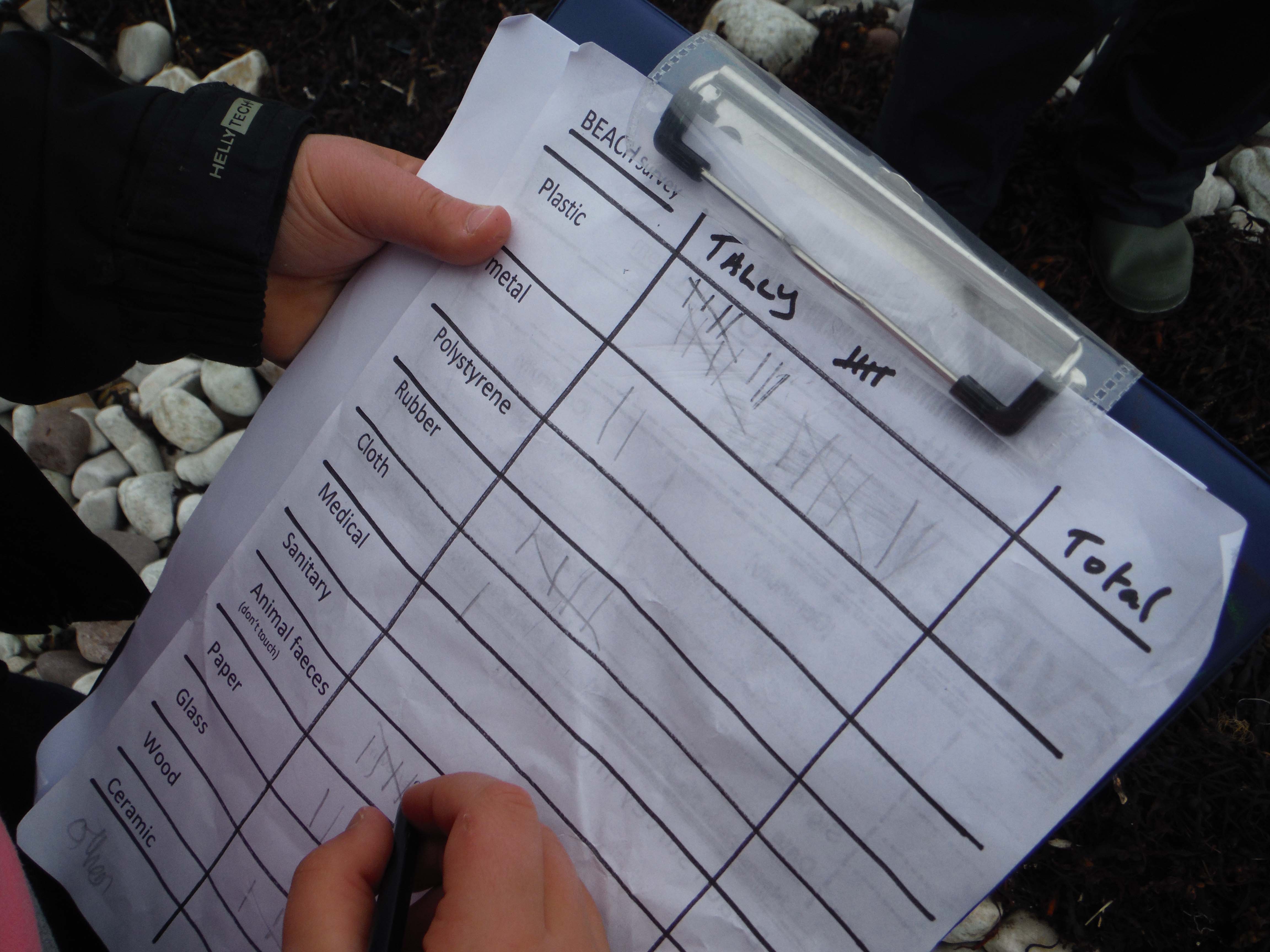
I am now engaged in the process of  cataloguing all the information I collected while based in Ullapool.  I recorded  the beach litter along 100m of the strandline  on  15 beaches in the Wester-Ross  and Sutherland areas.  During the walks I tried out different ways of recording litter, using tally systems  [ bottle tops III , aluminium cans  II etc].  I experimented listing materials then specifying the object.  I will continue to work out the final format over the coming weeks/months.

Port A Bhaigh strandline walk-1                   Rhue beach litter          strandline PDF

Whichever way you look at it the lists make sober reading when keeping in mind they are from such beautiful beaches found around Loch Inver and Loch Broom, all seemingly ‘clean and pristine beaches, until we look more closely.

White  Beach       rhue beach     MOREFIELD BEACH - Copy

Reflect and review

My 4 weeks in Ullapool have been incredibly busy. I have met many wonderful people keen to help me learn about litter along the nearby beaches. I am so grateful for the positive response I have received for my project,  the warm welcome and fantastic west coast hospitality.  Massive thanks to people popping into my studio at An Talla Solais, volunteers, teachers and pupils from all the schools, ecologists, marine biologists, conservationists and fellow artists.
studio wide

I am now pausing to reflect and review the vast amount of information I have collected, ideas that are jotted down on maps, photographs, notebooks and the walls of my studio at An Talla Solais.

stuio shoulder shot studio detail 2 studio detail 1 studio detail

At the beginning of November I will return to install temporary artworks in a variety locations in Ullapool in response to my research.

Postcards from Achiltibuie

postcards from Achiltibuie 1

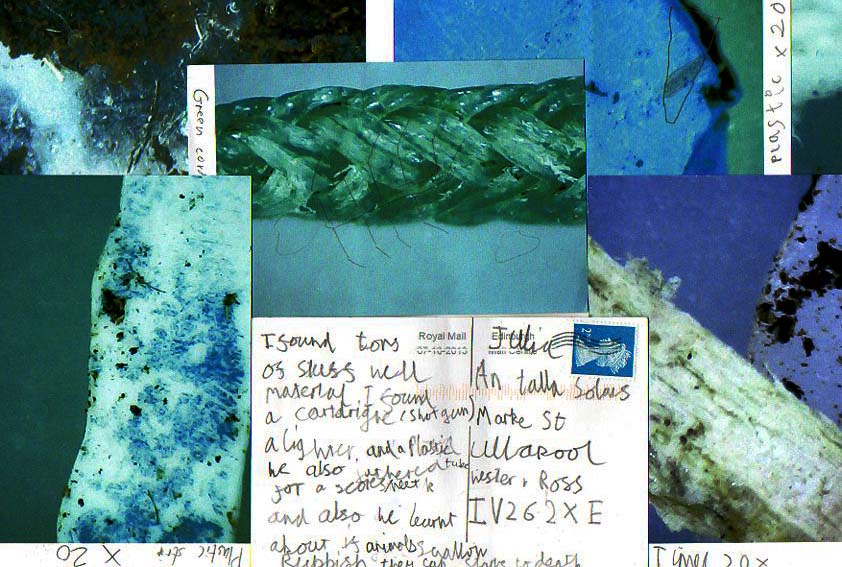
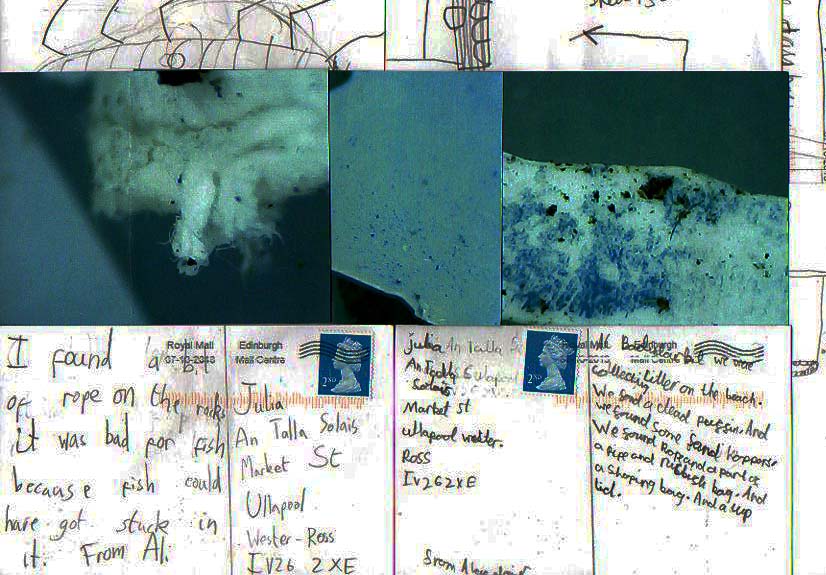
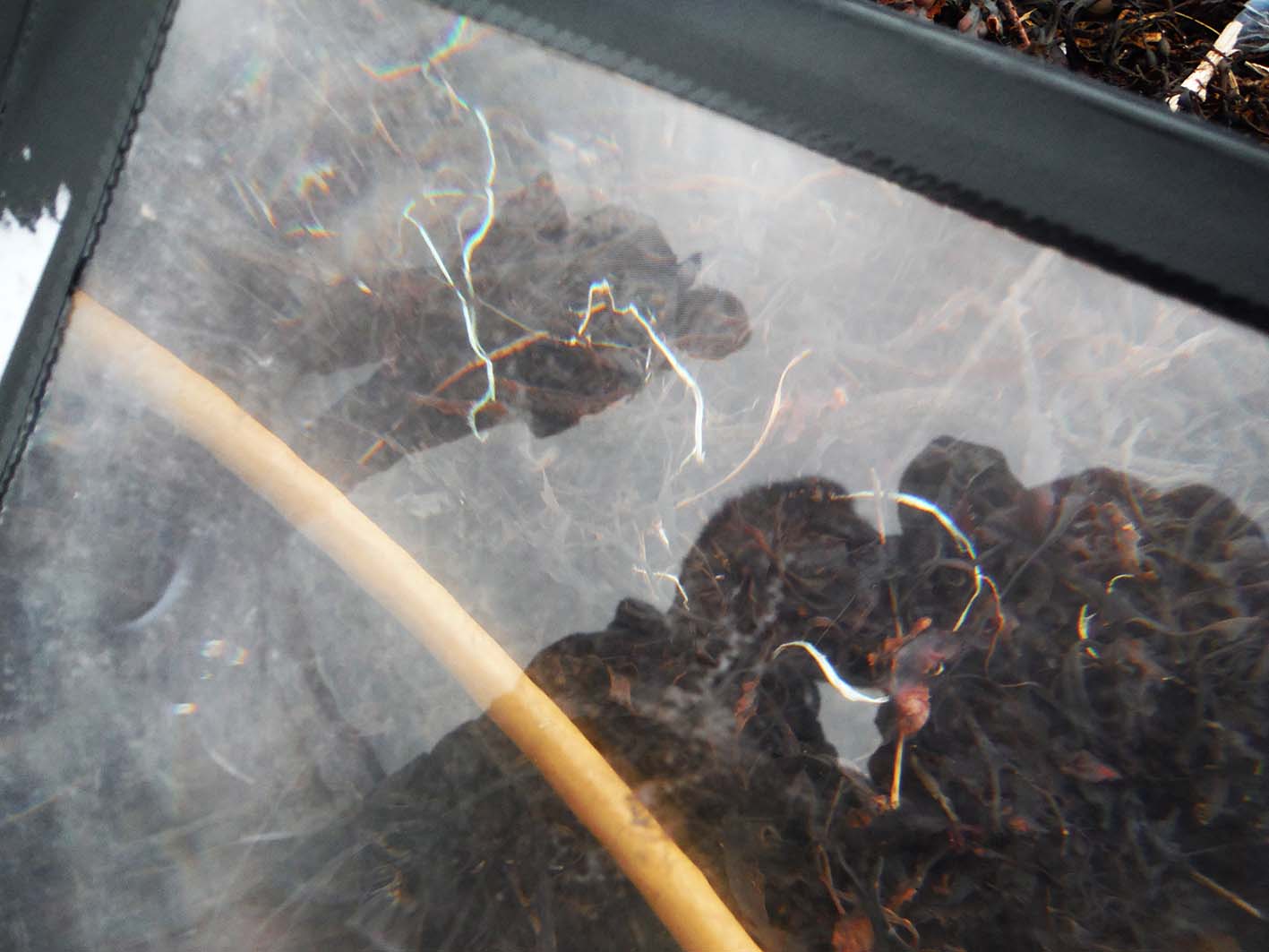
The  captured microscope images of plastic objects found on the beach at Badentarbet and the children’s words arrived at the studio in An Talla Solais today, in the form of 14 postcards, to the interest of  everyone who called in at the studio. Their observations and thoughts being read carefully to see what they had gleaned from our morning in the littoral zone.

Achiltibuie postcards 2

Badentarbat Bay

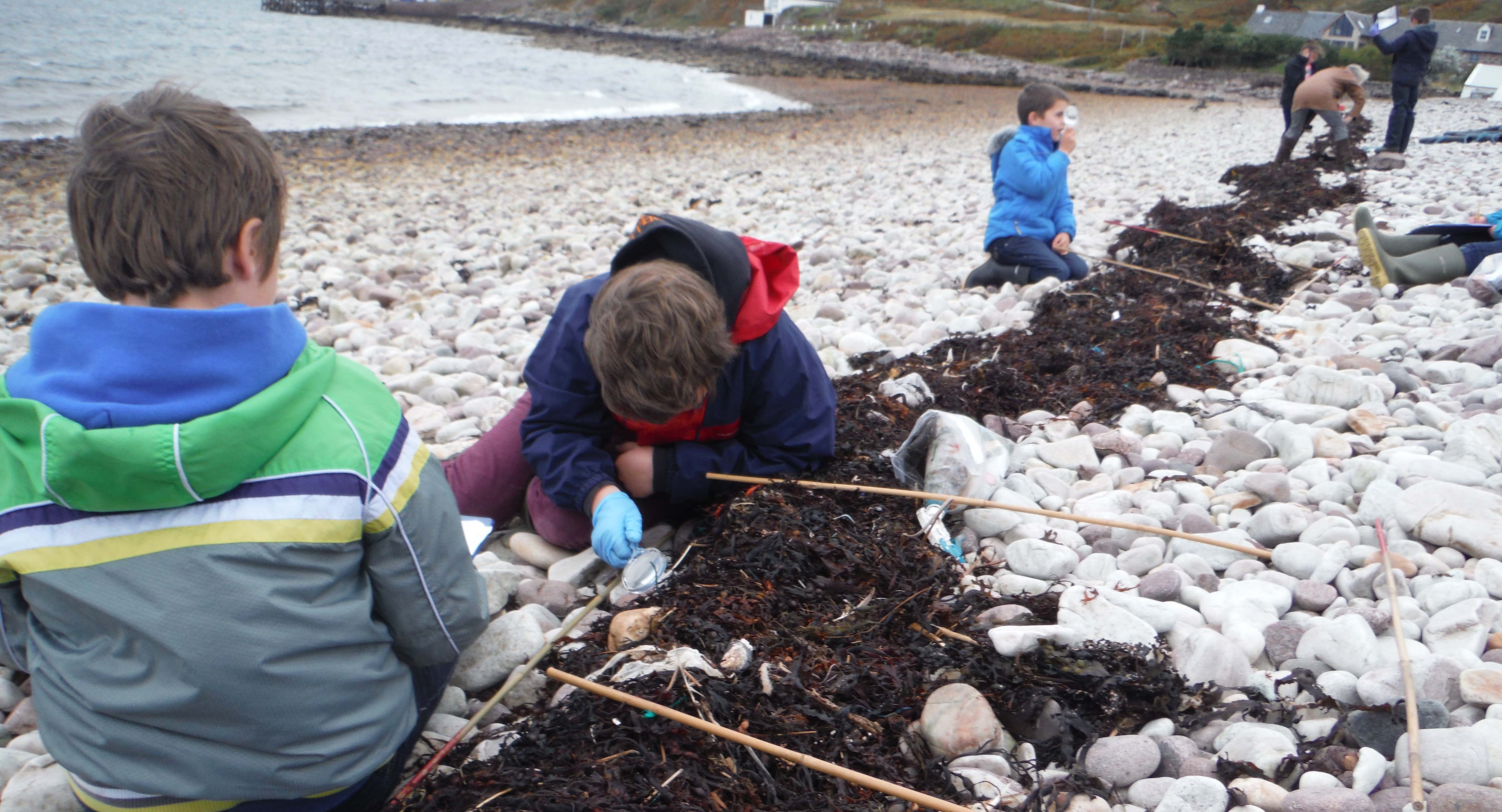
Our next shoreline survey was undertaken with 13 pupils of the Coigach primary school at Achiltibuie. All were very familiar with the local Badentarbat beach. It’s a beautiful beach facing west to the summer Isles. Most of the children were already familiar with the types of litter found there.  
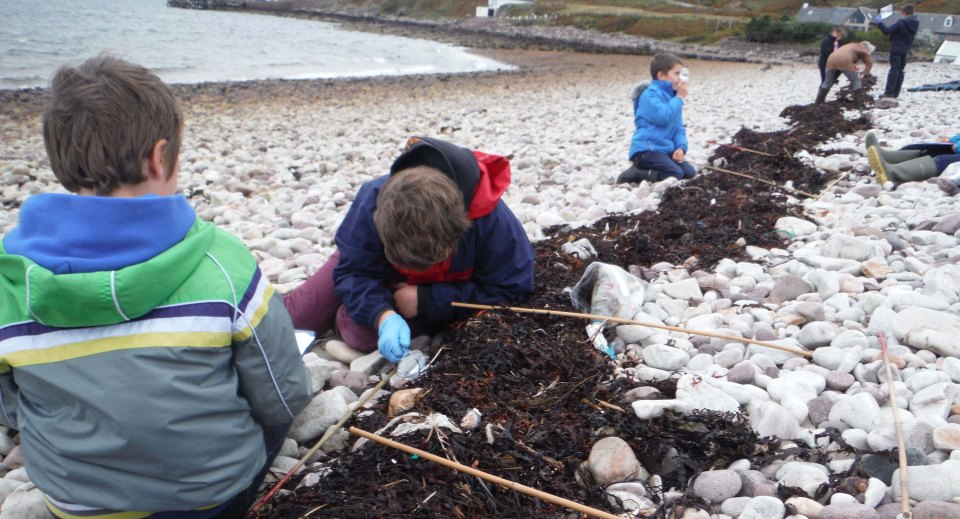
surveying on badentarbet beach

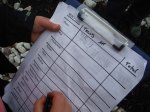
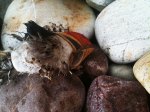
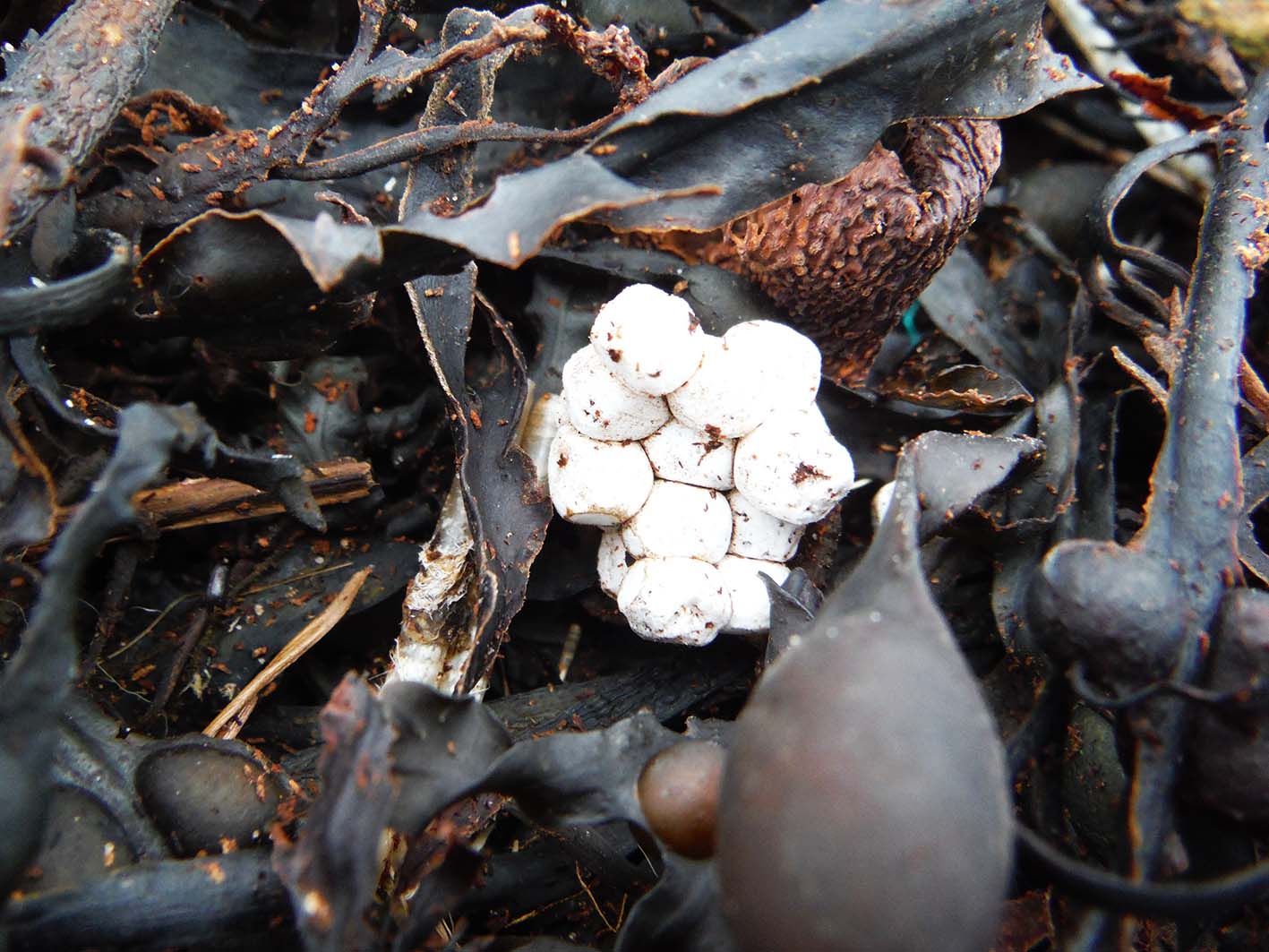
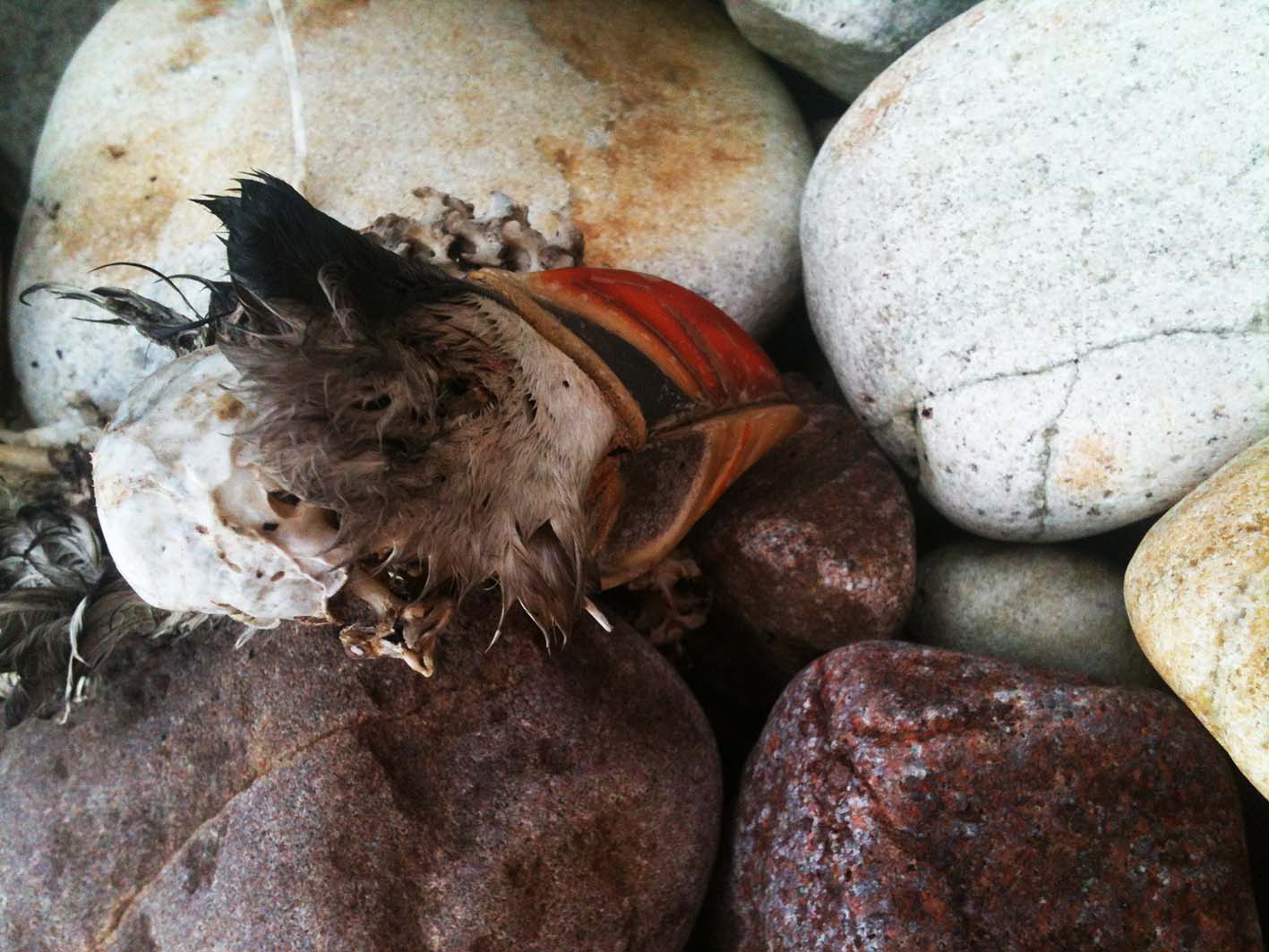
The pupils their teachers and I spread out along the beach recording the objects we found on a survey sheet. We subsequently closely examined small areas of the beach and collecting a range of objects in our evidence bags. A sad find was the body of a dead puffin. This was poignant as the day before the children & I had attended an RSPB Marine Day in Ullapool and had heard about how the Puffin population is decreasing due to lack of food.
looking closely polystyrene simplified tally system small unexpected find

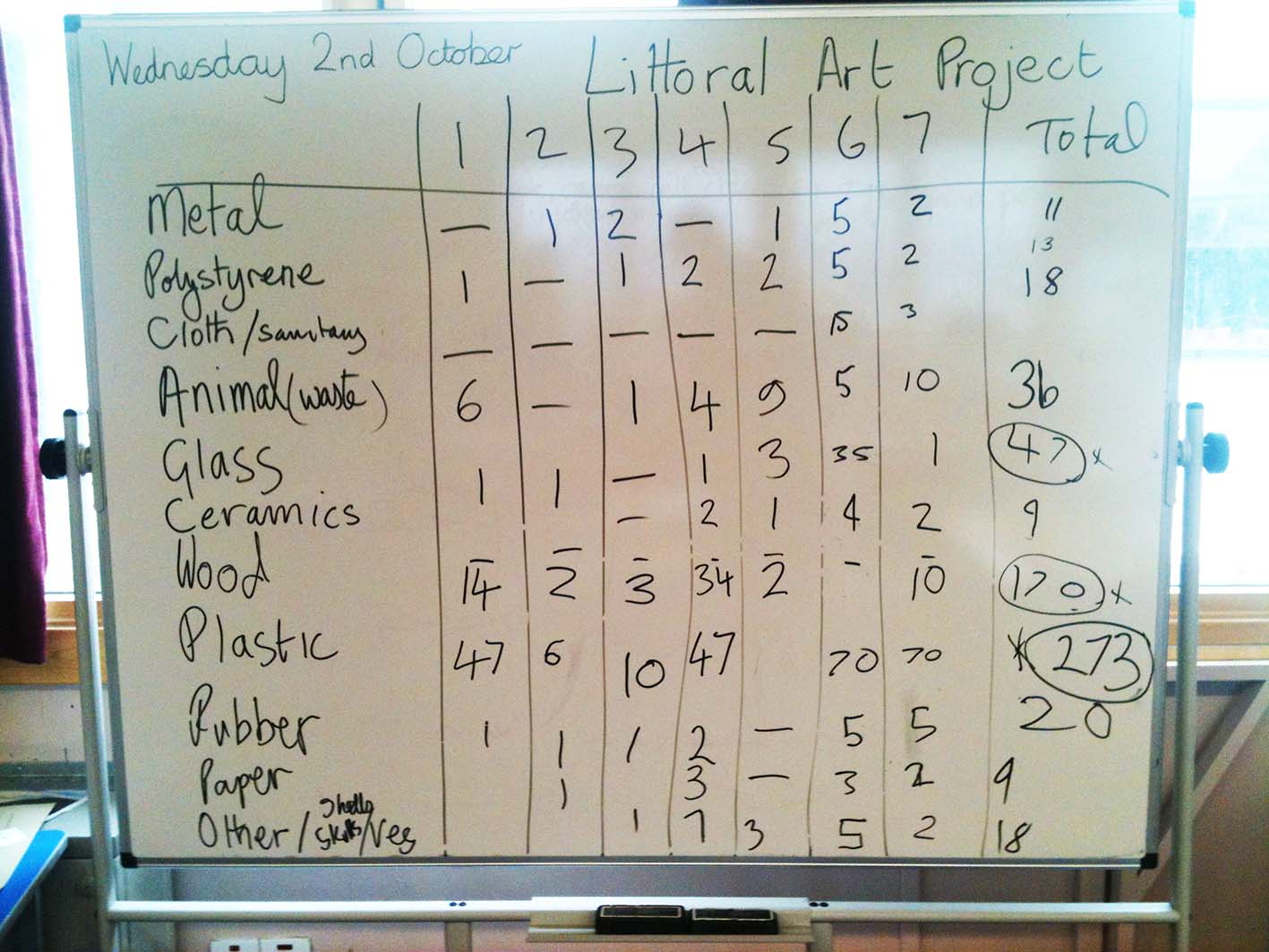
The analysis of our survey showed that we had counted 273 pieces of plastic ranging from sweet wrappers, fishing nets, shopping bags, small toys, prawn boxes to a cigarette lighter. Glass and rubber objects were the next highest number of man-made finds. 
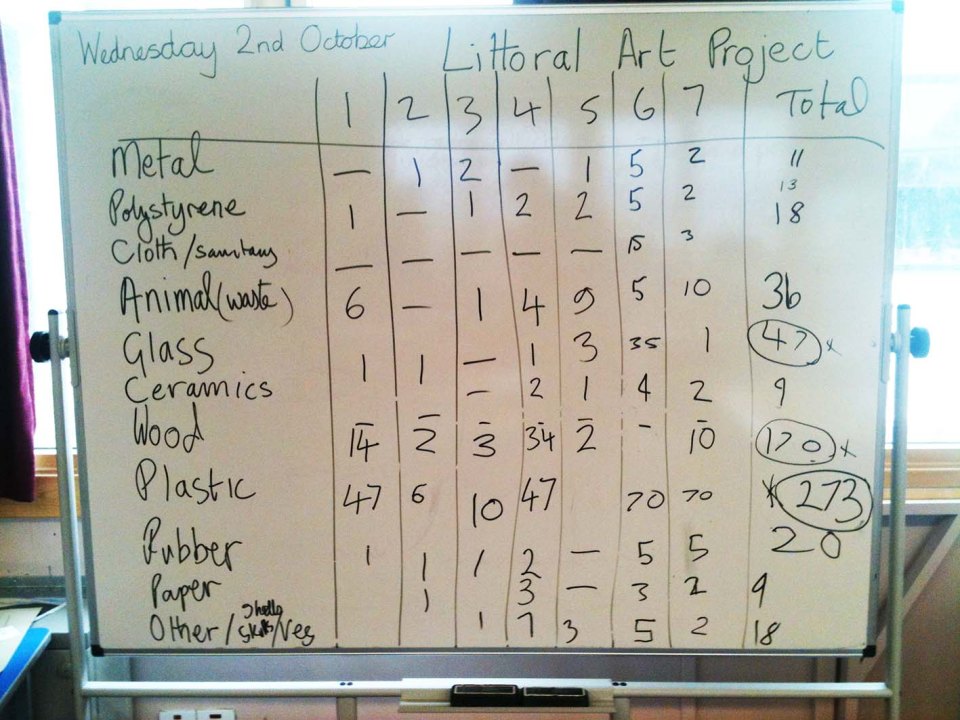
our survey results

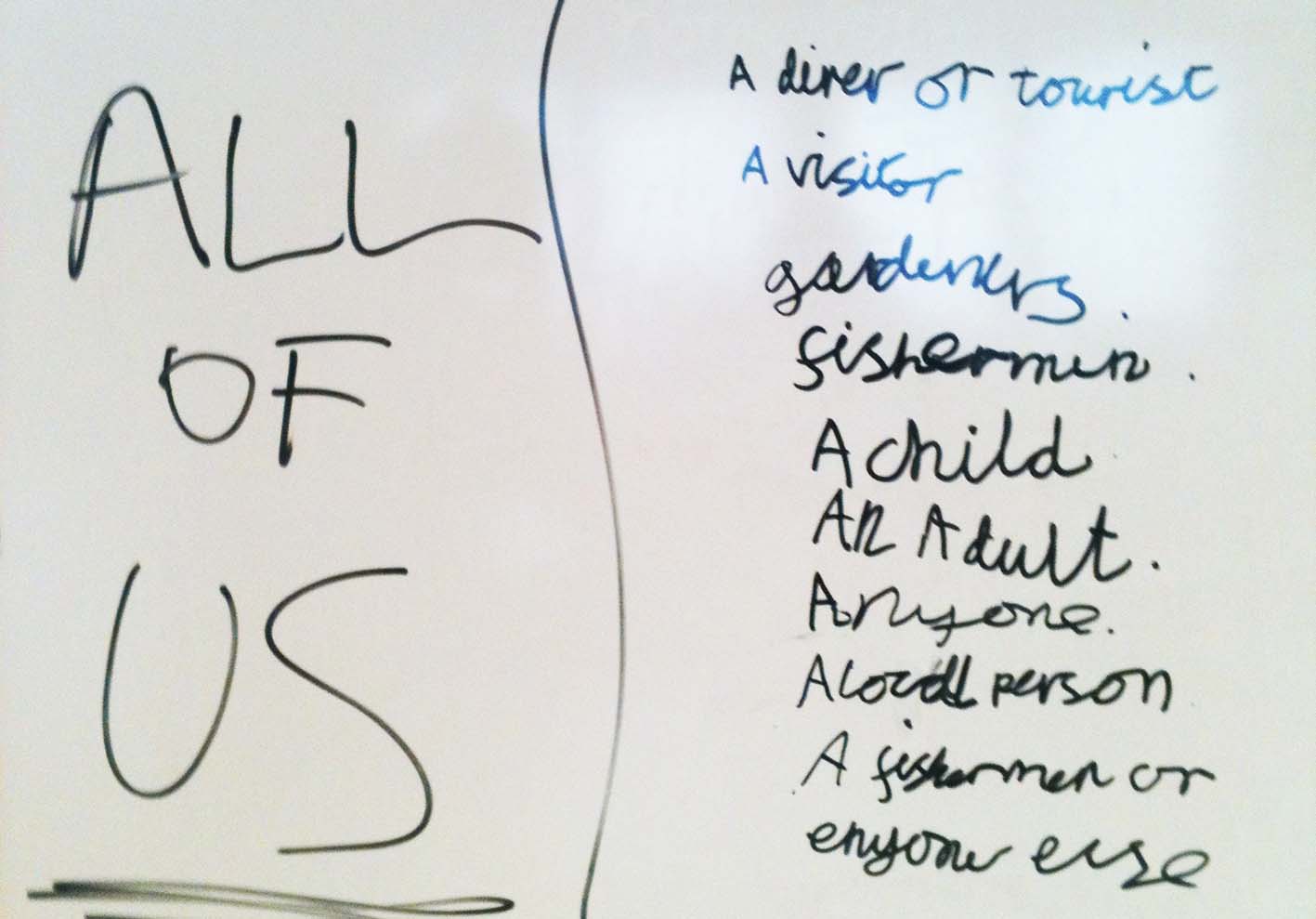
The evidence we had collected proved a useful starting point to discuss who might be responsible for each of the objects we had found, the washed up/dropped toys being a reminder that we are all responsible!
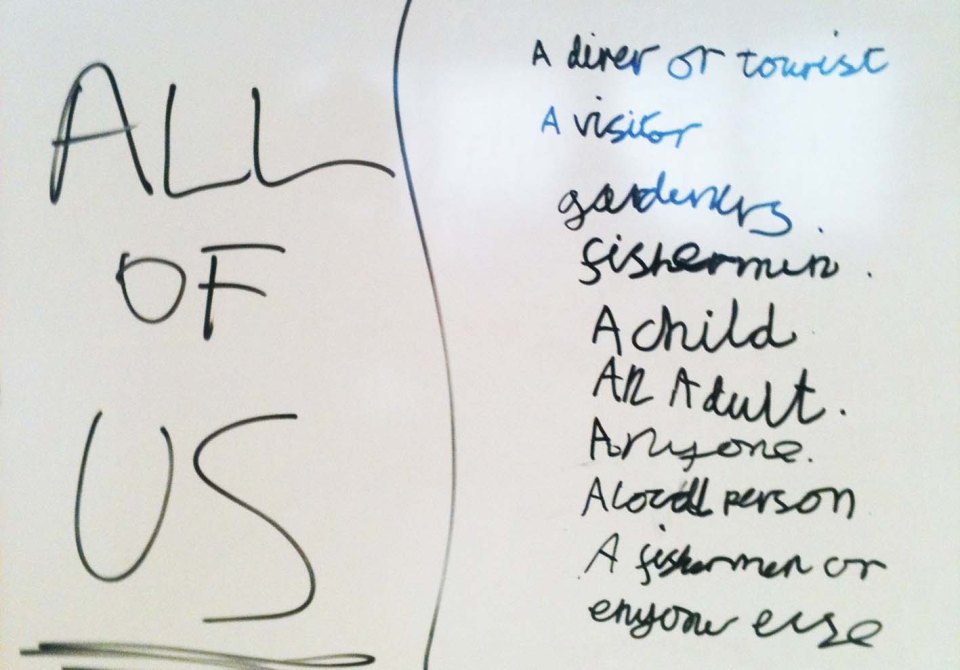
who might have been responsible

Throughout the afternoon as the teacher and I assisted pupils to write about what they had found. They also were asked to complete a worksheet to estimate the lifespan of different types of litter in the environment. Their answers showed that they hugely underestimated the length of time it takes for the materials we had found took to break down, some thought that leather lasted longer than plastic. Leather lasts for up to 50years whereas plastic bottles may last indefinitely.

From this observation I can now see how important it is for the littoral art project to draw attention to the extreme lifespan of man-made materials. 


.


35kg +

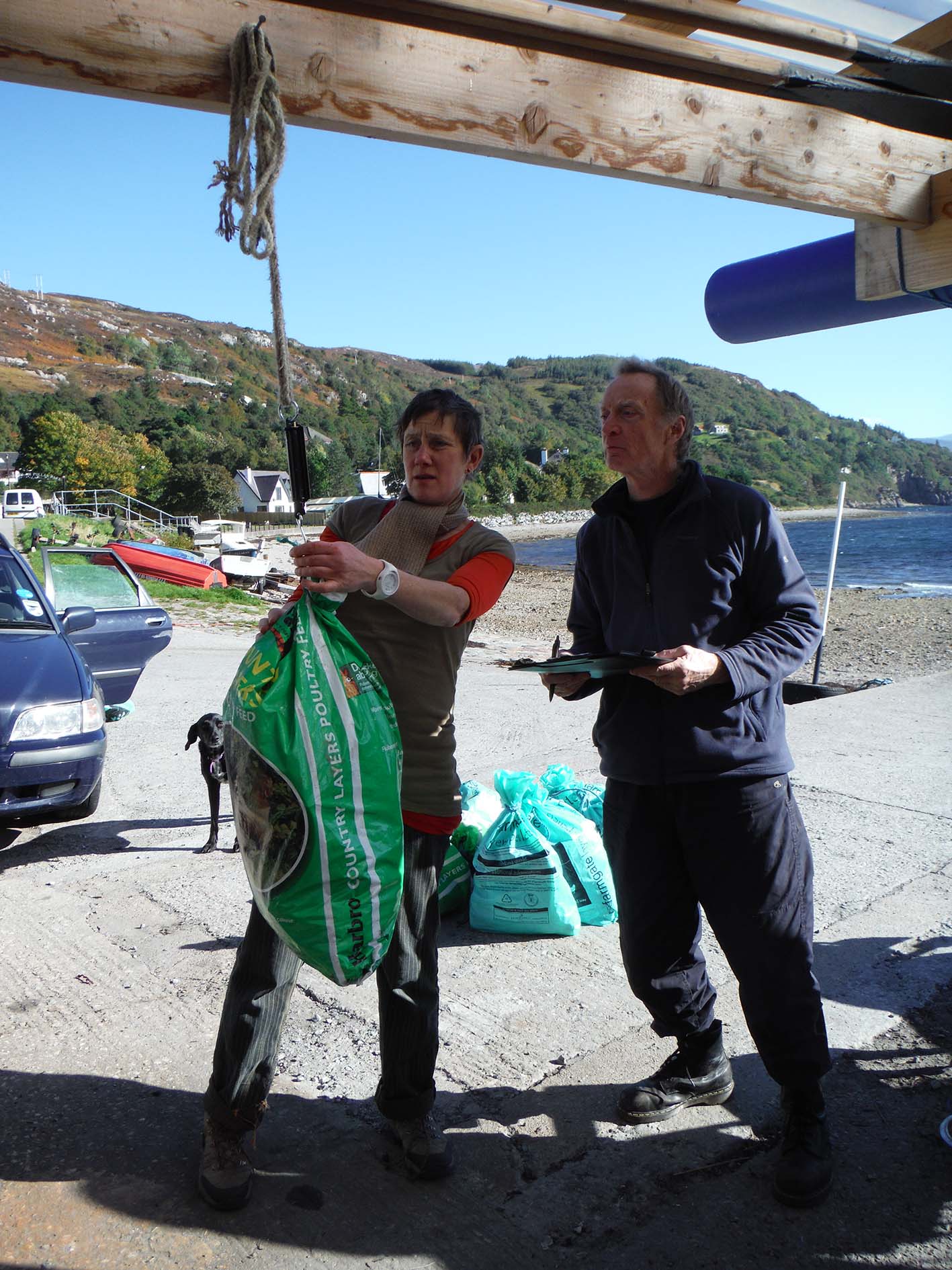
After filling in a risk assessment  for exposure to the elements for the Marine Conservation Society’s  (MCS)   Beach Watch team, to undertake the beach survey  on  Monday 30.9.2013 the day dawned with bright sunlight and only  a light south easterly  breeze.

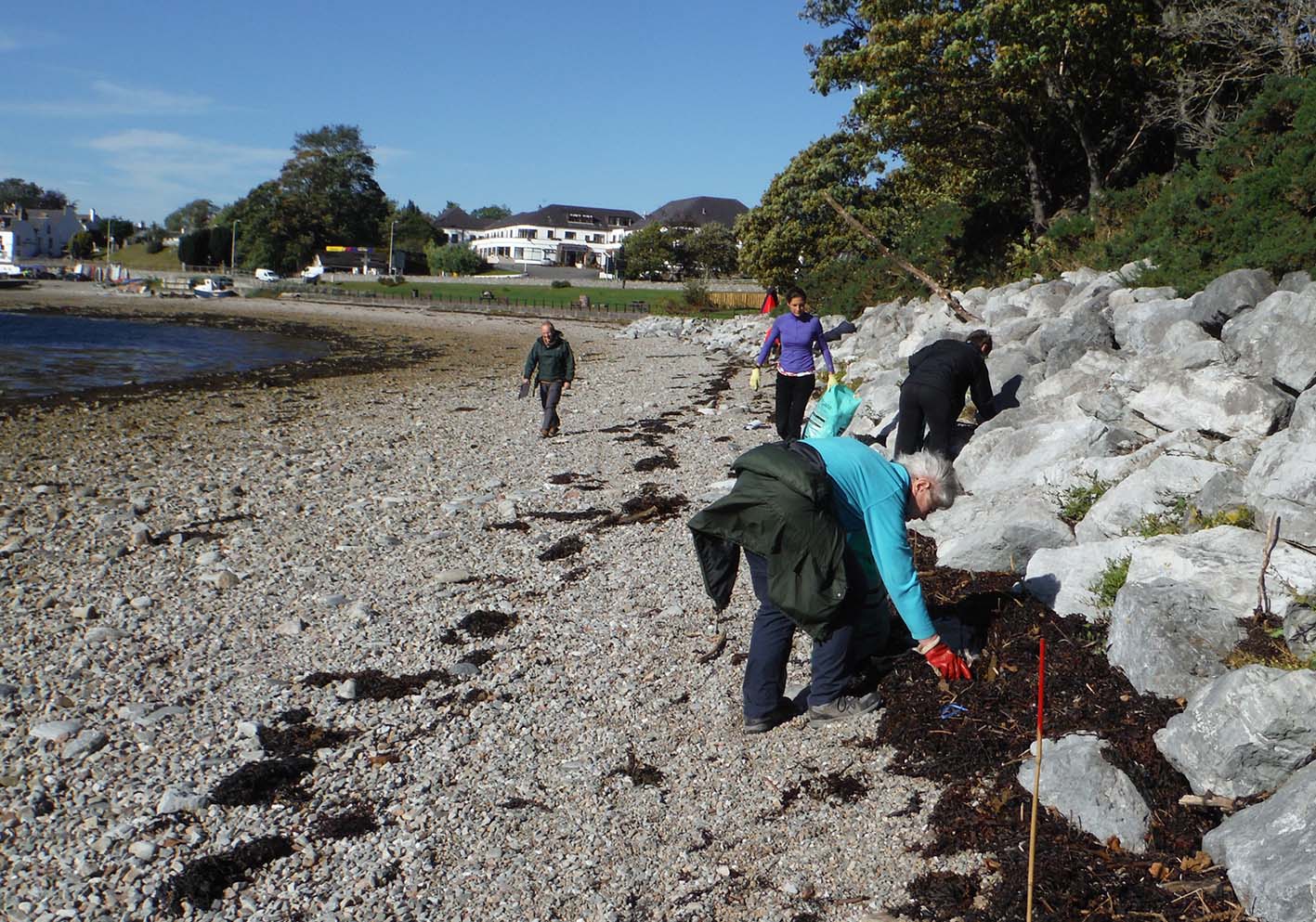
working together along the strandline

Great conditions for carefully noting the items of litter on the beach .

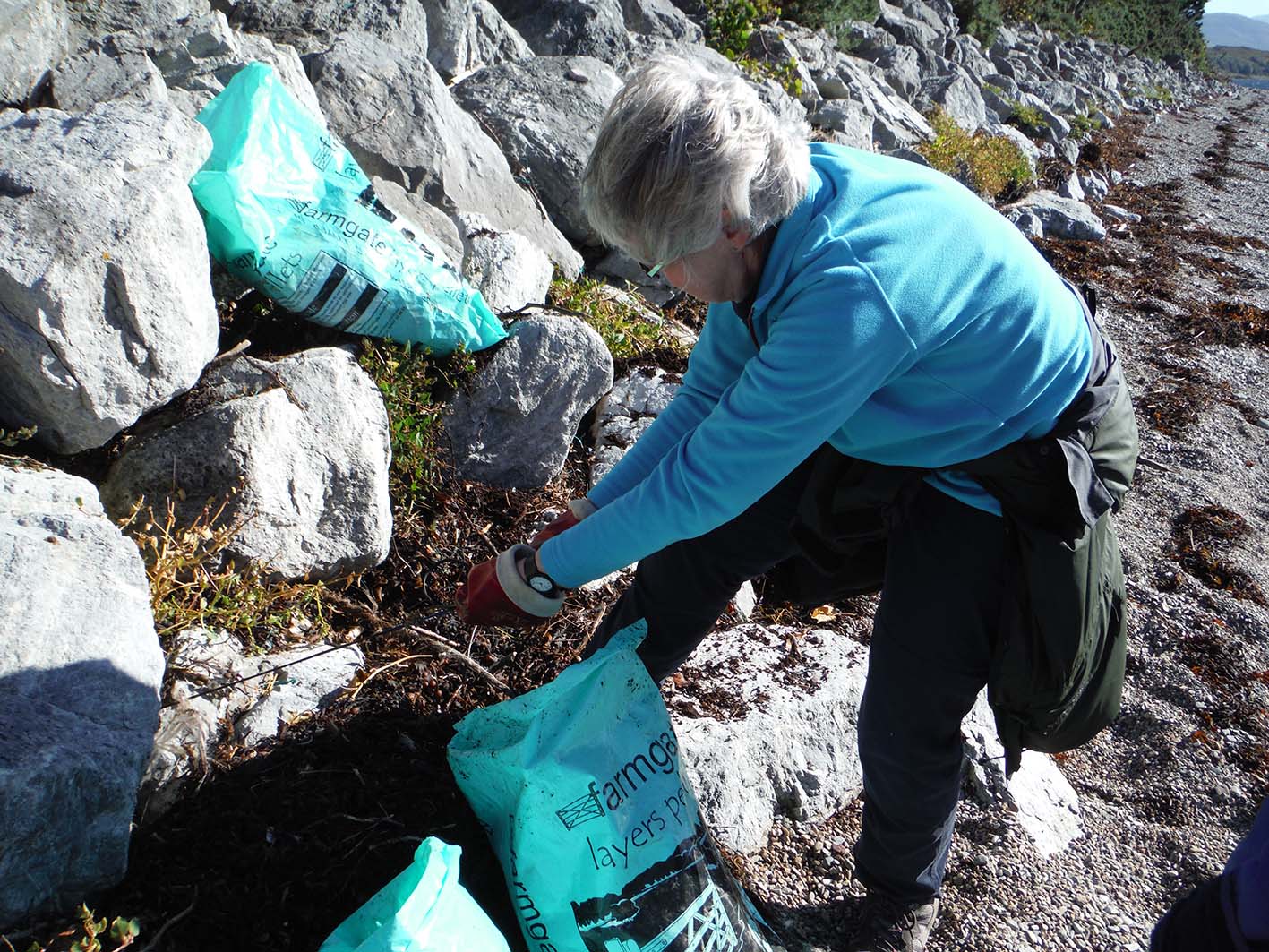
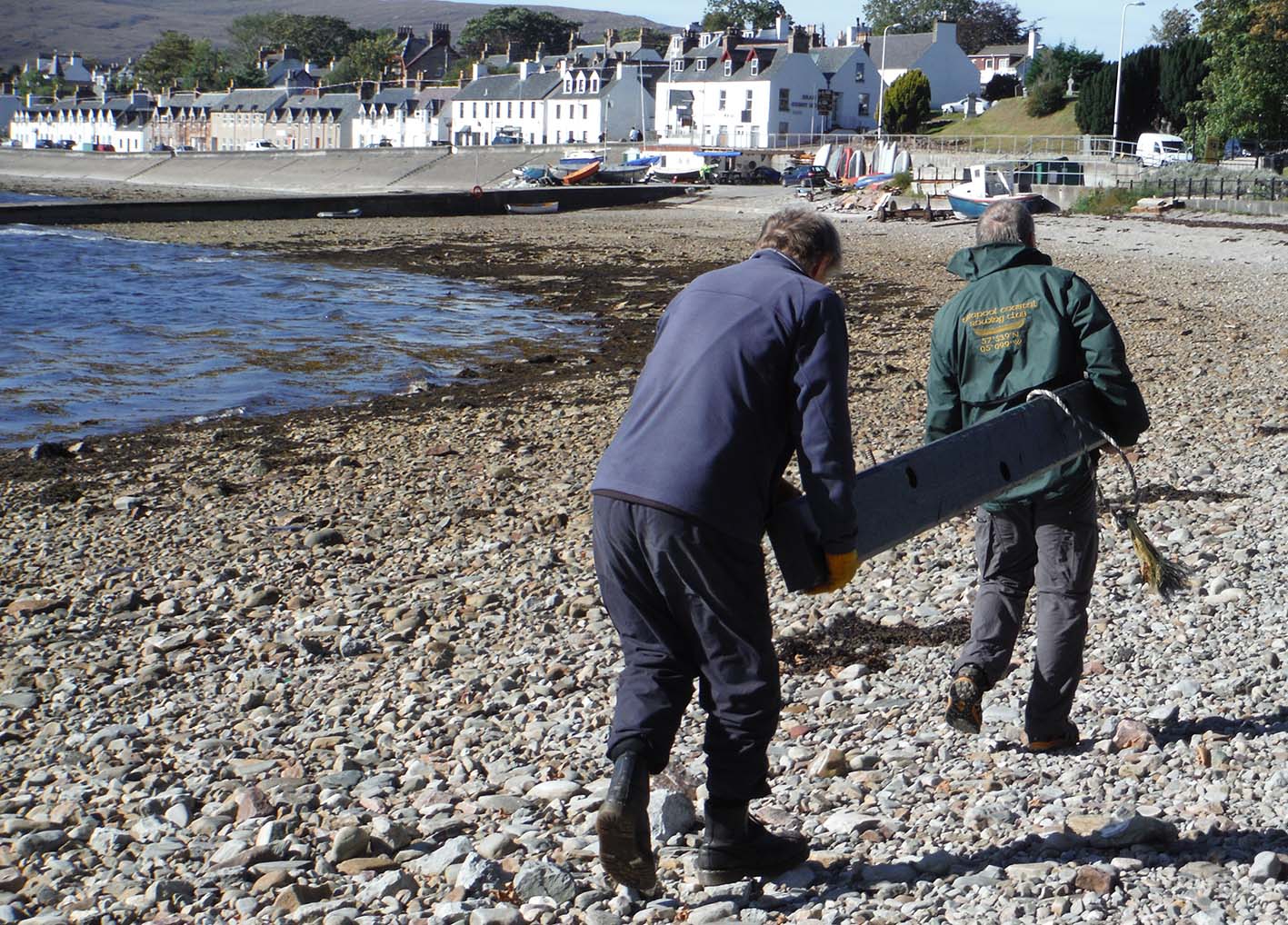
 caught rope     The heavier pieces -pier fender    bagged up

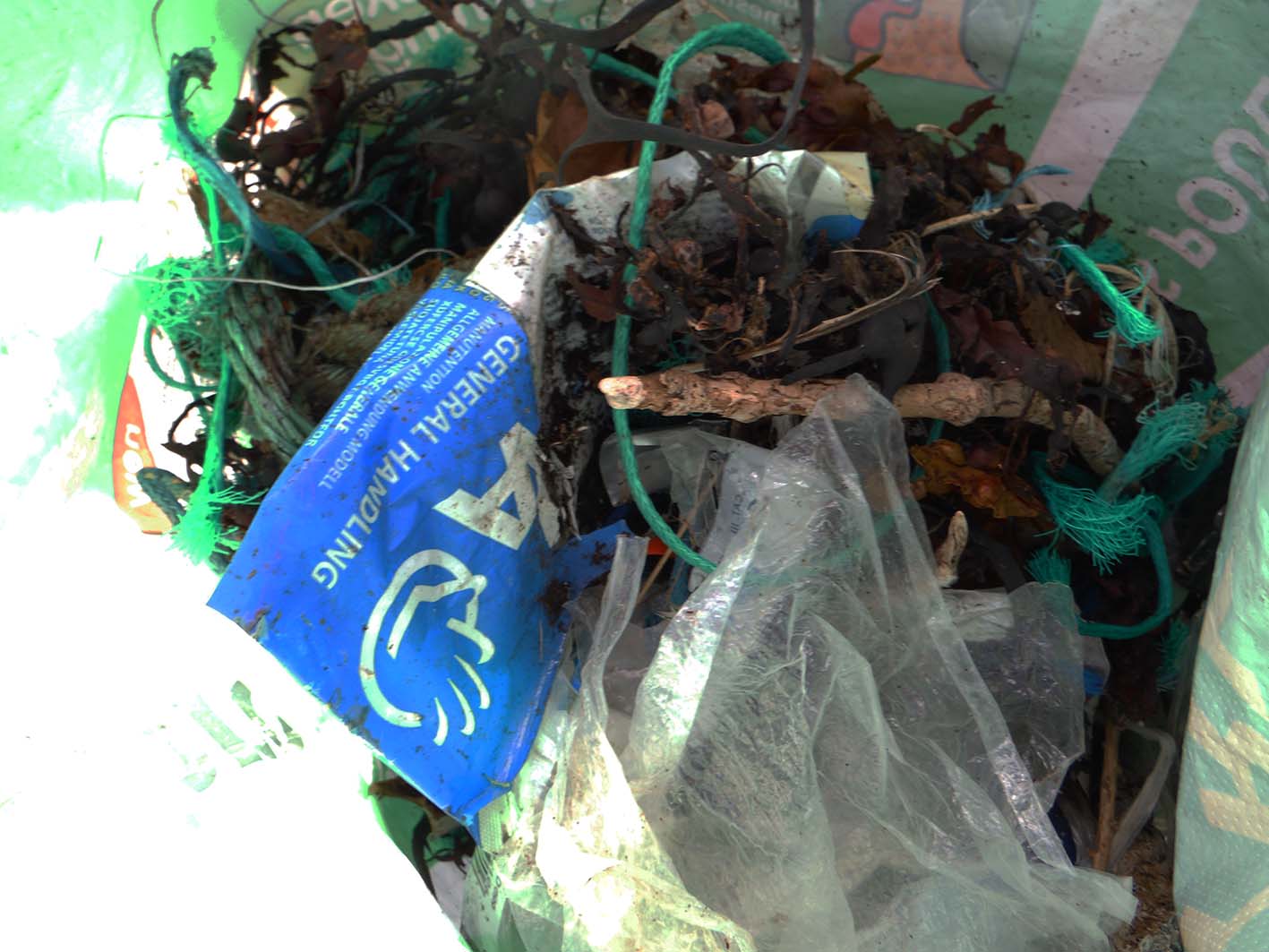
Seven of us made the most of the weather to do an incredibly thorough job on the beach  examining approximately one hundred metres of the beach stretching from  just east of  Am Pollan Park in Ullapool. Working from the low tide mark to the strand line identifying and counting pieces of glass, metal, wood, cloth and the massive category of plastics .  The survey we carried out for MCS in Ullapool has 35 sub-categories of plastics , mostl of which I have seen in the last three weeks.

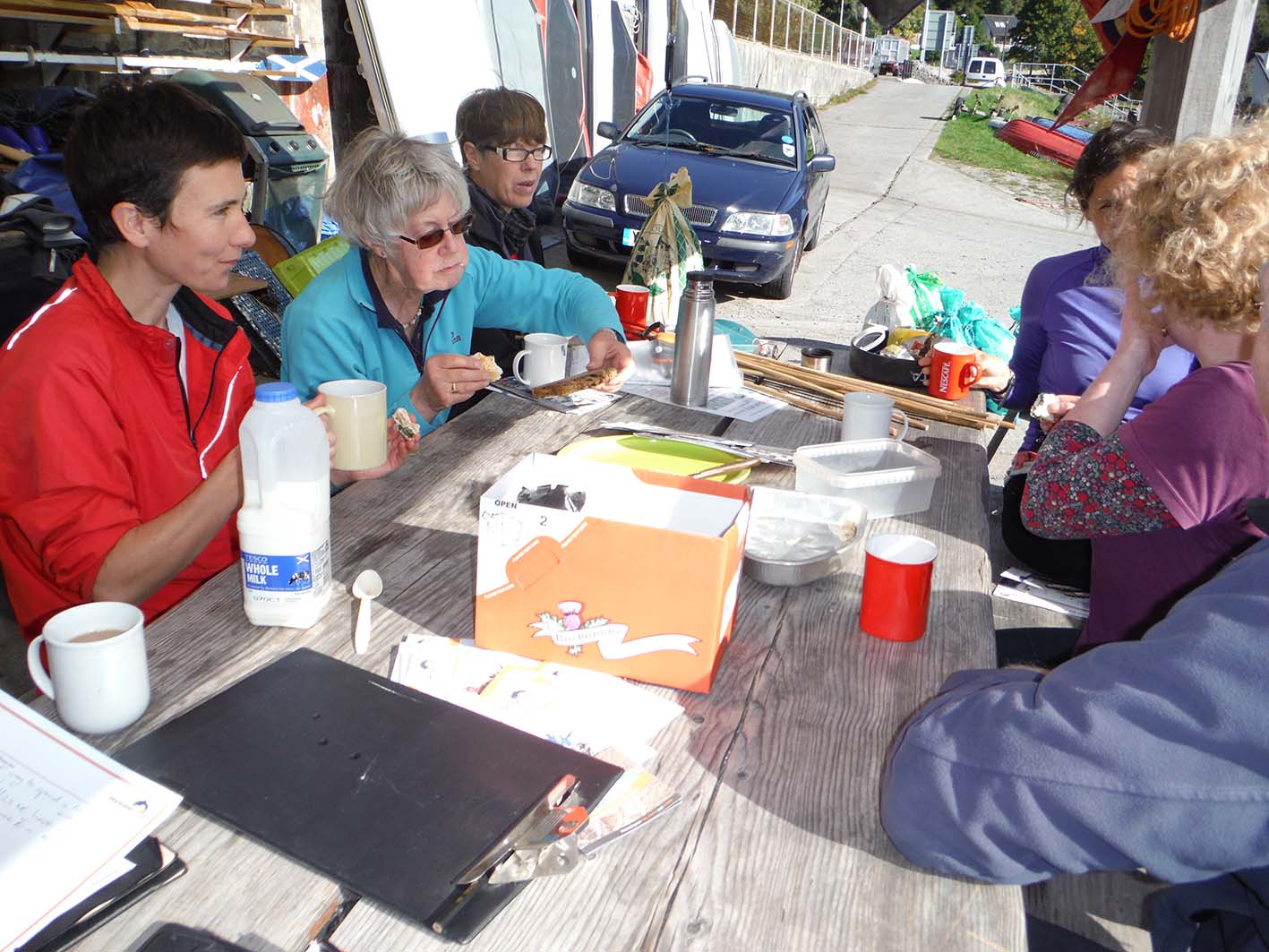
well earned rest and cup of tea      weighing the bags of litter

At the end of the survey we discussed how even on a beach which looked relatively clean we had collected 35kg of litter plus a fender off the pier which would have been to heavy for the weighing scale.

Thanks to everyone for giving a hand and to the Loch Broom Sailing Club for use of the club house to make tea and coffee.

Open Studio

The opening of the An Talla Solais members open exhibition on Friday gave me the opportunity to open my studio and invite visitors  in to see my growing collation of information and emerging ideas of possible responses to the beach litter I am examining with the High School pupils.

OS 27 OS evid bags OS 28.9

I am asking for comments to be added to my working notes on the walls as people walk around the studio.  The number of different of beach litter materials displayed are growing.

 OS ideas board    OS window dishes

Isolating them into specific groups enables discussion into specific  related problems. Something that I am keen to do.

Follow up reports

Over the lunchtime breaks at the High School interested pupils from years 1 &  2  have been joining me to catalogue the evidence that the year 3 pupils collected with me on the beaches around Ullapool. The survey information has been summarised on the evidence sheets for each 10m section along the 100m Morefield Beach survey transect and samples  have been photographed.

checking the bags    cigarette lighter  crime scene board  6 morefield   making notes on the crime scene board  quadrat evidence  IMG_0502

More detailed quadrat information collected along the West Shore beach provides a very different picture as to what has been found and who might be responsible.

Passersby to the Incident board in the foyer of the school are now offering up suggestions as to the origins of the litter.

littoral: beginnings

This blog is my way of recording the ideas, process and outcomes of my art-science project littoral, in which I will be examining and mapping beach litter with students and volunteers in coastal communities.  I welcome everyone who reads the blog to comment on what is posted adding their own experiences of beach litter and beaches to investigate in future with the hope that everyone who becomes involved will send images and information to add to the site.

littoral.sci-art project


The aim of the littoral project is to increase litter awareness and highlight its impact on the coastal and inland marine environment. The project title comes from littoral zone, the area between the low and high tide water marks this is where I will be looking for litter.

I will be mapping my findings and making artworks that encourage us to think about the issues and encourage people to help clean and take care of our marine environment.

“This project is my response to my fear of drowning in litter which I am increasingly experiencing when visiting beaches around our coast. High-tide lines are often marked not by seaweed but by a tangle of man-made materials dropped or washed up. Even on beaches which look clean, if you look closely between the stones or grains of sand we find cigarette ends, plastic pellets and fibres”.