Shetland Notes 6: Birds

Tonight I take my leave of the Shetland Isles with Black Guillemot’s  diving in Garthspool harbour. Stepping onto the deck of the ferry I am able begin to unravel what I have learnt from my extraordinary Shetland expedition.Almost 8 weeks criss-crossing the Isles, examining beaches, collecting Plastiglomerate, filming  animation footage and leading workshops with pupils with 14 schools. On this journey my constant yet ever changing companions have been the wonderful bird life that fills the skies and extensive coastline.
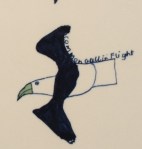
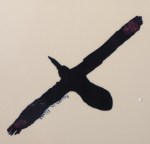
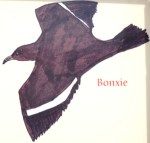
             Drawings above of a Common Gull, Raven and Skua (Bronxie) by Urafirth School Pupils

As the ferry swiftly leaves the dock and makes its passage through the Bressay Sound Arctic Terns dart across the prow of the boat and Fulmars fly down skimming  the seas surface dipping to pick up food.
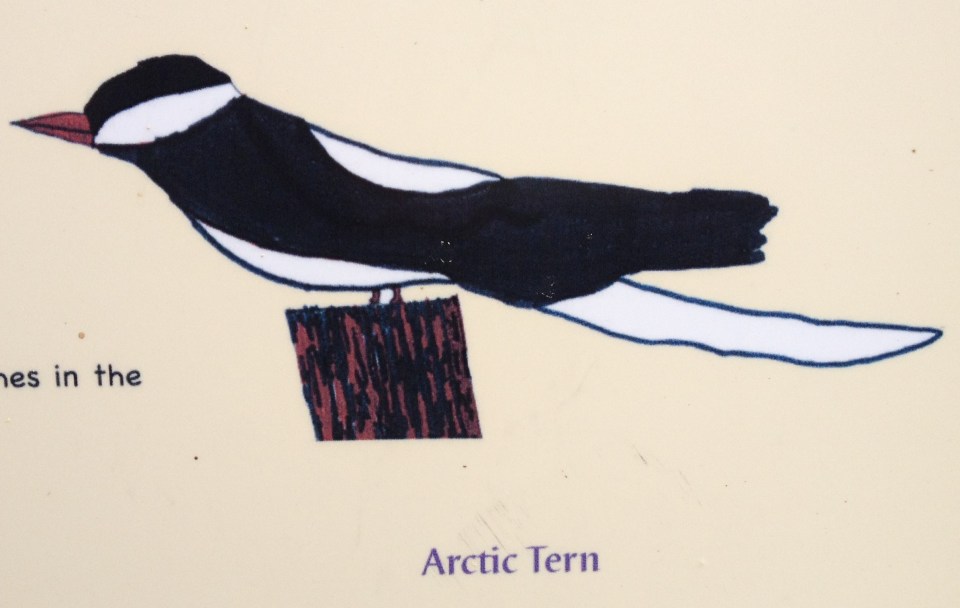
IMG_1882Steaming down the east coast of the isles I focus hard on the shoreline through the mist trying to recognise some of the beaches I have collected Plastiglomerates from and lead litter investigations on with pupils from 14 schools over the last 7  weeks. The first beaches I spot are effectively the small town beaches (less thean 50m long)  there are many of them tucked in between buildings with a  small tidal range.

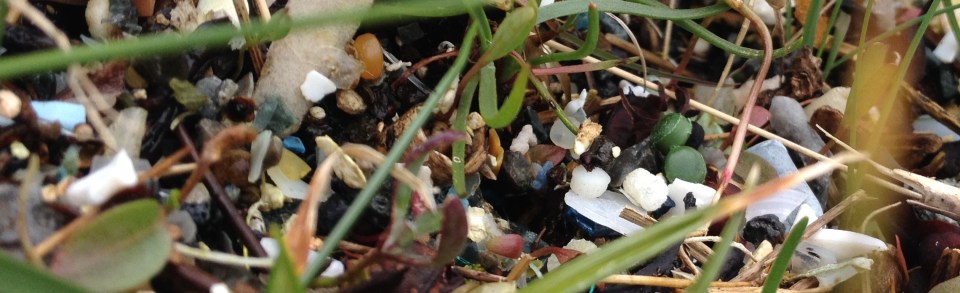
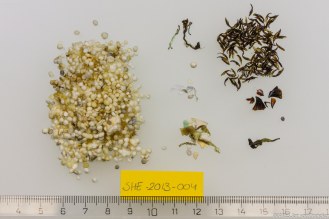
We soon pass by the Voxter beaches of stone and shingle then Hoswick  beach were we examined the beaches with local Sandwick School pupils, collected micro-plastics from the beach and considered the disturbing images (below) taken by a scientist Jan Andries van Franeker who carried out an autopsy on a Fulmar found locally on Shetlands south mainland.

130611-IMG_8518-Dove-Lab-SHE-2013-004-stomach-v2  Shetland-HD-Franeker-G00637

The dead Fulmar had over 9oo polystyrene beads plus small pieces of plastic and nurdles. Fulmars  feed on the surface of the sea and understandably mistake the polystyrene and plastic pellets/pieces for fish eggs. The result of eating so many piece of plastic is starvation as the bird thinks its full. Fulmars also feed the plastic to the chicks. The extreme dangers of micro plastics to bird life was central to our Close Examination workshops and was carefully explained by my workshop colleague Jane Outram the environmental officer of the Shetland Amentity & Guide at Sumburgh Head Lighthouse (bird observatory). Jane has been a great bird knowledge and has been an invaluable project colleague  who has helped me to facilitate the workshops and help me  differentiate  the numerous type of  waders, gulls and .

IMG_1886

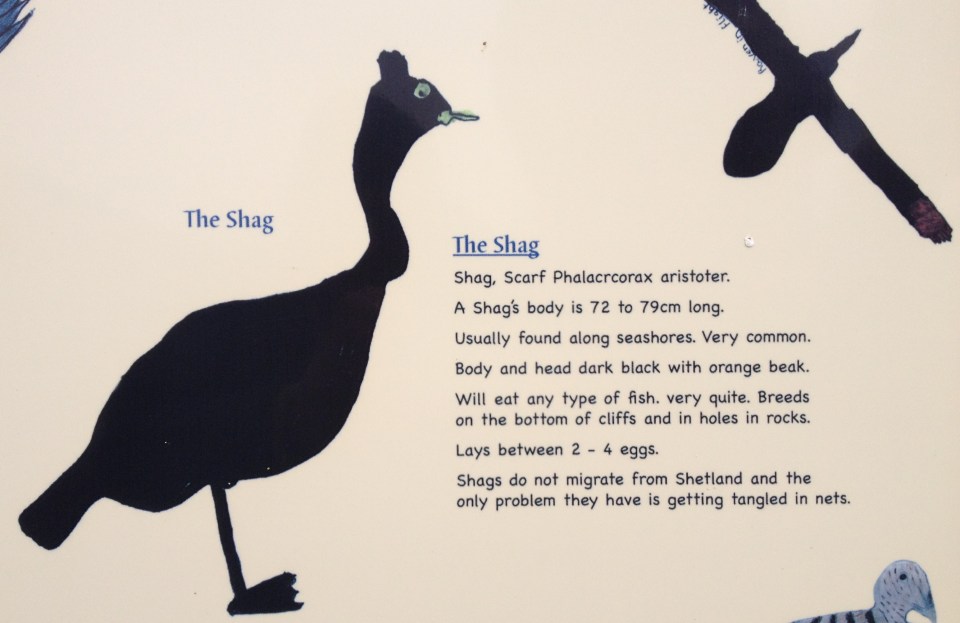
We have both been delighted and impressed by the children’s knowledge of birds while delivering the educational workshops. The Urafirth Primary Schools beautiful  illustrations used here are taken from the schools notice board which names the birds seen around their school and points out the dangers that face specific birds  like the Shag below,  from beach and marine plastic litter.
IMG_1888 (2)

Shetlanders are rightly proud of the vast aray and number  of bird and  wildlife that lives and visits the islands throughout the year. I have delighted in being able to witness this at close hand  as I criss-crossed the islands visiting beaches and schools. I have caught sight of otters cruising along the Grathspool harbour wall (Lerwick) at sunset and Red-throated Divers diving in the afternoon sunlight on Voes out west.

As MV Hrossey ploughs through the North Sea I try in vain to photograph a lone Gannet gliding  fast across the wake of the ship which is broken up by the fresh north easterly.
sea wake

As we pass by  Sumbrugh Head cloaked in cloud after  weeks of continual sunlight. I reflect on the fascinating natural beauty of Shetland and the dangers that wildlife and Birds are facing here and around the world given the increasing volume of plastics in the oceans and on the beaches.

Birdlife: (top) melted plastic rope,  (LHS) Guillemot egg on Yell,  (RHS) waders eggs increasingly exposed as nests change from muted brown to brightly  coloured

With such images in mind  I leave with an even greater determination to make work that envisages this environmental problem  in new and dramatic ways and  to stimulate  discussion and the need to act /change behaviours. I look forward to returning in September to install my work at Da Gadderie  Shetland Museum and Archives

Thanks to Creative Scotland for funding towards my animation and exhibition development work and thanks to Awards for All  and Zero Waste Scotland for funding for the educational workshops and to North Link Ferries  for help towards my travel.

CS logo 1 copy

Shetland Notes 5: Collecting

Shetland Notes 5: Collecting

As my expedition to Shetland enters its last few weeks I am travelling to as many beaches and foreshores that I can to examine the littoral zones and to collect Plastiglomerates.

IMG_1940

This morning I picked my way carefully along the tideline of Channer wick beach a steep pebble beach on the eastern side of Shetlands mainland keeping an eye out for waders nests and watching the Fulmar chicks fledging out of burrows set in the bank of the back beach while I myself was being in turn watched by three common seals basking close in to the shore line. Facing southeast this beach is cleaner than most beaches around the  Shetland/World though plastic litter is there  knitted into the raised  back beach landscape

My main aim is to collect up as amny of the Plastiglomerates I can find, so far I have found them on nearly every beach I have surveyed, even on the beautiful world renowned St Ninians (tabola), where they tend to be small fragments collecting usually at the south west corner of the beach.

My notes help me keep track of my finds, the type of beach, aspect amount of easily visible litter and the amount of  what I collect.

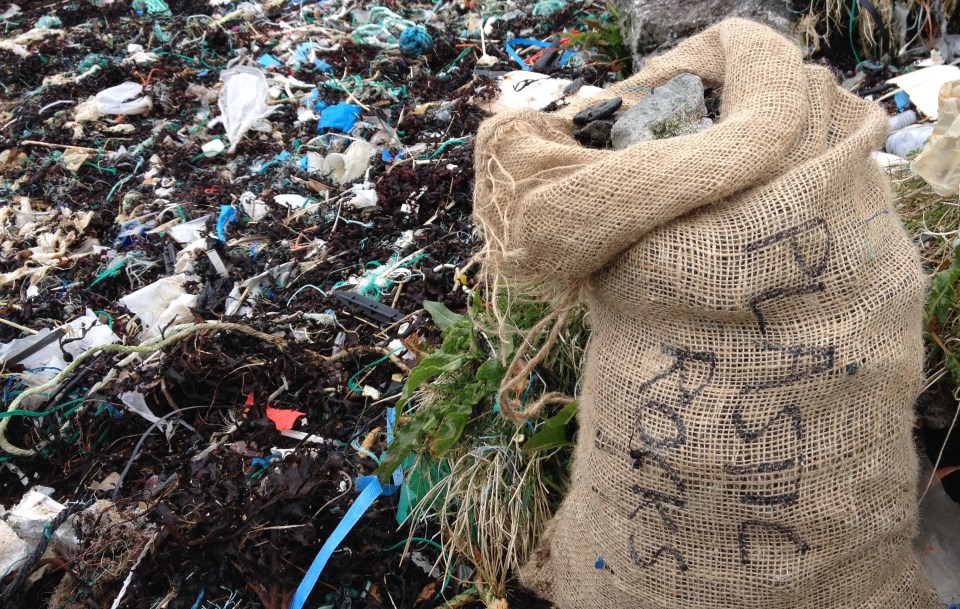
The numbers of sacks are a  crude summary of the amount of litter that each beach is subject to and the prevailing  tidal  flows and whether the  tidal flows are able to wash  the litter out to sea once it’s there or whether the landforms entraps the litter like at beaches such as Burrick (above left) where so far we have collected 6 sacks,  or at  Meal where I lifted several large slabs off the rocks,  or at Mangaster (below) and Mavis Grind  where the the Hightide lines are almost as deeply littered as at Burick.

IMG_1695 (2)

Mavis Grind is a significant point in Shetlands Geo Park  being a narrow isthmus between the Atlantic and the North Sea where boats were hauled traditionally from one side to other to avoid the long row around.  On my journey north today I intend revisiting Mavis Grind to try and understand  more clearly the significance of the landforms (Taings : tonues of land ) that entrap what the Atalantic and passers by leave. Connectivity permitting I will share my findings.

IMG_1694 (4)

Alongside collecting the Plastiglomerates  usually within the high tide zone, I have been taking small samples of sand/seaweed from the splash zones that evidently contain micro-plastics.  This week I will ask Higher school pupils on Whalsey Island to examine and compare samples taken from their own shorelines with those I have taken from around the Shetland Mainland.   I look forward to their observations creative interpretations and  wonderfully visiting another one of Shetlands 100+ Islands.

Shetland Notes 4: Learning

A big aim of mine is to inspire young people to creatively tackle the massive environmental issue of plastic pollution in our marine and coastal environments.

Pupils in Shetland each year take part in the great Da Voar Redd Up spring litter pick and so know only too well the size of the problem and how much effort it takes to collect and carry hundreds of bags of litter from remote beaches.  Last week 70 Scalloway primary pupils cleaned Burick Beach a mile west of the school they collected 363 bags of bruck (rubbish) off the beach approximately 100m long.

IMG_1720 (2)

Jane Outram (environmental officer for the Shetland Amenity Trust) & myself have now begun to deliver three educational workshops across Shetland. Each workshop begins with an observational session on a beach near to the school. The outside learning element of the day long workshops fitting well with many of the schools, as writ on the wall at Nesting Primary School

learning words (2)

We are criss-crossing the isles to deliver 3 different workshops devised for different ages across the Primary and Higher School years with the aim of looking at how we can tackle the litter before it arrives on our beaches, so Shetland’s  children’s children won’t have to collect hundreds of bags of rubbish each year.

school workshop locations (2)

We have had an amazing response over 14 schools will be taking part, including the outer isles. Pupils taking part will also complete a questionnaire developed and written by researchers Lynette Robertson, Agnes Patuano and Reyhaneh Mozaffar so we can assess the benefit of our creative approach to investigating  beach litter and how we can help to reduce plastics in the environment. So far we have delivered a training session to members of Shetland Environmental Education Partnerships (ShEEP) an environmental project which will continue to help schools deliver the workshops on in future years.

LAP Edu Pack 2   LAP Edu Pack 3

Our first ‘Close Examination’ into the micro plastics of our beaches was carried out by lower high pupils of Aith School, who after taking a selection of particle samples from their local beach, used simple separation techniques to discover the variety of forms that plastic particles take. Using electronic magnification identification of the types and possible sources of the particles was discussed.

IMG_1519 (3)

Using projected images of  drawings of sand hoppers, the smallest organisms known to ingestion micro fibres, we began to experiment with ways of visually making the links between the ingestion of  micro plastics by marine organisms, the related hazards particularly to birds and mammals. The pupils and biology and art teachers now plan to explore this connection further through graphics.  I look forward to seeing the work!

Year 7 pupils enthusiastically took up the roles of a Crime Scene Investigation (CSI) team, on the western end of Burick Beach to collect evidence to carry out a ‘Return to Sender’ workshop. Back in the art room our team eagerly and thoroughlyscrutinised their evidence to build up a detailed product profile.

DSCF9913   DSCF9923   DSCF9919 evidence board

Each Crime Scene Investigation team set about interrogating the litter items to learnas much as possible about the type of material it was made from,who manufacturered the product, the retailer involved, plus  recycling symbols and anti-littering information etc.

IMG_1598

With this information pupils are now composing highly visual letters, FaceBook messages and Tweets to be sent shortly to manufacturers/retailers to ask for their help in reducing packaging, encouraging recycling and investing in  research into biodegradable products to help them keep their beach free of their products. Follow the blog to see their work and manufacturers responses

A cross age group of Outer Isle School pupils from Foula, Fetlar, the Skerries and Fair Isle visiting mainland Shetland searched for ‘Future Fossils’ amongst the Voxter shoreline stones. The children took part in 2 full sessions collecting and examining rock samples,  and then excitedly broke open the fossil pebbles to reveal a variety of common objects found on shorelines all around Shetland.

observation drawing rocks & FF Voxter magnifying  Voxter timeline Voxter

Later they took time to carefully work out how long litter items such as plastic bottle tops, gun wads, balloons and ropes might last into the future and considered this in context of the time line of the world, Shetlands geology and their own existence having put their names and birth dates onto the line.  A powerful days learning outside, together. I look forward to meeting all of these children in the interactive laboratory that I am designing for the exhibition at Da Gadderie.

Special interactive school event at the museum on Thursday 27th October

Many thanks to Awards for All , Zero Waste Scotland and North Link Ferries for enabling this educational part of the project to  be devised and facilitated .

Sharing ideas – Ragged University Talk

On Thursday evening I embraced  the  ethos of the Ragged University’s talks: ‘to share ideas you are passionate about and to learn something new’ and I enjoyed illustrating my ‘News from the Littoral Zone’ at the Counting House in Edinburgh. The evening also included a mind stretching talk by  Susan Brown from Manchester University on Sustainable Education and allowed the audience and myself to join in with the current thinking on educational approaches to ecologically aware education

The audience was wonderfully  attentive and I was happy to illustrate my research process of exploring the littoral Zones on the NW coast of Scotland  through images taken over the past 2 years  that I have  shared in this blog.  These included my initial shocking strand-line walks, learning survey methods, related hazards and the longevity of respective materials found, plus my trials to creatively share my findings with local community members. Take a look back through the posts.

I began by passing around  evidence bags  of litter items collected over the past two years from 18 beaches and exhibited during my residency at An Talla Solais, Ullapool’s Arts Centre during my residency in 2013 and then shown as part of my installation at Ullapool Museum in 2014.

evidence bags 1

I then shared my thoughts on how I am now honing down my research  findings to be able to focus on specific findings that are the most poignant to me and that inspire me to make strong vital imagery.  Item wise I am now looking in more depth at 3 of the less easily seen litter items found.

Gun Wads: plastic wadding to keep the ammunition in place   either in a gun-barrel or in a paper or metal shell.

IMG_4454

180 plastic wads were collected last autumn on beaches  around Reiff on the Coigach peninsula by committed local beach cleaners concerned  by the fact that these  ‘wads’ have been found to significantly contribute to the death of porpoises, dolphins and turtles.Which is understandable when you view the gun wads floating in the sea as they are so similar to squid. Ecowad alternatives are available.

gun cartridges our contribrition to the ocean conveyor belt

Last week on Shetland I witnessed plastic gun wads on every beach I visited, as there is no known shooting activity on the islands, the Shetland Amenity Trust ‘Dunna Chuck Bruck’ team that I was working with thought it probable that they originated from the from the same place that the lobster tags washed up traced back to Canada’s east coast.   If we follow the conveyor belt of the ocean currents  round it is therefore likely that the  gun wads dropped on Scotland’s NW coast will be ending up on along the eastern Seaboard of America at some point.

Micro-fibres: degrading particles of plastic litter  e.g. rope, bags sacks, cord

IMG_4455

Even on the cleanest looking beaches, where no obvious  litter items are seen,  I have  found micro-fibres laced within sand grains or caught up in/on the seaweed. On mass the fibres are easily visible but when not visible they can be seen easily amongst collected sand grains or seaweed with a hand lens or USB magnifier.   Marine Biologist Dr Phillip Cowie at Millport Field Study Centre explained filter feeding organisms  such as Prawns, flat fish and even sand hoppers are being recorded with such fibres in their guts.

Plastic rocks: melted plastic waste, formed by burning plastic litter on the beaches

IMG_4456

Plastic rocks are perhaps one of the hardest litter items to ‘see’  as the process of burning so many different coloured plastic materials together, often results in  range of grey muted tones which blend in easily with the beach pebbles . I have recorded most of these ‘rocks’ in the mid zones of the beach as they are one of the densest of the plastic items and are less prone to being wind blown.

As I explained in my last post  the melted plastic rock  has now been named  ‘plastiglomerate’ by a Canadian research team and their research findings have led them to argue that the proliferation of the plastic rocks around the world can be seen as a marker horizon of human pollution.

Plastic Rock

I explained that I felt that this broad project knowledge was vital to gain before I could begin to envisage the series of  visual and performance artworks that I am now planning. I am presently working with Shetland Amenity Trust and Highland Arts organisations to raise funding to make the Littoral Art Exhibition possible in the coming year.  I intend to make installations and related stop frame animations focusing/using plastigomerate’s and the micro-fibres that I find practically on every beach I investigate.

Many thanks to Alex Dunedin who organises the Ragged University Talks, and to Susan Brown who through her fascinating talk on Sustainable Education has enabled to me see how my practice fits well in the Sustainable Education models currently being discussed and developed.


Beach style campaign

My  campaign trip to the Dumfries coastline  to raise last minute support for the ‘Guide to Beach Litter’ developed into an exciting days work on Luce Bay Beach. The bay is vast and the beach extensive and has a great mix of sand, shingle and rocks. Perfect for anyone’s bank holiday.  Thankfully the day was bright and sunny though the brisk very cold winds kept all but the hardy seaside visitors away.

IMG_4383 IMG_4387 IMG_4424 IMG_4386  

I set the van up as a Sci-Art beach investigation unit alongside the beach, highlighting a selection of my findings so far  and open to all  beach goers. Discussions with intrigued visitors ranged widely from beach litter, to concern about the increasing acid levels in the sea and to fears of over fishing. On the beach I began mocking up a ‘Guide to Beach Litter’ using the litter I collected from along the strandline. The process of laying out the litter made me realise how complex the decisions to decide what to include in the Guide will be, in order to highlight the different : materials ,  hazards, and groups of people responsible for the litter.

DSCF9316 DSCF9383  particles in petridish
The item that drew most attention was in fact the collection of minute  fragments of mixed platic pieces and fibres that are found in the sand and amongst the seaweed.  I explained that these fibres and micro plastic particles are now being ingested by fish and marine organisms. The conversations reminded me of my dismay at being told by marine biologist Dr Philip Cowie  that organisms as small as sandhoppers had been found to ingest micro-plastic fibres.  As I had the ‘lab’ all set up I placed a (found) dead sand- hopper under the microscope and placed fibres beneath it to explore the visual connection. An idea I intend to pursue.

DSCF9408   DSCF9400

I was asked what I was filming as I shook a glass flaskcontain in front of the camera.  I explained that I was experimenting with the idea of how it would feel to be in the sea surrounded by plastic particles rather than plankton.

DSCF9346 DSCF9359

Flask contents : water , plastic particles and fibres plus architectural model  figure.

 ‘Well you have opened my eyes  with that, I never realised that’s what happens’                                     Alan local man

Yours is a great project and is doing a great job to make us aware of our environment. When you think about it the way we live has to change! ‘ Hugh from Whithorn

To celebrate these  encouraging comments in the Littoral Art Project’s work,  I spent the evening translating their verbal votes of confidence into visual votes on the beach.  As the tide receding I marked out  two X’s  using ‘litter lines’ made of prawn boxes and gun wads stitched together on Isle Martin last May.   One for #cleanseas and the other for #cleanbeaches

IMG_4392

A full compliment of X’s will follow soon with the appeal and sponsorship update. Many thanks to everyone who pledged support, together there has been over £1,000 pledged. I am presently setting up a  [donate] button on the blog and I hope everyone will be happy to donate their pledges via this PayPal system instead of via kickstarter. Thank you!

IMG_4402

2014 A Year in the littoral zone

Having completed a year’s research monitoring beach litter on the west coast of Scotland, I have selected twelve images that I feel summarise my findings along the west coast ‘littoral zone’ . The beaches I have surveyed are Grid- referenced and are located between Loch Broom (NH 133 939) in the south and Loch Inver (NC 094 973) in the north.

Ullapool E beach gun copy

Toy Gun Plastic   Ullapool
A poignant find that lay washed up along the upper shore of the north east beach of Ullapool. I have found toys on every beach I have surveyed.

Rhue polystyrene copy

Polystyrene   Rhue point
A common sight on each of the beaches I have monitored. Often large blocks, boxes or takeaway cups break into individual particles that float and litter the rock pools when broken against rocks. They are subsequently ingested by birds mistaking them for food.

IM plastic bottles copy

Bottles Plastic   Isle Martin
Found on every beach. Along the Back Beach (Camas a Bhuailidh) on Isle Martin the nearest of the Summer Isles in the mouth of Loch Broom, I recovered over 100 bottles which had contained drinks, cleaning fluids, oils etc. All the bottles towed from Isle Martin on World Environment Day were recycled.

IMartin melted plastic copy

Melted Plastic   Isle Martin
Hard to see rock-like forms which blend into the cobbles of the Ross-shire beaches. These predominantly grey plastic forms are the result of plastic rubbish that has been burnt on ships/trawlers or on the beach.

Dun Canna strandline mix copy

Strandline mix Plastic   Dun Canna
The strandline of this west-facing beach on Loch Kinnaird is one of the worst I have witnessed . Broken fragments of every type of litter is mixed into the seaweed.

Badentarebt prawn box copy
Prawn boxes   Badentarbet
Unsurprisingly, in a significant prawn fishing area, broken corrugated plastic prawn boxes are common place on every beach survey .

Badentarbet rope copy

Rope, cord, line and nets   Badentarbet
The highest percentage of litter that I have recorded has been made up of commercial fishing related materials such as ropes and cord: none of these at present can be recycled in the Highlands.

Altandu measuring cylinder
Fibres Plastic   Altandu
Close between the cobbles, sand grains or within the seaweed are millions of plastic fibres from deteriorating rope, bags, boxes which could be ingested by birds, fish and sand hoppers. I collected 1/2 litre of fibres  from 1m of  seaweed along   (Camas an Fheidh)

Altandu toy soldier copy

Soldier Plastic   Altandu
I found this soldier amongst one of the most severely littered beaches in the area. I intend to enlist him in my Littoral Art Campaign in the coming year

Rief loch gun catridge copy

Gun cartridges   Loch of Reiff
It was explained to me by two local beach watchers & cleaners in the Reiff area that the opaque splayed tubes that are numerous along beaches in this area are the inner sleeves of gun cartridges. In the water they are often perceived as squid by turtles and porpoise and eaten.

reiff loch cabling copy

Plastic tubing   Loch of Rieff
Evidence of large scale commercial dumping like this mass of plastic tubing is evident on the beaches close to commercial fishing areas. The scale of it takes your breath away

lochinver takeaway spoon copy

Food containers & implements   Loch Inver
On a much smaller scale but equally insidious is the common takeaway litter stuffed/trapped between the strandline rocks of harbour walls

I intend during 2015 – 16 to make artworks to hopefully encourage all of us to keep our seas and littoral zones clean. Please keep reading and supporting this project in any way that you can. Happy New Year


Relocating a Timeline

My installation at the museum continues to grow and develop daily and on Thursday the children from Achiltibuie Primary School brought their Timeline to the Museum. Unraveled the Timeline now stretches a good 10 metres along the back of the central pews of Ullapool Museum ( a Telford Church), the line itself is made up of lengths of washed up rope. We re-positioned the stones we found on the beaches in relation to the beginning of the world and to then checking their own positions on the line according to their birth dates we then hung the objects we found on the beach last autumn at the points in time that they might disintegrate and disappear if left on the beach.

timeline unravelled   using the space   refernce draws  whole group
Together we recalled the investigation process they undertook with me last year surveying quantifying and analysing who was responsible for different items, all of which will form part of the project folder on view in the Museum next week. In the short time we had the children worked hard to reacquaint themselves with the meaning and significance of the of the Timeline they had brought with them coiled up in a bag and how they might explain the Littoral Art Project investigation process to a group of children from the Ullapool Primary School children. They made full use of the installation in their presentation to the delight of myself and the teachers and by the end of the afternoon their was a great sense of achievement from all. With Museum staff complimenting us on how wonderful it was to hear such excitement in the Museum and to have such an unusual exhibit to offer visitors .

presentation  explaining fossils
The idea is that the Ullapool Primary School will now come back to the museum to examine the Fossil Collection themselves and to use the investigative space to examine and consider the beach litter and its consequences. Who knows they might come up with ideas which might help in future!


Thinking…..

…..in Abundance, in the company of  350 people attending the  TEDx* talks on Friday at  the University Edinburgh.

TED ent bottle

My contribution was to create an installation to spark discussion and catalyse debate about Scotland’s problem of beach litter

Talk attendees were asked to follow the sound of the sea  to find the installation,  along the way passing  statements about the condition of the beaches and litter found. Reaching the installation room they were asked to Enter, Consider  and Respond –  by tweeting a picture and comment. On entering the room the viewer was confronted by a collage of projected images of seemingly massive floating plastic  bottles which emanated from seven overhead projectors positioned throughout the room . Participants were encouraged to walk around, reposition bottles on the projectors  and to ask questions about the issue. Many engaging in discussion with me about the  major part that plastics plays in the problem.

IMG_1628  IMG_1689   IMG_1665   IMG_1666

IMG_1673       IMG_1635      TED entrance      IMG_1712      IMG_1655    

IMG_2974   TED installation 2   TED comment  TED comments & fossils

A display of a few of the ‘future  fossils’ helped to introduce the issue of the longevity of the litter problem and my new crowd funding appeal video gave an on the beach background to the project.  In the centre of the floor a 1 metre square was marked out with plastic drinks bottles I had recently found in a similar area on a beach last month , bottles like the ones we use everyday for 5 minutes which might have  contained  water, juice, coke …. prompting the question why are we using bottles made of a material that lasts up to 1,000+years when the contents are drunk in a few minutes ? Prompting comments like:

 It’s not even good for you to drink out of ta plastic bottle!!  

Where does what you drop end up? Here               One day the ocean will throw it all back at us

We’re paying today the price  for a  mind set from a time when environmentalism still didn’t exist in our vocabularies

Make rubbish valuable e.g. non throwaway bottles.

There needs to be an incentive to recycle. For example in Scandinavia you’re charged 20c per bottle if you return it , you’re given money back. In my time living in Finland I didn’t once see bottles lying around.

Please comment on the installation and the event

* TEDx is designed to give communities, organizations and individuals the opportunity to stimulate dialogue through TED-like experiences at the local level. TED’s mission is to freely promote “ideas worth spreading”. TED Technology, Education,  Design. Talks are offered for free viewing on line in 2012 TED Talks had been watched one billion times worldwide

South

On a rare trip down south I am taking time to see what’s happening on the beaches of Dorset. After months of storms, rain and flooding the access to most beaches is tricky  but what I am finding out after sliding onto the rocks and sand is both sobering and hopeful with interesting positive initiatives.

IMG_1343    IMG_1396   IMG_1379   IMG_1345

While there was only limited access to the beach at Kimmeridge Bay due to minimal low tides and the Dorset firing range flags flying I was still able to see that stony strandline under the cliff edge was punctuated with dense knots of tangled line, rope and rubber strips presumably originating from fishing gear The knots ranged from 30cm -1.5m across, big objects to be floating in the sea and to be hauled off the beaches by volunteers.

 IMG_1142 IMG_1171 IMG_1173

Kimmeridge is fortunate to be home to the Purbeck Marine Wildlife Centre (run by the Dorset Wildlife Trust) which promotes active beach cleaning and creative ways to recycle the bigger lengths of fishing gear washed up by selling them (nets & bouys) to visitors to  decorate their garages and garden sheds.  

 IMG_1331   IMG_1333   IMG_1330  DSCF7001

Both Kimmeridge and Swanage Bay beaches plus several other smaller ones I visited have adopted the Sea Clean initiative of installing simple pipe bins to encourage beach goers to collect the thousands of metres of plastic fishing line littering the beaches. I found Swanage Sailing club beach approximately 100m long littered with tens of smashed lobster pots and the ubiquitous plastic bottles. Feeling shocked and saddened I was happy to hear that the beach is also home to a large variety of seaweeds which I will go back to take a closer look at.  

DSCF7011

Chapmans Pool between Swanage and Kimmeridge proved the trickiest decent yet and an an even harder ascent several hours later. The continuing winter storms have washed that idea clear away as I look along the volume of litter that is backed up along the slipway wall I feel that drowning feeling I first felt on Altandu beach on the Ross-shire coast, when I made my decision to somehow address this issue began.

DSCF7023   DSCF7022   DSCF7003

Plastic bottles … How many bottles can be washed up onto 1 sq m of beach? On this day on this beach I have counted 23 besides all the other things.

Taking stock

As the year comes to a close I have been taking stock of the littoral project  to see what has been achieved.

My personal highlights  included:

Setting up a studio at An talla Solais in Ullapool, meeting tens of people in the area concerned with the litter on the beaches . Learning about litter on the beaches in Ullapool   with Dougie Mac Crimmond. Finding a beach with very little rubbish on it  Achnahaird. Hearing that two oranges launched along the coast had been tracked by residents. Sharing my discoveries with people  e.g. the types  of litter found, magnifying the fragments  of litter  found on the beach and the harm they can cause, understanding the  longevity of the litter  items dropped and washed up.

timeline compilation copy

The ‘future fossil’ hunt and  examination on the beaches showed me how the  chilling issue  of how long litter might last in the environment  can be approached in an imaginative way. Pupils comments and shock that a plastic bag on the beach might last until they (primary children) where grown up and had children and that a plastic  bottle might  be around longer than their children certainly was obviously provoking thought for both them and me .

Other  peoples comments:

The pupils loved the stone hunt and the ‘future fossil’ idea and it really caught their imagination. This was a highly creative way to stimulate thoughtful discussion of the issues around marine pollution.It stimulated discussion around how our beach litter will take many many years to decompose. Lesley Strachan, Head of Art, Ullapool High School

Julia Barton and the littoral art project engaged with all those who encountered her and her work. Whether through her workshops – the printmaking workshop at ATS was keenly attended – through her displays or involvement with the local schools and organisations her art and message is clear, welcoming, inclusive, thought provoking extremely relevant, fun and educational. S Garnett  ATS events co-ordinator

 …that plastic bag could still be here when I’m married … ugh…the bottles have to go at the end of the line ….they could be around thousands of years?……where do we put paper on the line? It doesn’t take long to rot…let’s put it near to us…….2013  Lochinver School Pupil

‘I think having the different aspects – scientific survey, investigation and creative elements – meant that it appealed to many different people. It was certainly successful in highlighting the issue of beach litter.’  V Halcrow, Project Manager Coigach – Assynt Living Landscape

I   It’s important to show ‘everyone can do something’ by setting an example cleaning beach we can encourage others to join in Jean Urquart MSP

It’s great having new energy in Ullapool – it helps the many people concerned about the marine environment and the pollution that is threatening it. So many local people clean the beaches near to us, so having you drawing attention to the state of the beaches is really helpful. Ailsa resident. (marine biologist)

Thanks for making me more aware of the horrible amounts of litter we see along our beautiful coastline.  Ann Hoffmann resident

My question is now how should  the project  move forward?